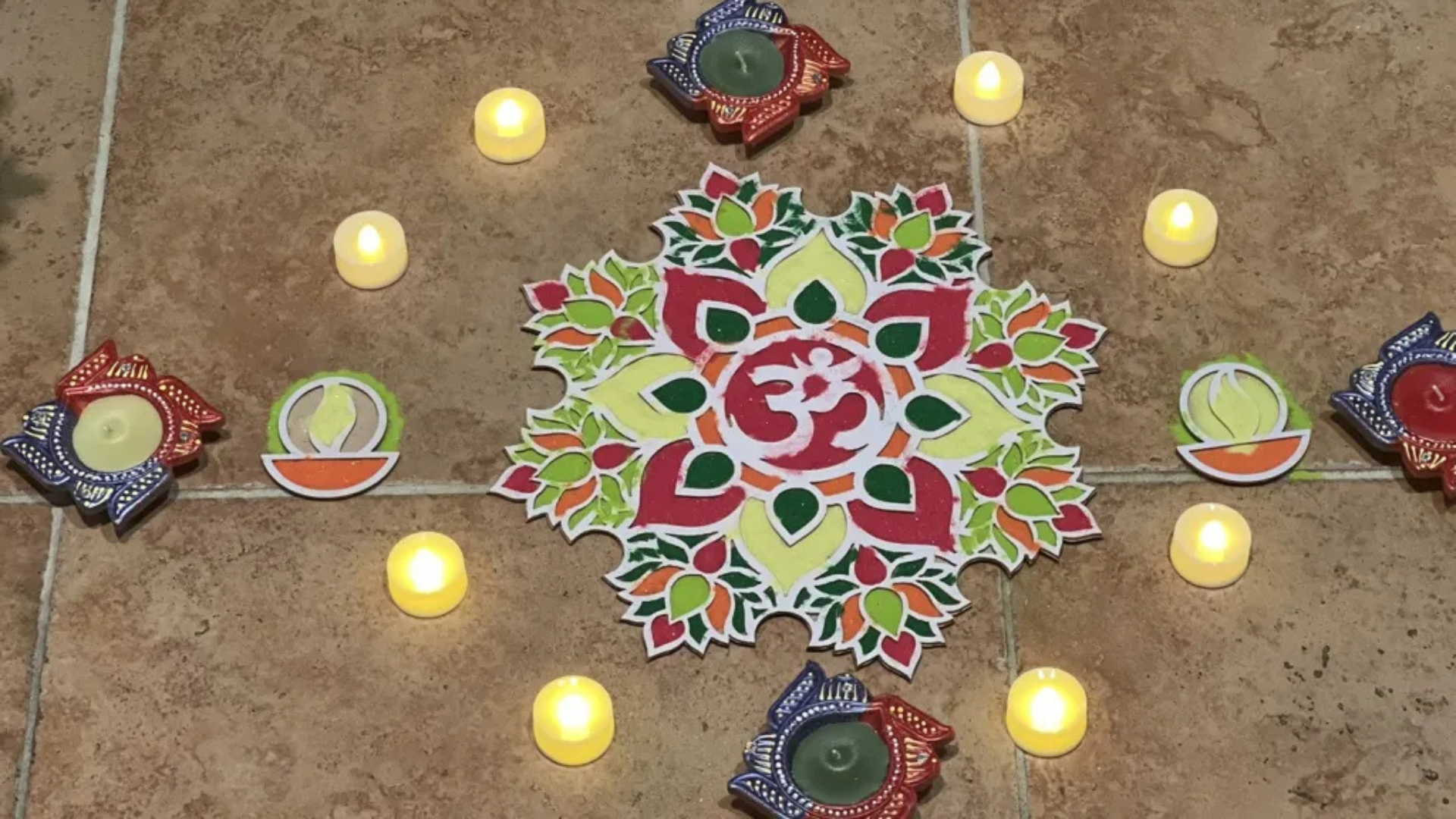
Rangoli, kolam and alpona are traditional Indian art forms that bring colour to homes and courtyards during the festive season. Beyond their decorative purpose, these intricate designs reflect cultural identity, creativity and a sense of belonging. Traditionally, rangolis were created using natural materials such as rice powder, wheat flour (atta) and lentils. These designs were also associated with feeding birds, insects and ants searching for food in the early morning hours, connecting household traditions with the surrounding environment. Kolam, particularly associated with southern India, is known for its geometric and symmetrical patterns. Often drawn using rice flour, these designs create delicate white patterns on the ground, combining precision with artistic expression. During Diwali, rangolis frequently feature marigold petals and other flowers, coloured powders, kumkum, turmeric (haldi), rice paste, geru, chuna and atta. These materials contribute to the vibrant appearance of festive decorations. The practice of creating rangolis at entrances and courtyards is widely associated with welcoming guests and symbolising auspiciousness. The designs also reflect regional traditions and the creative ways communities celebrate important occasions. As materials and artistic interpretations have evolved, traditional floor art continues to hold a place in India’s festive culture. These practices demonstrate how everyday spaces can become expressions of heritage, artistic imagination and community connections.





0 comments
No comments yet. Yours would be the first.