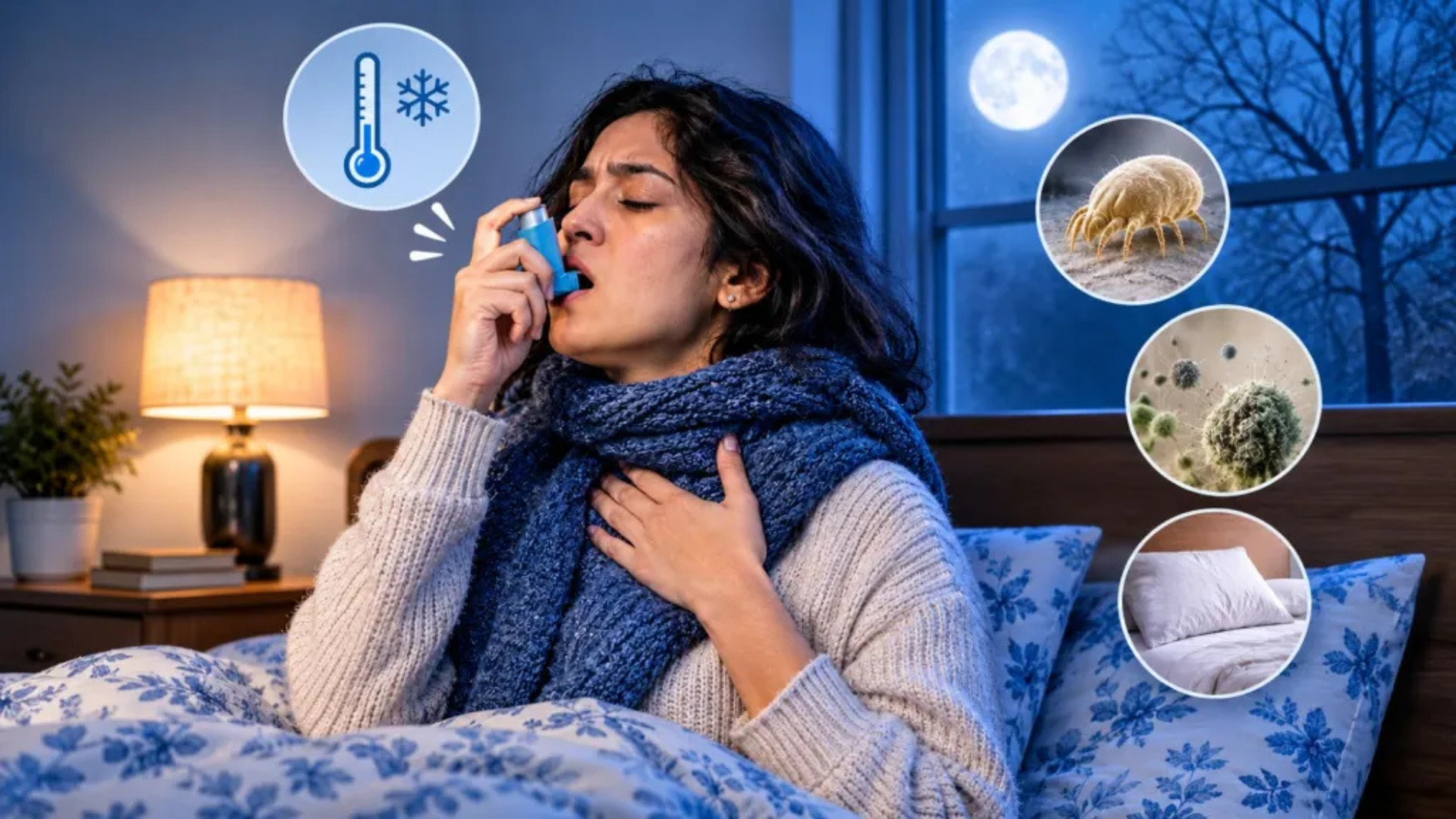
Wheezing, coughing and breathlessness can become more troublesome at night during winter, particularly among people with asthma. Cold air, indoor allergens and changes in the body’s biological rhythm may contribute to worsening symptoms and disrupted sleep. Dr Manisha Mendiratta, Director and Head of Pulmonology at Sarvodaya Hospital, Sector 8, Faridabad, explains that exposure to cold air can irritate the airways, causing them to narrow and triggering bronchospasm. This can make breathing difficult. Asthma symptoms commonly include wheezing, coughing, chest tightness and shortness of breath. Symptoms may worsen at night or in the early morning, and frequent nighttime episodes can indicate that asthma is not adequately controlled. Indoor triggers may also play a role. Dust mites, mould, smoke and other allergens can aggravate symptoms, particularly when people spend more time indoors during colder weather. People with asthma should take prescribed medicines as directed and keep their reliever inhaler accessible. Avoiding known triggers, keeping bedding clean and discussing persistent nighttime symptoms with a healthcare professional can help improve asthma management. When exposed to cold air, covering the nose and mouth loosely with a scarf and breathing through the nose may help warm the air before it reaches the airways. Patients should follow their personalised asthma action plan and seek medical advice if symptoms worsen or inhaler use increases. Nighttime wheezing should not be ignored. Severe breathing difficulty or symptoms that do not improve with prescribed rescue treatment require urgent medical attention.






0 comments
No comments yet. Yours would be the first.