
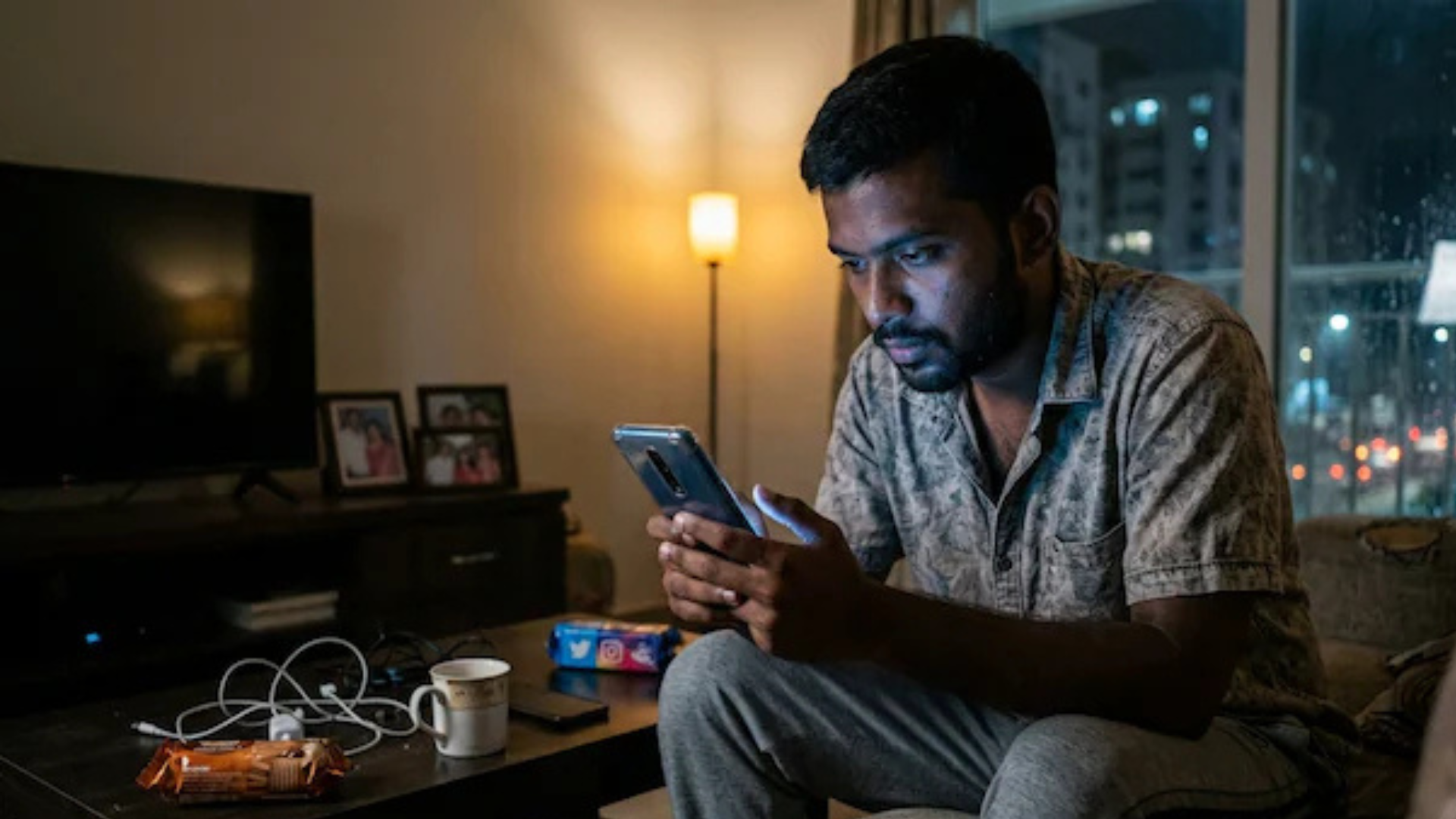
Late-night phone scrolling may do more than delay bedtime. Prolonged screen use can contribute to digital eye strain, with symptoms such as dry eyes, headaches, blurred vision and eye discomfort. However, it is important to distinguish temporary eye strain from permanent vision damage. Current evidence does not show that ordinary screen light causes permanent eye damage in humans.
Using a phone for long periods can make the eyes work harder, particularly when the device is held close. People also tend to blink less completely while concentrating on digital screens, which can reduce the spread of tears across the eye and contribute to dryness and irritation.
Night-time screen exposure can also affect sleep. Blue-enriched light can suppress the body's normal evening rise in melatonin and interfere with the timing of the sleep-wake cycle. Using a phone immediately before bed may therefore make it harder to fall asleep and maintain healthy sleep patterns.
Simple habits can reduce discomfort. Follow the 20-20-20 rule by looking at something about 20 feet away for 20 seconds every 20 minutes. Blink frequently, avoid holding the phone too close, reduce glare and keep the room comfortably lit rather than scrolling in complete darkness. Taking longer breaks during extended screen sessions can also help.
If eye pain, persistent blurred vision, significant dryness or other symptoms continue despite reducing screen strain, an eye-care professional can check for underlying vision or eye-health problems.





0 comments
No comments yet. Yours would be the first.