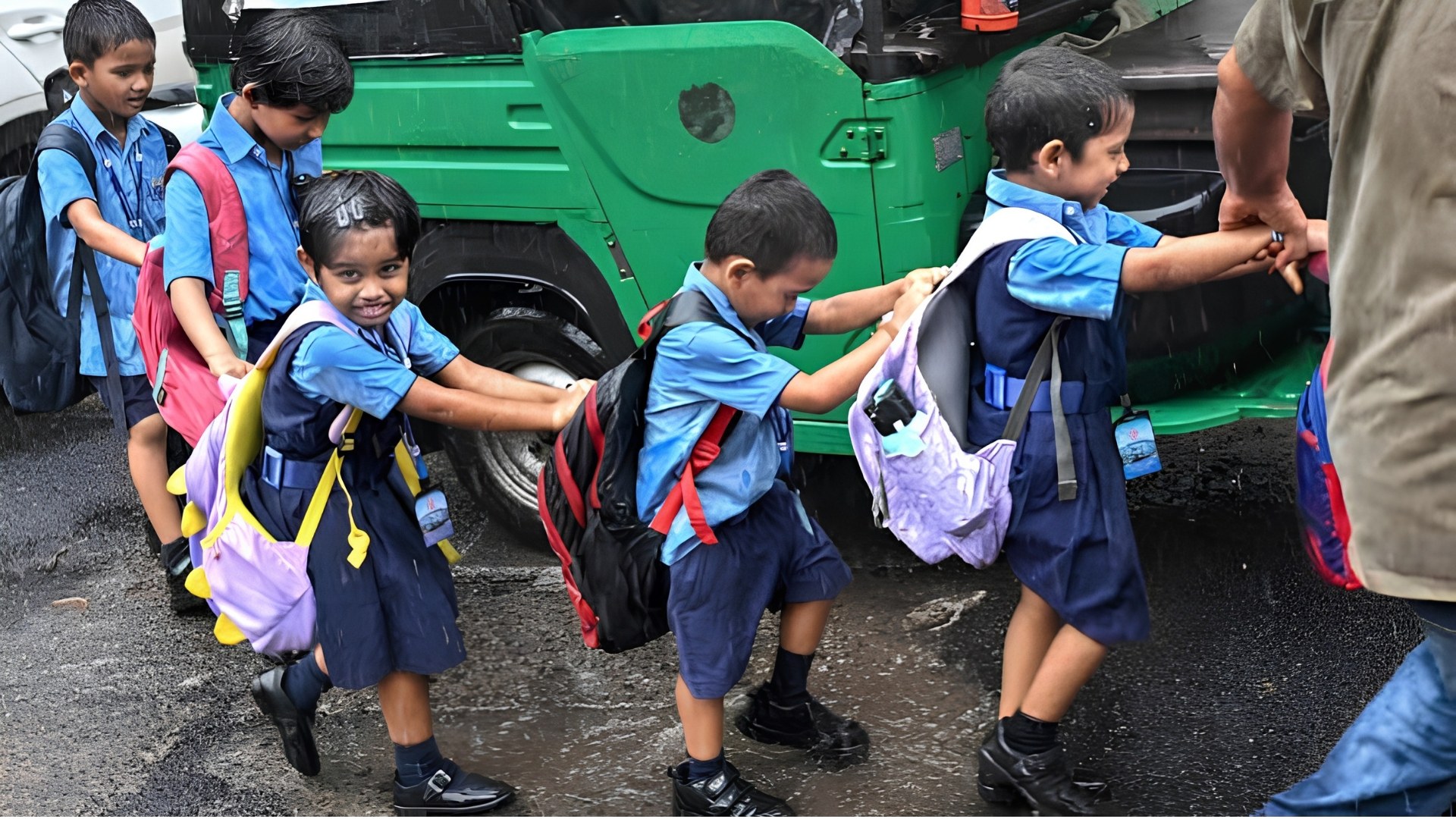
More than three out of five children aged between 6 and 14 in India travel over one kilometre to reach their educational institutions, according to the government’s first National Household Travel Survey (NHTS). Conducted by the National Statistics Office (NSO), the survey found that 60.6% of students in this age group travel beyond the one-kilometre mark, highlighting the distance many children cover to attend school.

The findings raise questions about access to nearby schools under the Right to Education (RTE) Act, 2009. Under the Central government’s rules, appropriate governments and local authorities are required to provide schools within walking distance of one kilometre for children in Classes 1 to 5. For students in Classes 6 to 8, the prescribed distance is within three kilometres.
The figures suggest that many students travel farther than the distance specified for primary school access. However, the overall statistic covers children aged 6 to 14 and does not, by itself, establish how many students exceed the applicable distance for their individual class levels.
The issue has also drawn attention to the challenges faced by children in villages where schools offering the required level of education are not available nearby. In August 2026, Tina Vaikunthe, a Class 9 student from Khetapur village in Nagpur district, Maharashtra, attracted widespread attention after documenting her daily seven-kilometre journey to school.
Her village does not have a school offering secondary education, meaning students must travel to Dongargaon to continue their studies. Following the circulation of her video on social media, the state government introduced a bus service to help ease the journey.
The case illustrates how the availability of schools at different educational levels can affect students’ daily travel, particularly in areas where secondary education facilities are limited.
The NHTS findings bring school accessibility into focus, as long commutes can create practical challenges for children and their families. The survey’s overall distance figure provides a national snapshot of student travel, while further breakdowns by class, location and school availability would help assess how closely access on the ground matches the requirements of the RTE Act.






0 comments
No comments yet. Yours would be the first.