
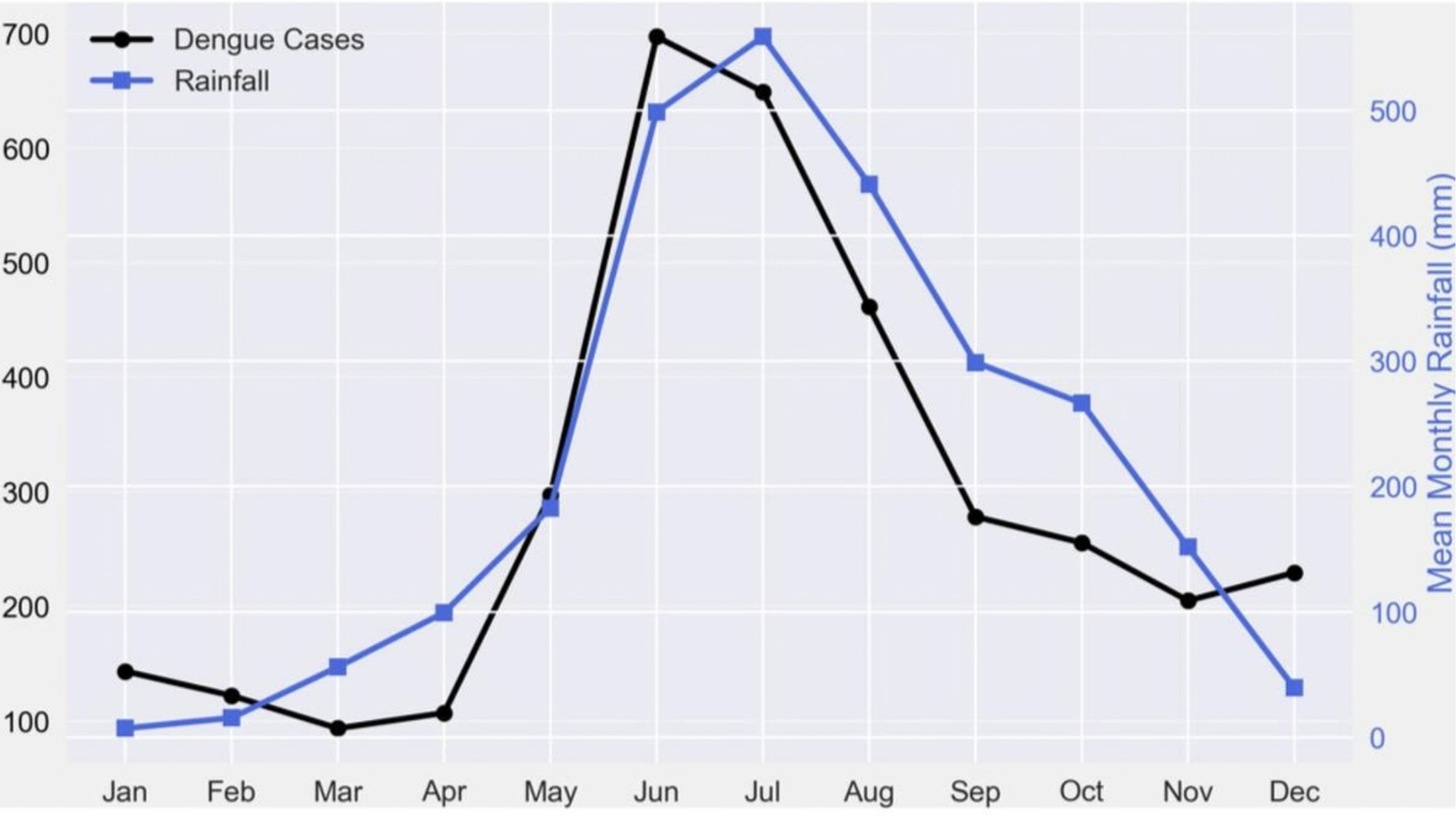
Climate change and changing monsoon patterns could increase the risk of dengue transmission in Kerala, with dengue cases potentially rising by 20% by 2040, according to a recent study.
Research from the Centre for Climate Change Research at the Indian Institute of Tropical Meteorology (IITM), Pune, examined the relationship between climate conditions and dengue transmission in the State.
The study, titled “Climate-informed dengue prediction and future risks under a changing monsoon climate in Keralam,” found a strong seasonal pattern in dengue cases. Nearly 60% of reported dengue cases occur during the southwest monsoon between June and September, broadly corresponding with the State’s rainfall cycle.
Researchers identified rainfall, humidity and the El Niño-Southern Oscillation (ENSO) as important factors influencing dengue transmission. Changes in atmospheric conditions during different phases of the monsoon can affect mosquito breeding and contribute to variations in local dengue risk.
Climate change could further influence these patterns by altering temperature, rainfall and humidity. Shifts in the timing, intensity and distribution of monsoon rainfall may create conditions that affect mosquito populations and dengue transmission.
The findings highlight the importance of monitoring weather patterns alongside disease trends, particularly during periods of increased rainfall.
Dengue is transmitted by infected Aedes mosquitoes, which can breed in containers and other places where water collects. Understanding how climatic conditions influence mosquito breeding could help strengthen early warning systems and public-health preparedness.
The study suggests that changing climate conditions could make dengue risk more difficult to manage in the coming decades, underlining the need for climate-informed disease surveillance and prevention strategies in Kerala.



0 comments
No comments yet. Yours would be the first.