
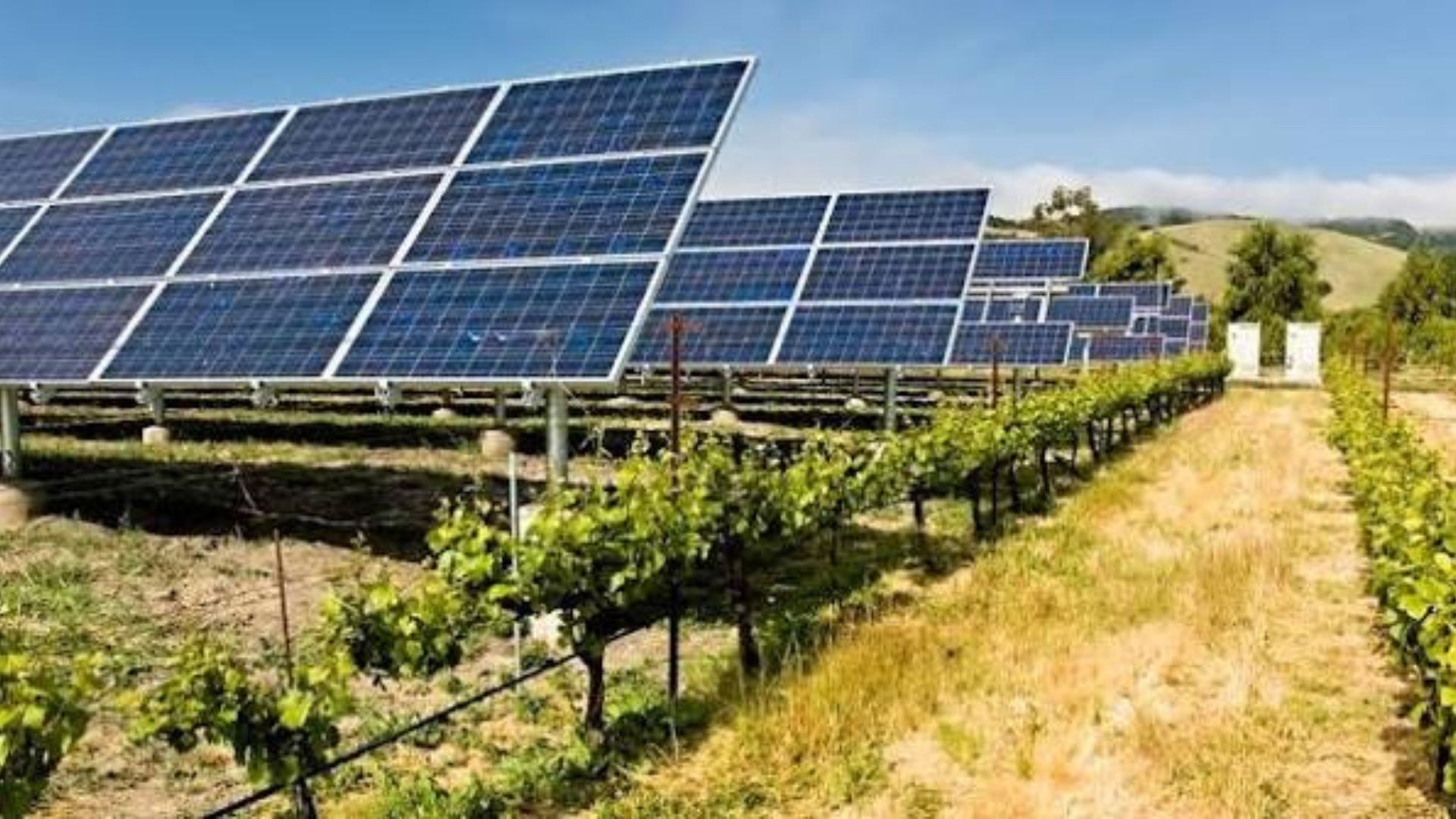
Agrivoltaics and global environmental regulations are emerging as important topics for understanding the link between agriculture, climate change, energy security and international trade. For UPSC Civil Services Mains aspirants, these issues offer an opportunity to connect environmental sustainability with India's economic and development priorities.

Agrivoltaics refers to the combined use of land for agriculture and solar power generation. Solar panels are installed above or alongside crops, allowing farmers to continue cultivation while producing renewable electricity. With careful planning, this approach can improve land-use efficiency, diversify farmers' income and reduce dependence on conventional energy sources.
In India, agrivoltaics could support climate-resilient agriculture by providing partial shade to selected crops, reducing heat stress and potentially limiting water loss in suitable conditions. Farmers may also earn additional income by supplying solar power. However, its success depends on crop selection, panel design, access to finance, maintenance and local climatic conditions. Poorly designed projects could reduce crop yields or exclude small farmers from the benefits.
The second issue concerns global green trade regulations, including environmental standards, carbon-related measures and requirements for sustainable production. These rules can create challenges for Indian exporters if they increase compliance costs or require new reporting systems. At the same time, they can encourage cleaner production, energy efficiency and improved supply-chain transparency.
India can turn these requirements into export opportunities by investing in renewable energy, supporting small and medium-sized businesses with compliance assistance, improving emissions measurement and promoting low-carbon manufacturing. Clear standards, accessible green finance and stronger certification systems could help Indian products compete in environmentally conscious markets.
For UPSC GS 3, the key is to balance opportunities with practical challenges. Agrivoltaics can connect clean energy with rural livelihoods, while green trade compliance can become a driver of innovation and export competitiveness if supported by inclusive policies and long-term investment.



0 comments
No comments yet. Yours would be the first.