
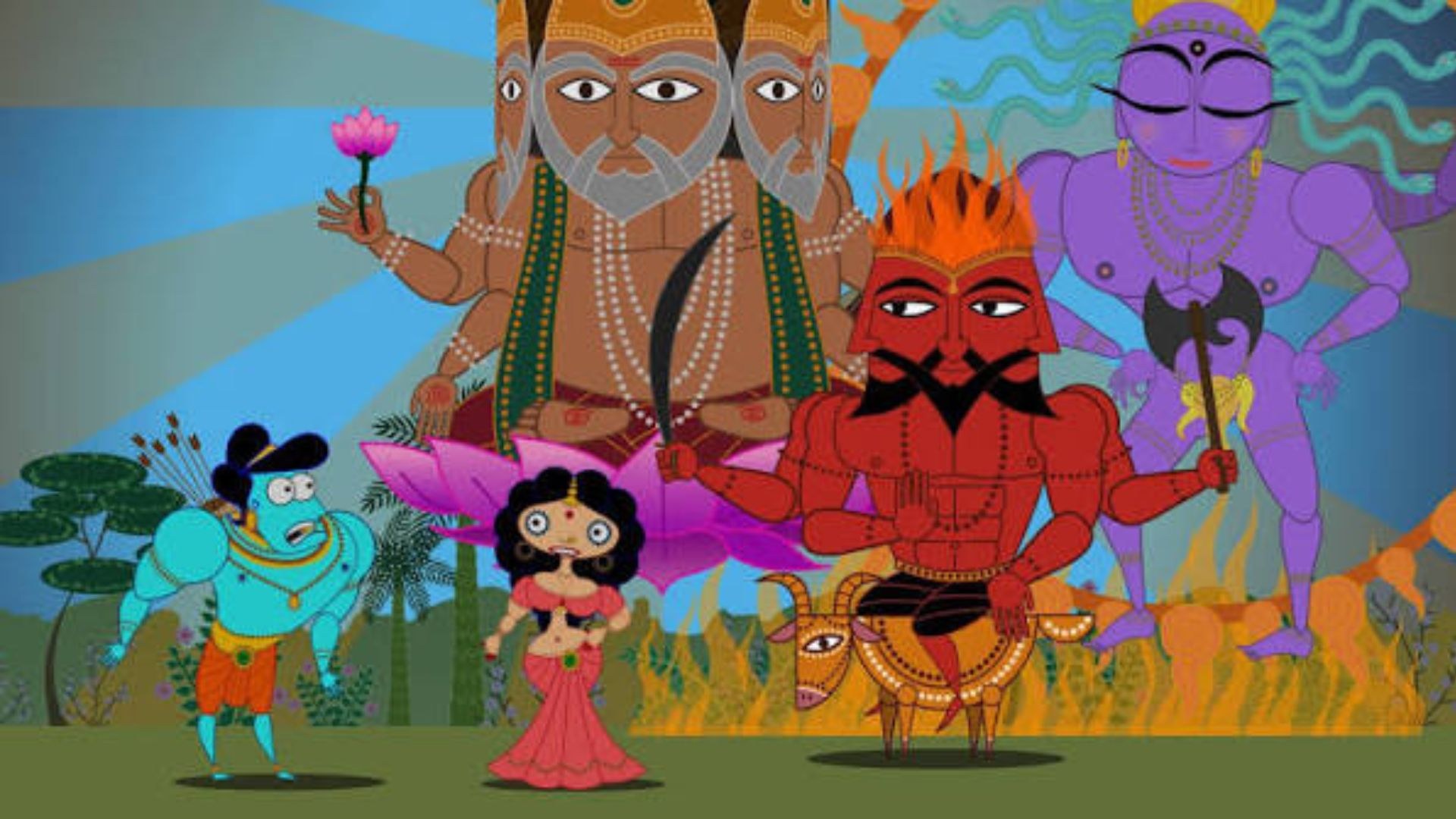
The Ramayana has inspired several memorable screen adaptations, from Ramanand Sagar’s much-loved television series to the Indo-Japanese animated film Ramayana: The Legend of Prince Rama. But not every retelling has received the same response. One adaptation that sparked protests was Sita Sings the Blues, an animated musical created by American artist Nina Paley in 2008.

Paley presented the film as a feminist retelling of the ancient epic, exploring themes of love, heartbreak and unequal treatment through Sita’s story. She also drew parallels between the mythological characters and experiences from her own life, giving the traditional narrative a personal and contemporary perspective.
The film uses a mix of visual styles, including vector graphics, Indian shadow puppetry and artwork inspired by Rajput and Pahari miniature paintings. Its scenes are accompanied by 1920s jazz recordings featuring singer Annette Hanshaw, creating an unusual combination of Indian mythology and American musical influences.
However, the creative approach proved controversial. Some Hindu groups objected to the film’s portrayal of Lord Ram and Sita, arguing that it misrepresented religious figures and hurt Hindu sentiments. Protests were reported at screenings, including one in San Jose, California, in August 2011. Critics particularly objected to scenes depicting Ram’s treatment of Sita. <em>(Source: The Times of India.)</em>
The controversy highlighted the challenges filmmakers face when reinterpreting religious epics through modern perspectives. While some viewers approached the film as an artistic exploration of gender and relationships, others viewed its portrayal of revered figures as disrespectful.
Unlike conventional commercial releases, Sita Sings the Blues was also made freely available online, helping it reach audiences beyond cinemas. The film remains an example of how creative freedom, feminist interpretation and religious sensitivities can collide when ancient stories are retold for contemporary audiences.


0 comments
No comments yet. Yours would be the first.