
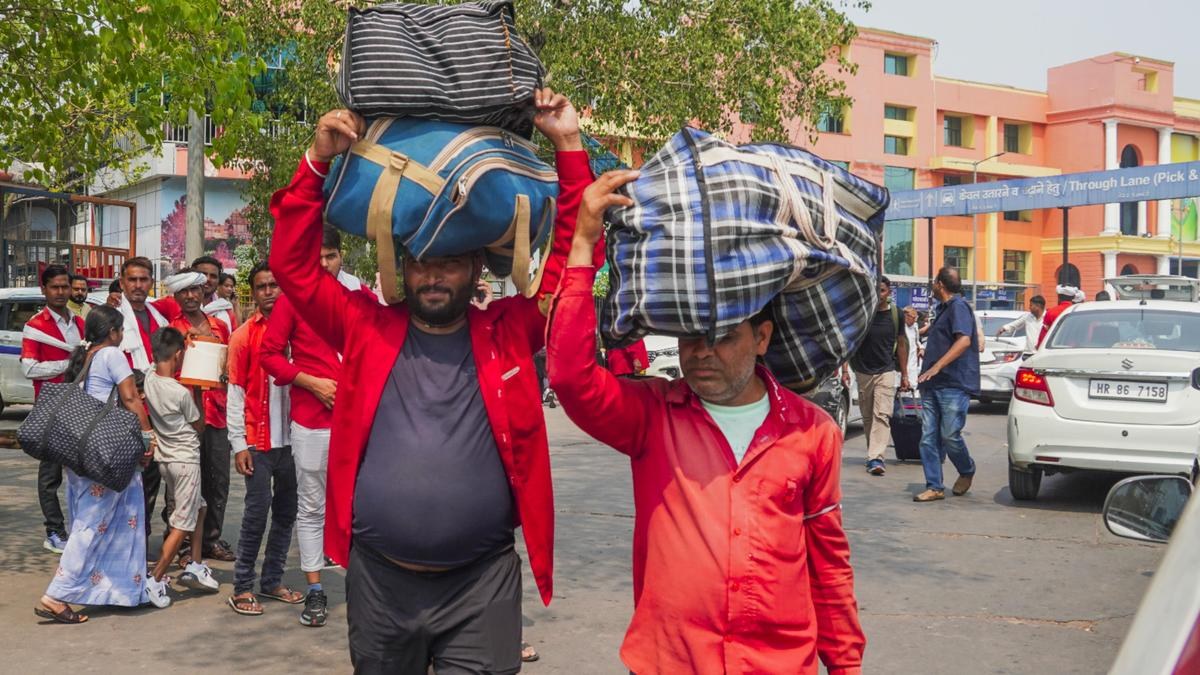
Railway modernisation in India is making travel more convenient for passengers, but it is creating serious challenges for traditional porters, commonly known as coolies. Across Uttar Pradesh, porters report declining earnings as passengers increasingly rely on wheeled suitcases, elevators, escalators and battery-powered vehicles to transport their luggage.

For generations, railway porters have played an important role in helping passengers carry bags and parcels through crowded stations. However, improvements in station infrastructure and changing passenger preferences are reducing the demand for their services.
Umesh Maurya, a porter at Lucknow’s Charbagh Railway Station, says his profession no longer provides enough income to support his family. Having worked in the occupation for 12 years, he is now considering buying an electric auto-rickshaw to find an alternative source of livelihood.
Maurya explained that his father had also worked as a porter for more than 40 years. When he began his career, he regularly assisted three to four passengers daily and earned over ₹600 a day. Today, he struggles to find even one passenger on some days.
According to Maurya, his income has fallen by around 50% amid rising inflation, making it increasingly difficult to manage household expenses for his family of four.
The introduction of ramps, lifts, escalators and battery-operated transport has improved accessibility and convenience for railway passengers. However, these developments have also reduced the need for manual luggage assistance.
The situation highlights the economic challenges faced by workers whose traditional livelihoods are affected by technological progress.
As Indian Railways continues to modernise stations and improve passenger facilities, the declining income of porters raises questions about alternative employment opportunities and support for workers adapting to these changes.


0 comments
No comments yet. Yours would be the first.