
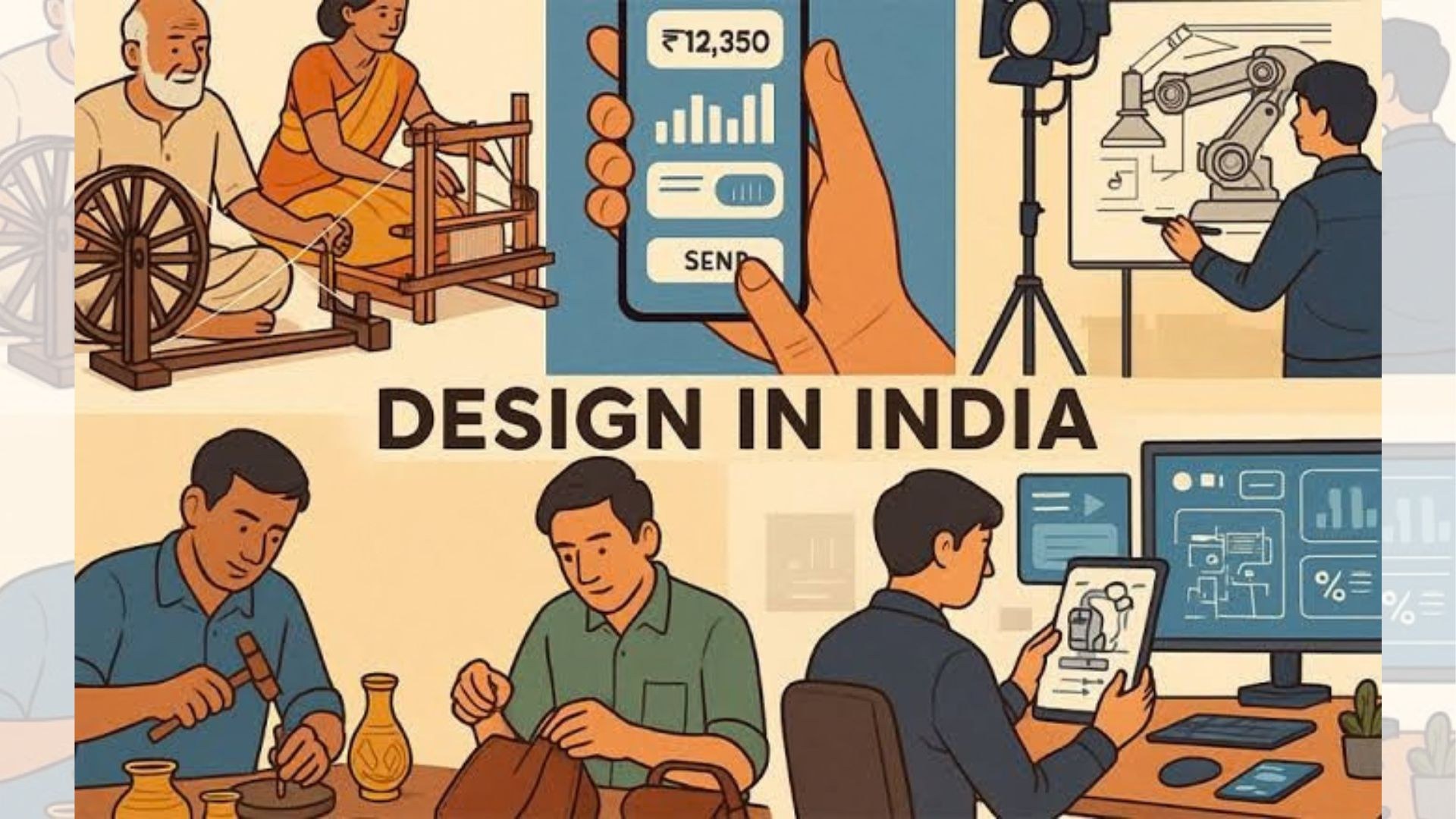
Indian design is increasingly drawing from the country’s cultural heritage, creating fresh opportunities across fashion, product design, graphics, automobiles, animation and interiors.

A prominent example comes from fashion designer Rahul Mishra, whose collection “Devi: The Eternal Muse” showcased ancient Indian temple-inspired forms at Paris Haute Couture Week. The collection used raised, three-dimensional embroidery not simply as surface decoration but as a structural element of the garments.
This approach reflects a broader shift in the Indian design industry, where traditional art, architecture, materials and cultural practices are being explored as sources of contemporary design ideas.
The movement extends beyond fashion. Indian designers in product and industrial design are increasingly examining indigenous materials, craftsmanship and everyday objects for inspiration. In the automotive sector, Royal Enfield’s design language demonstrates how elements such as mechanical simplicity and an upright motorcycle stance have been developed into a distinctive global identity.
Graphic designers, animators and interior designers are similarly incorporating Indian visual traditions, regional crafts, architecture and cultural motifs into contemporary work.
The growing interest in culturally rooted design could create new career paths for professionals who combine creative skills with an understanding of Indian heritage. Opportunities may emerge in areas such as sustainable product development, craft-led design, fashion, visual communication, animation, automotive design and experiential interiors.
As Indian design gains greater international visibility, the country’s cultural diversity could become an increasingly important source of creative innovation and professional opportunities.

0 comments
No comments yet. Yours would be the first.