
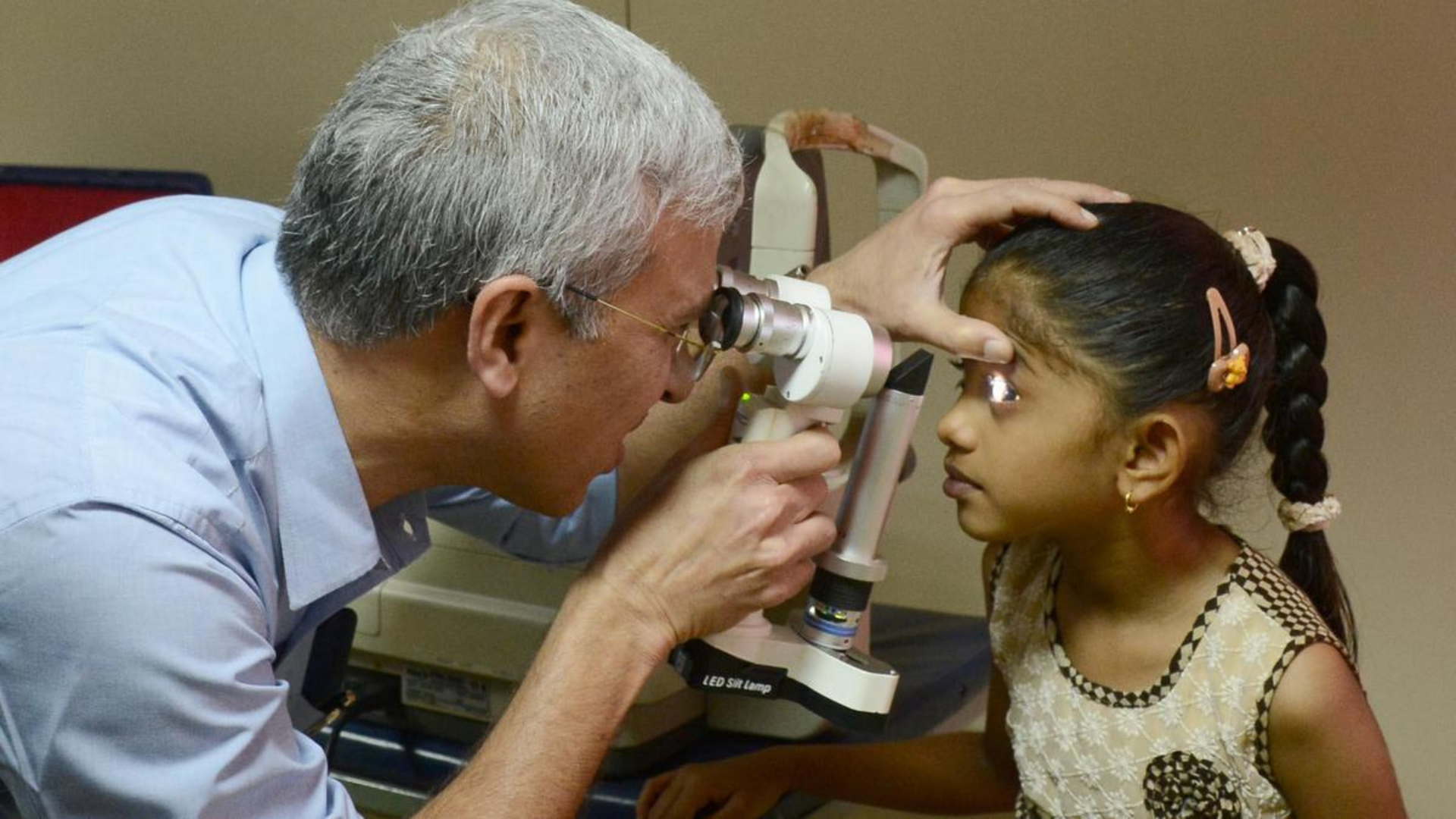
Early detection of eye conditions in children remains a major public health priority in India, where gaps in screening and timely treatment can lead to preventable vision loss.
The World Health Organization estimates that around 19 million children worldwide have visual impairment, including approximately 1.4 million who are blind. India is estimated to have around three lakh blind children, with many cases linked to conditions that may be preventable or treatable when identified early.
India already has several systems that could help protect children’s vision, including frontline health workers, immunisation services, school health programmes and primary and specialist healthcare facilities. The challenge is to connect these services so that children receive timely screening, diagnosis and treatment.
Eye conditions can develop early in life and may affect a child’s learning, development and quality of life. Some conditions require prompt specialist care, while refractive errors may be addressed through appropriate assessment and corrective lenses. Delays in identifying serious eye diseases can increase the risk of lasting visual impairment.
Government initiatives such as the Rashtriya Bal Swasthya Karyakram provide screening and referral services for children from birth to 18 years. Strengthening links between these programmes and eye-care specialists could help ensure that children identified during routine health checks receive appropriate follow-up.
Schools and community health centres can also play an important role by identifying possible vision problems and guiding families towards professional assessment. Parents and caregivers need clear information about warning signs and the importance of timely eye examinations.
Improving childhood eye care requires more than occasional screening camps. Better coordination, reliable referrals, trained personnel and accessible treatment can help turn routine contact with health services into an opportunity to protect every child’s vision.


0 comments
No comments yet. Yours would be the first.