
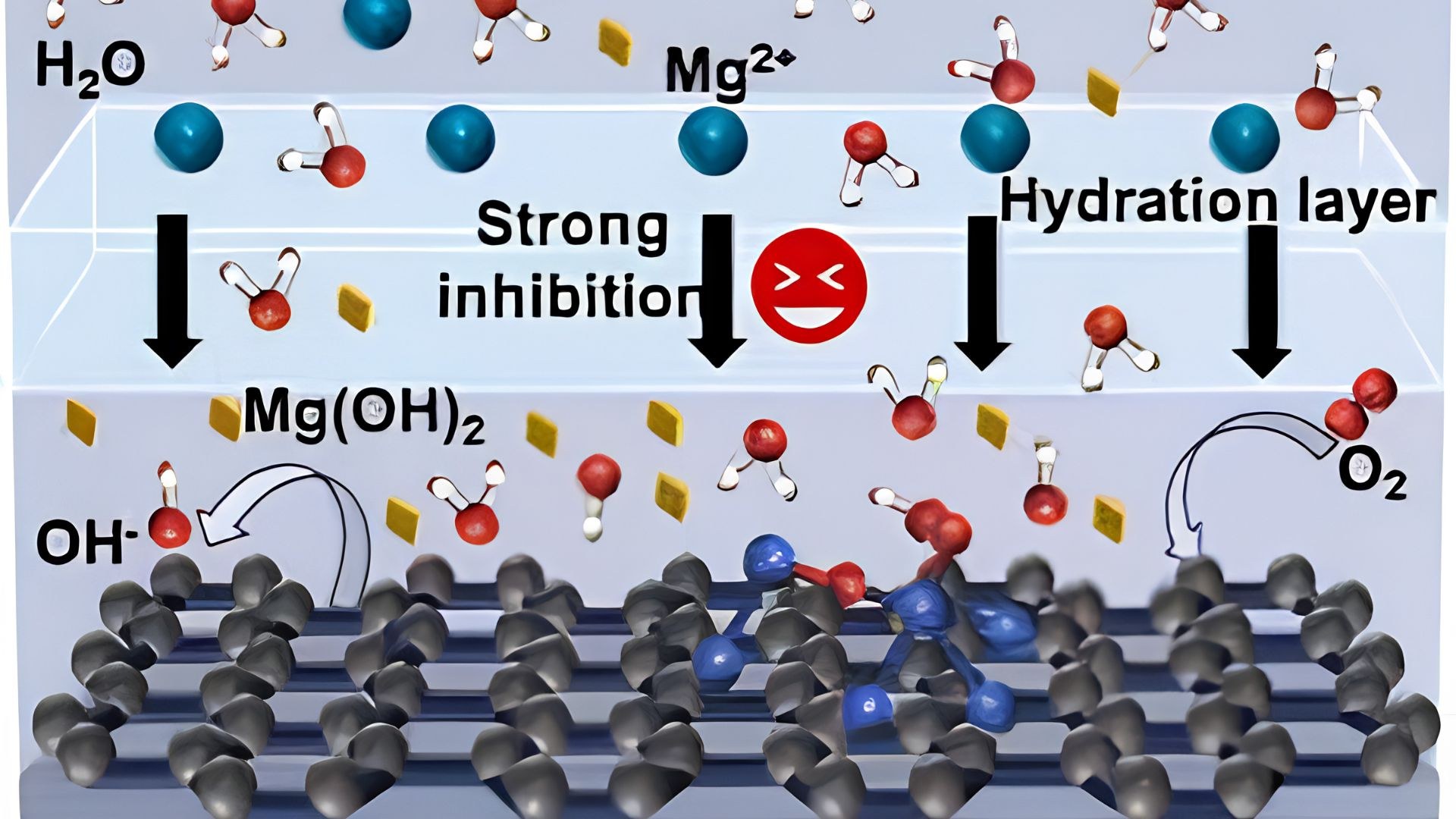
Cooling water to temperatures near its freezing point could help catalysts last longer during water oxidation, according to a study published in Nature Chemistry in 2026. The research explores how temperature control can address a common challenge in electrocatalysis: improving reaction activity without sacrificing catalyst stability.

The study focused on manganese dioxide used in the oxygen evolution reaction, a process that helps drive water splitting in electrochemical systems. Although lower temperatures generally slow chemical reactions, the researchers found that cooling the system suppressed catalyst degradation more effectively than it reduced the desired reaction rate.
One major source of degradation was the formation of permanganate, a chemical species that can contribute to the breakdown of the manganese-based catalyst. Near the freezing point of water, this unwanted process was suppressed, extending the catalyst’s lifetime.
However, the researchers found that cooling below 0°C increased permanganate formation again. This unusual temperature response, described as anti-Arrhenius behaviour under subzero conditions, was linked to electrolyte supercooling. The findings suggest that the relationship between temperature and catalyst performance is more complex than simply assuming colder conditions always improve stability.
The results point to temperature regulation as a potential way to improve the durability of electrochemical systems. The approach could be relevant to technologies operating in cold climates, polar environments and potentially extraterrestrial settings.
Further research will be needed to determine how broadly the findings apply to other catalysts and practical devices. For now, the study highlights how carefully controlling temperature near 0°C may help balance performance and durability in water oxidation.




0 comments
No comments yet. Yours would be the first.