
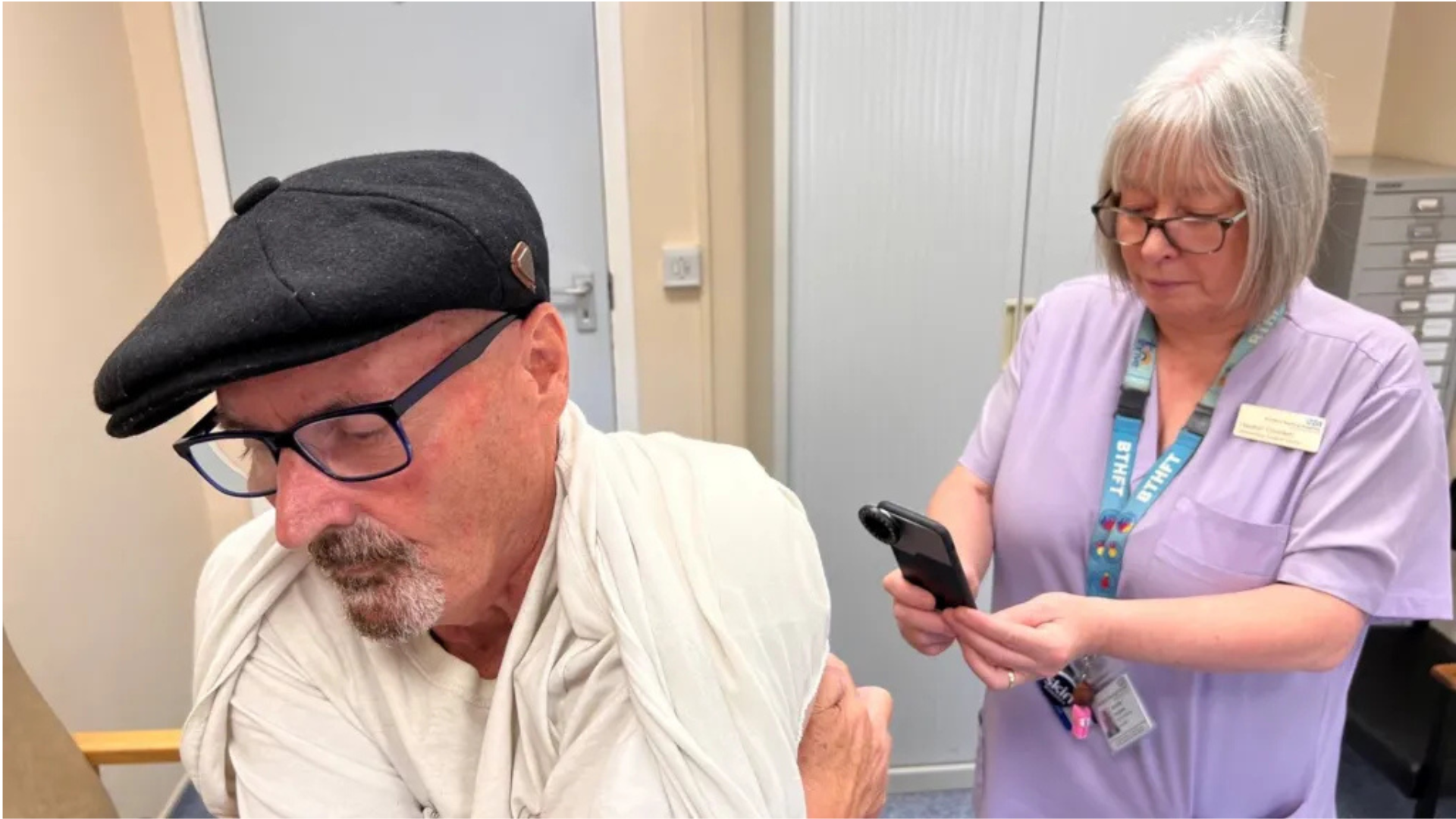
An NHS dermatology clinic in Bradford is using artificial intelligence to assess suspicious skin lesions, with staff saying the technology is helping reduce waiting times and increase the number of patients seen during each clinic session.
The system, called DERM, was introduced at St Luke’s Hospital in April. Healthcare assistants take images of suspicious moles or lesions and upload them to the AI system, which analyses the images within minutes. Patients whose lesions are assessed as benign can receive advice and be discharged, while those flagged as potentially serious are referred for specialist assessment.
The clinic can now reportedly see 32 patients during a session, compared with 24 before the AI system was introduced. Consultant plastic surgeon Zakir Shariff described the technology as having a significant impact on waiting times and unnecessary procedures.
DERM is developed by Skin Analytics and is designed to assess lesions for possible melanoma and other skin cancers. The company currently reports a 99.9% negative predictive value for melanoma, meaning it correctly rules out melanoma in 999 out of every 1,000 cases it identifies as negative.
NICE has conditionally recommended DERM for early use in NHS secondary-care skin cancer pathways while additional evidence is collected. The guidance also includes specific requirements for certain patients, including dermatologist review for people with Fitzpatrick skin types V and VI.
The technology is intended to support faster triage rather than replace specialist care, with suspicious cases continuing through appropriate clinical pathways.



0 comments
No comments yet. Yours would be the first.