
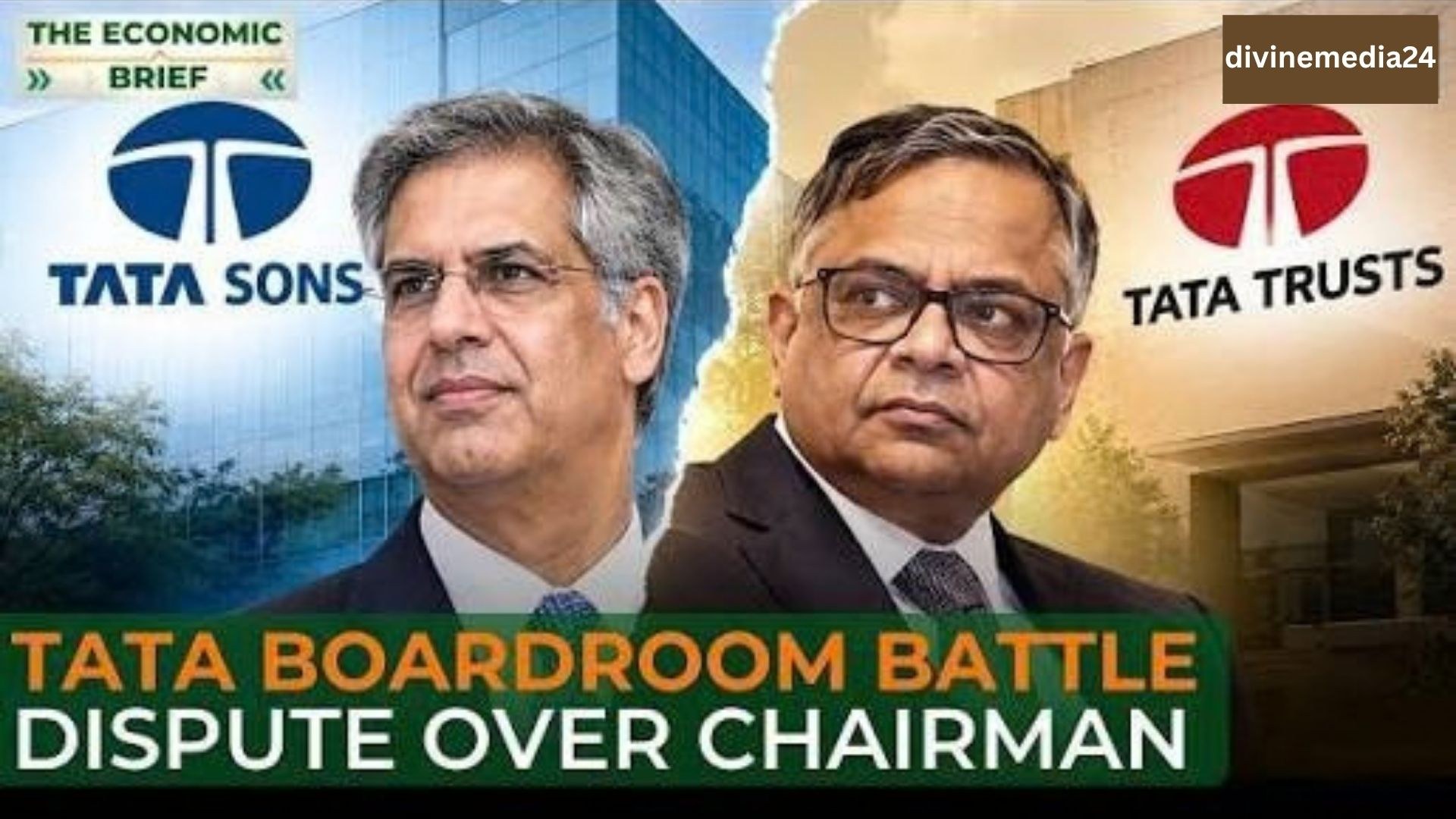
Two years after Ratan Tata’s death, a leadership dispute at the Tata Group’s holding company, Tata Sons, is raising important questions about corporate governance, succession and the balance of power within one of India’s largest business conglomerates.

At the centre of the dispute are N. Chandrasekaran, Chairman of Tata Sons, and Noel Tata, Chairman of Tata Trusts. The disagreement could influence the group’s future leadership, ownership structure and long-term strategic direction.
Tata Trusts’ Ownership Adds to the Complexity
Tata Trusts holds approximately 66% of Tata Sons, the unlisted holding company that oversees the Tata Group’s diverse businesses. However, its representation on the Tata Sons board is smaller than its ownership stake, creating a complex relationship between shareholder influence and board authority.
The structure has become a key factor in the ongoing disagreement over Chandrasekaran’s leadership and the company’s future.
Leadership and Listing Under Debate
According to reports, Chandrasekaran was reappointed by the Tata Sons board after initially not offering himself for another term. The decision reportedly faced opposition from Noel Tata, highlighting differences over the group’s leadership succession.
The potential listing of Tata Sons has also emerged as a contentious issue. A public listing could significantly change the holding company’s ownership and disclosure framework, while its current unlisted status preserves the existing structure.
Why the Dispute Matters to Business
The outcome could have implications for the governance of the wider Tata Group, its strategic decision-making and its relationship with shareholders. The disagreement may also raise legal questions about the authority of a company’s board when its largest shareholder objects to a decision.
With the dispute unresolved, the leadership transition at Tata Sons remains a significant corporate development to watch.


0 comments
No comments yet. Yours would be the first.