
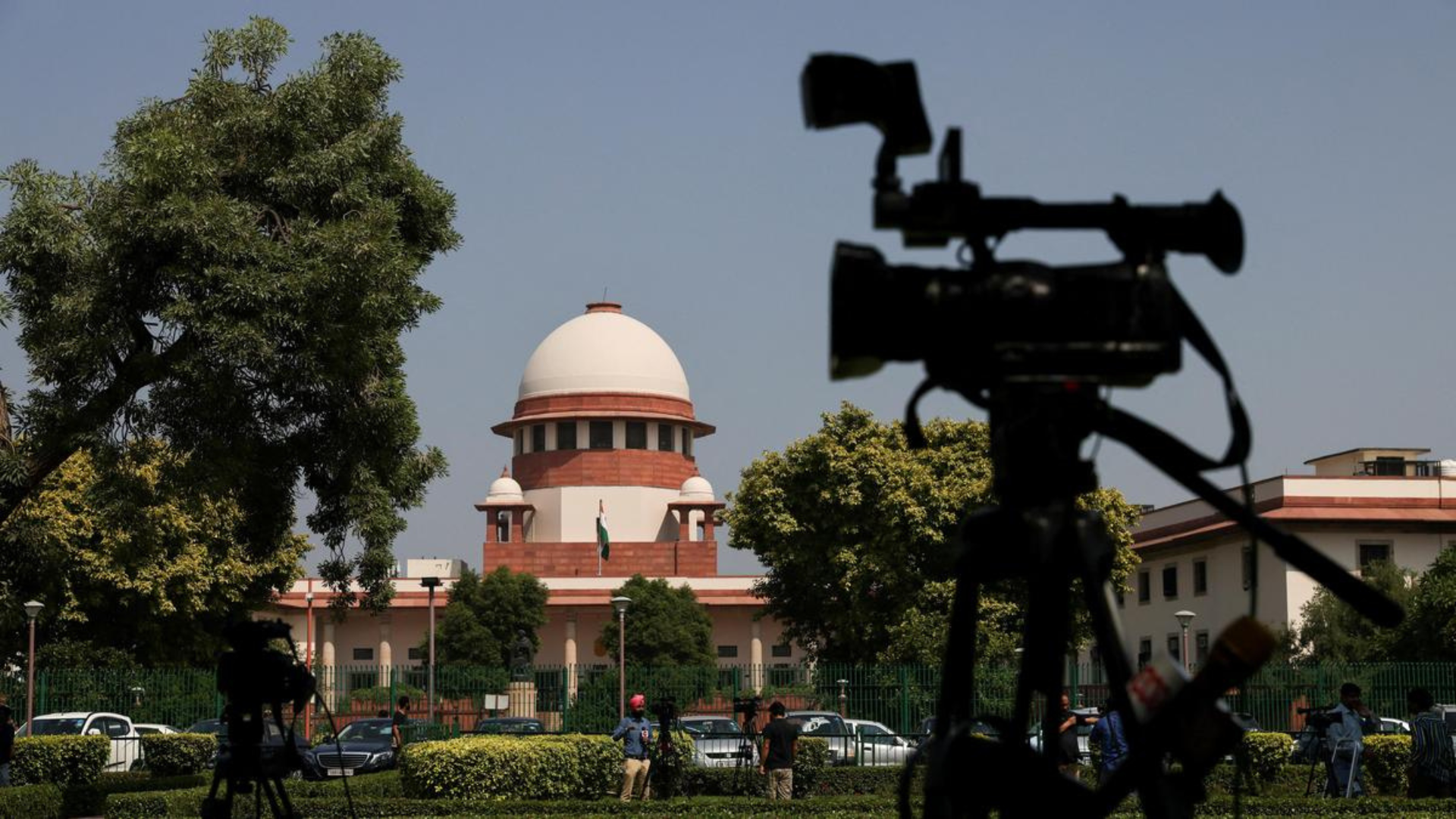
The Supreme Court of India on Friday dismissed a Public Interest Litigation (PIL) seeking directions to establish a database of individuals who allegedly file repeated complaints of sexual offences. The Bench raised concerns that maintaining such records could compromise the identities and privacy of victims.

A Bench comprising Chief Justice Surya Kant and Justices Joymalya Bagchi and V. Mohana rejected the petition filed by Shonee Kapoor against the Centre, the Delhi government and the Delhi Police Commissioner.
During the hearing, the court observed that every individual has the right to lodge a complaint, regardless of the number of complaints filed. Justice Joymalya Bagchi stated that the law already provides consequences in cases involving false complaints.
"Everyone has a right to file a complaint, even a hundred complaints. If it is a false complaint, consequences will follow," Justice Bagchi observed.
The petitioner had sought directions for establishing a structured database at police headquarters in every district to identify individuals allegedly filing repeated complaints. The petitioner's counsel clarified that the proposed database would cover complainants rather than accused persons.
However, the Bench questioned the necessity of such a mechanism, pointing out that it could create serious risks concerning victims' identities. Justice Bagchi highlighted the existing legal safeguards for protecting victims' privacy.
The court also referred to established investigation procedures, including medical examinations, DNA profiling wherever applicable, and recording victims' statements before a magistrate.
Questioning what additional identification information investigating agencies would require, Justice Bagchi asked, "What better identification data can the investigating agency maintain?"
Following these observations, the Supreme Court dismissed the PIL.
Editorial Disclosure:The report is based on information published by PTI and other available news reports. Statements and observations made during court proceedings have been attributed to the concerned judges and parties.




0 comments
No comments yet. Yours would be the first.