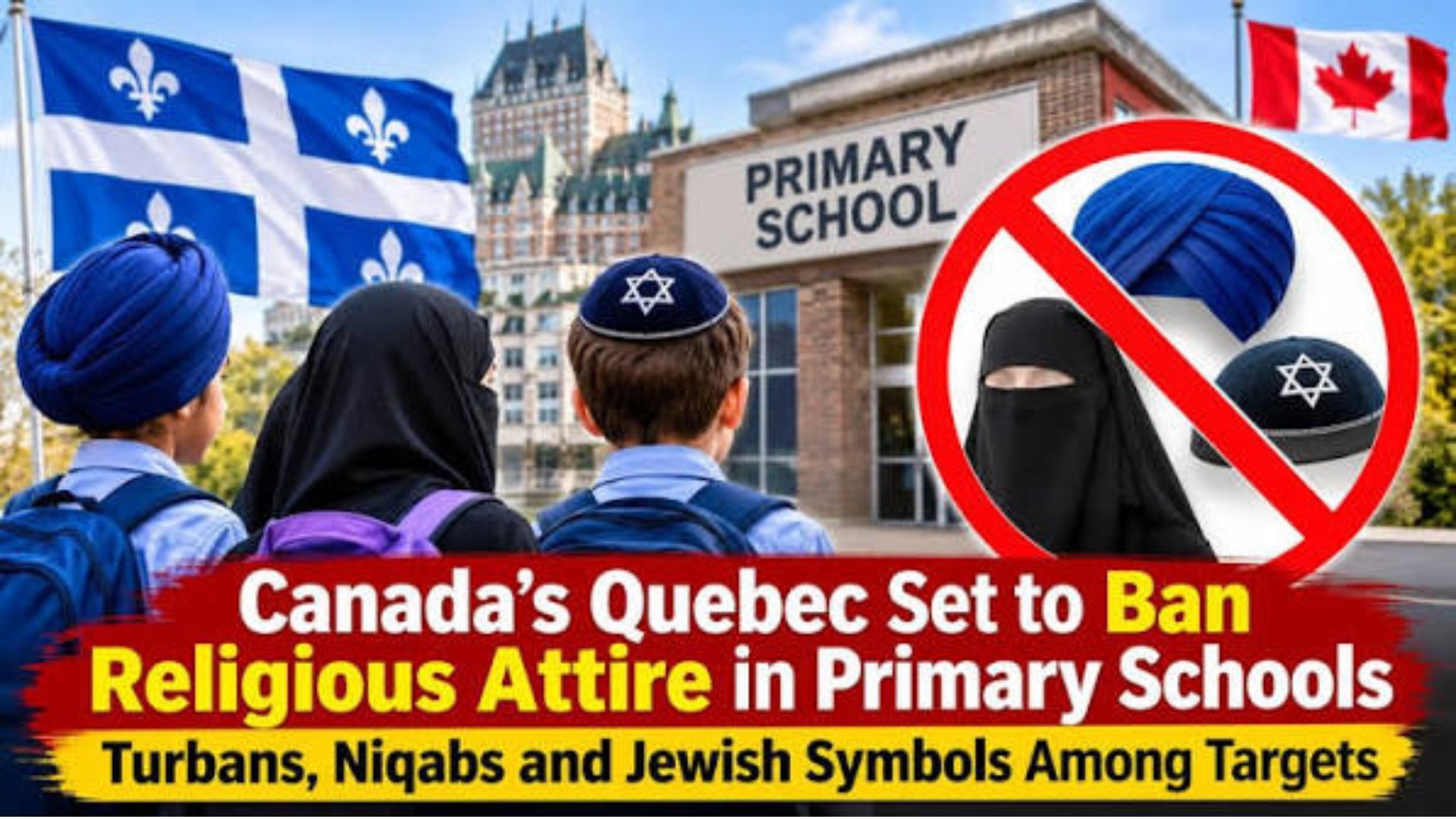
Quebec’s newly elected Parti Québécois government plans to prohibit students in elementary schools from wearing visible religious attire, including Sikh turbans and Muslim niqabs. The proposed restriction would extend the Canadian province’s existing limits on religious expression and has raised concerns about its impact on children from minority faith communities.

The party included the proposed ban on overt religious symbols in its platform for the provincial election held in October 2026. Quebec Education Minister Joël Arseneau has indicated that the government intends to move ahead with the commitment.
The proposal follows years of efforts by successive Quebec governments to strengthen secularism in public institutions. In 2019, the previous Coalition Avenir Québec government introduced a controversial secularism law that barred certain public servants in positions of authority from wearing visible religious symbols. The restrictions cover roles including teachers, school principals, vice-principals, police officers and judges.
The law has faced legal challenges and is currently before Canada’s Supreme Court, according to the supplied report.
In April, the previous government introduced additional restrictions affecting religious practices in public universities, government-subsidised private institutions and daycare centres. The measures also restricted collective religious activities on roads and in parks.
The latest proposal has drawn criticism from civil liberties advocates. Anaïs Bussières McNicoll, a spokesperson and Director of Fundamental Freedoms at the Canadian Civil Liberties Association, argued that extending restrictions to children could promote exclusion rather than address a clearly established problem.
The debate places religious freedom, public-sector secularism and the rights of children at the centre of Quebec’s education policy. Sikh, Muslim and Jewish communities are among those likely to be affected by restrictions on visible religious expression.
The proposal’s final scope, implementation timeline and any exemptions will depend on the government’s next steps and the details of any legislation introduced.


0 comments
No comments yet. Yours would be the first.