
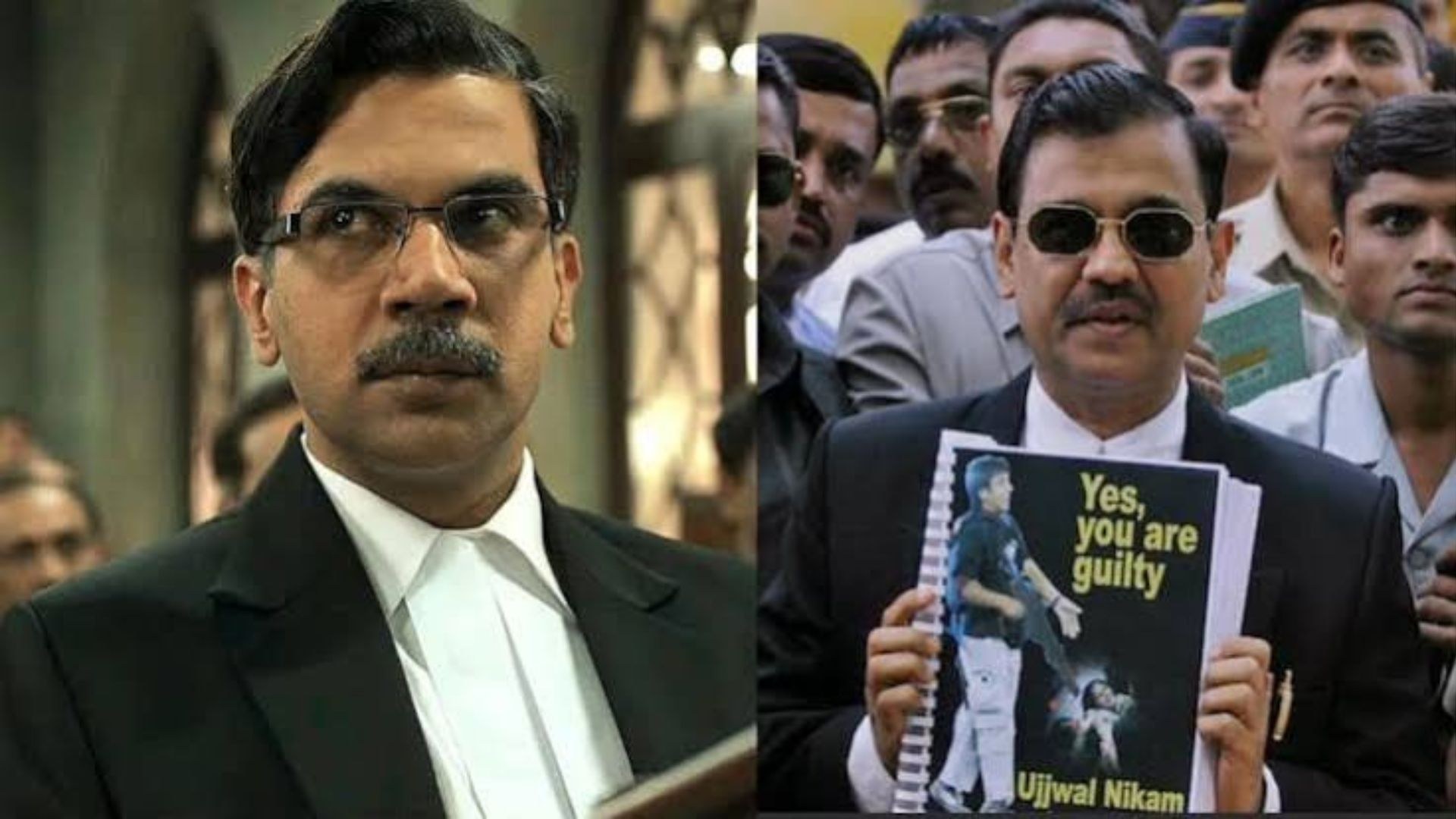
Rajkummar Rao brings determination and sincerity to his portrayal of special public prosecutor Ujjwal Nikam in Prahaar: The Untold Story of Ujjwal Nikam. The film revisits the legal battle against Ajmal Kasab, the terrorist captured alive during the November 26, 2008, Mumbai attacks. While the subject carries enormous historical and emotional weight, the film reportedly struggles to move beyond a predictable courtroom-drama formula.

Nikam played a significant role in prosecuting Kasab, whose capture and subsequent trial became central to the legal proceedings following the attacks. The film focuses on the painstaking work involved in building the case and presenting evidence in court, bringing the legal process into the spotlight alongside the horrific events that shook Mumbai.
Rao’s performance is one of the film’s key strengths. His portrayal of Nikam conveys the prosecutor’s persistence and commitment to the case. Rather than relying entirely on dramatic gestures, the performance brings a sense of seriousness to a character whose work demanded patience, attention to detail and determination.
The courtroom sequences feature defence lawyer Abbas Kazmi, played by Sikander Kher, challenging the prosecution’s case under the watch of a judge portrayed by Ashish Vidyarthi. These scenes recreate the legal contest at the centre of the story, highlighting the opposing arguments and the process through which the prosecution sought to establish Kasab’s guilt.
The film also revisits the night of the Mumbai attacks, when a terrorist group carried out coordinated assaults across the city. Recreating such a traumatic event presents a considerable challenge for any filmmaker, particularly when the events remain deeply embedded in public memory.
One of the film’s notable choices is its refusal to reduce the tragedy to a religious divide. Instead, the story frames the attacks as a crime against humanity, keeping the focus on the violence, the victims and the pursuit of justice. This approach gives the subject a broader moral perspective and avoids making religious identity the central lens through which the events are understood.
However, the film’s execution reportedly remains conventional. Both the recreation of the attacks and the courtroom proceedings follow familiar dramatic patterns, limiting the impact of a story that could have offered a more distinctive examination of the investigation and trial.
Ultimately, Prahaar benefits from Rajkummar Rao’s committed performance and the importance of the case it portrays. Yet its predictable storytelling prevents it from fully realising the potential of its subject. For viewers interested in the legal history of the 26/11 attacks and the work of Ujjwal Nikam, the film offers a dramatised retelling, even if it does not consistently rise above familiar biographical and courtroom conventions.


0 comments
No comments yet. Yours would be the first.