
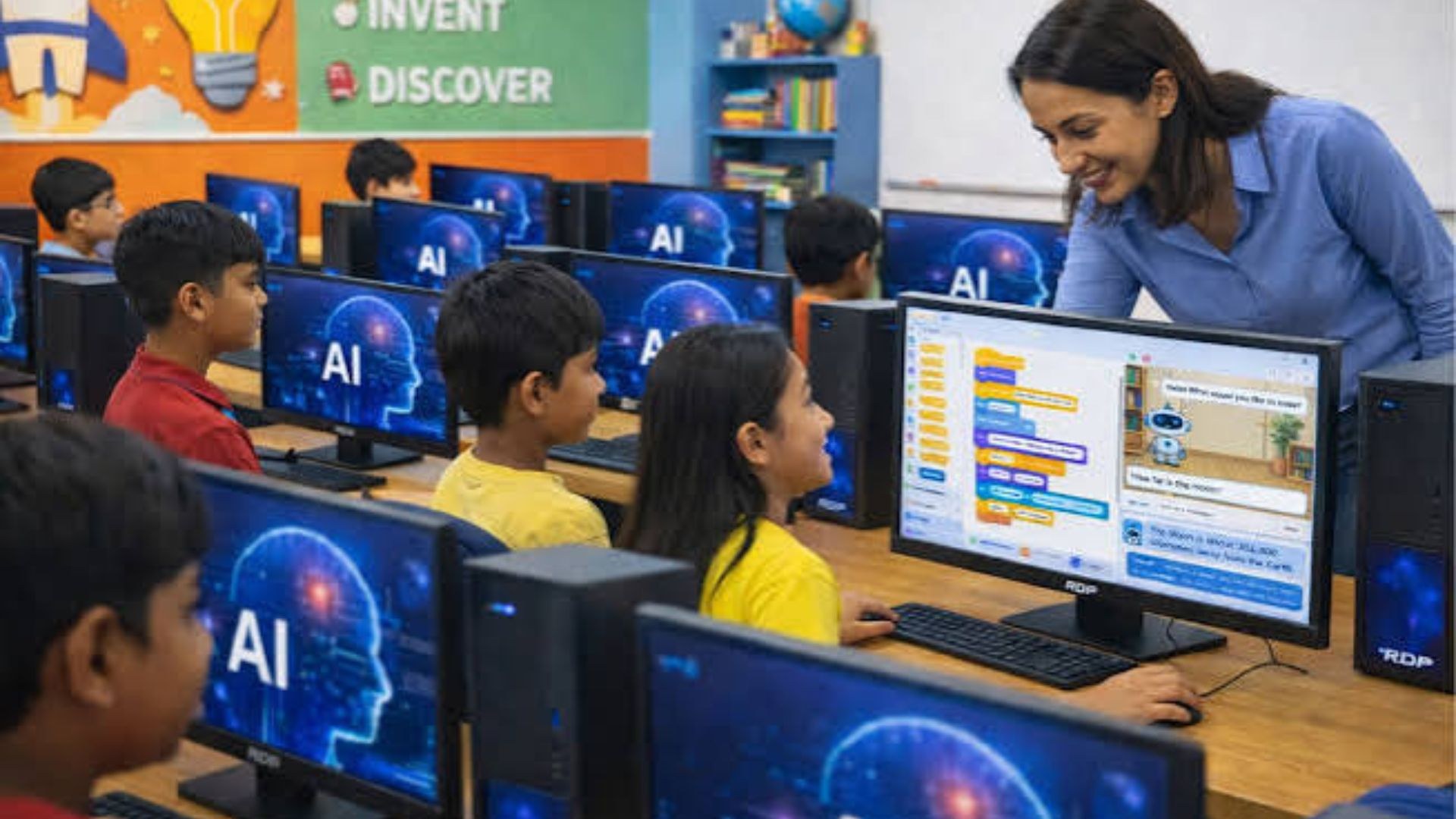
The National Council of Educational Research and Training (NCERT) has developed an introductory module on Computational Thinking (CT) and Artificial Intelligence (AI) for students in Classes 9 to 12. The initiative aligns with the vision of the National Education Policy (NEP) 2020 and aims to help secondary school students understand emerging technologies.

According to an official release, the module is designed for students with no previous knowledge of AI. It introduces computational thinking as a systematic way to solve problems while explaining how artificial intelligence works, where it is used, and what its possibilities and limitations are.
The learning material focuses on critical thinking, creativity, problem-solving and the responsible use of technology. It also highlights the ethical and safety concerns associated with AI, including data privacy, misinformation, fairness and digital security. Students will be encouraged to verify AI-generated information critically rather than accepting it without question.
NCERT has adopted an activity-based approach that includes discussions, practical exercises, experimentation and reflection. The activities can be carried out with or without digital devices, allowing schools with different levels of technological access to participate.
The module also emphasises that artificial intelligence should support learning without replacing human judgement, creativity or ethical responsibility. By introducing these concepts at the secondary level, the initiative aims to help students become more informed and confident technology users.
The introduction of computational thinking and AI concepts reflects the growing importance of digital literacy in education, particularly as AI tools become increasingly common in everyday life and learning environments.




0 comments
No comments yet. Yours would be the first.