
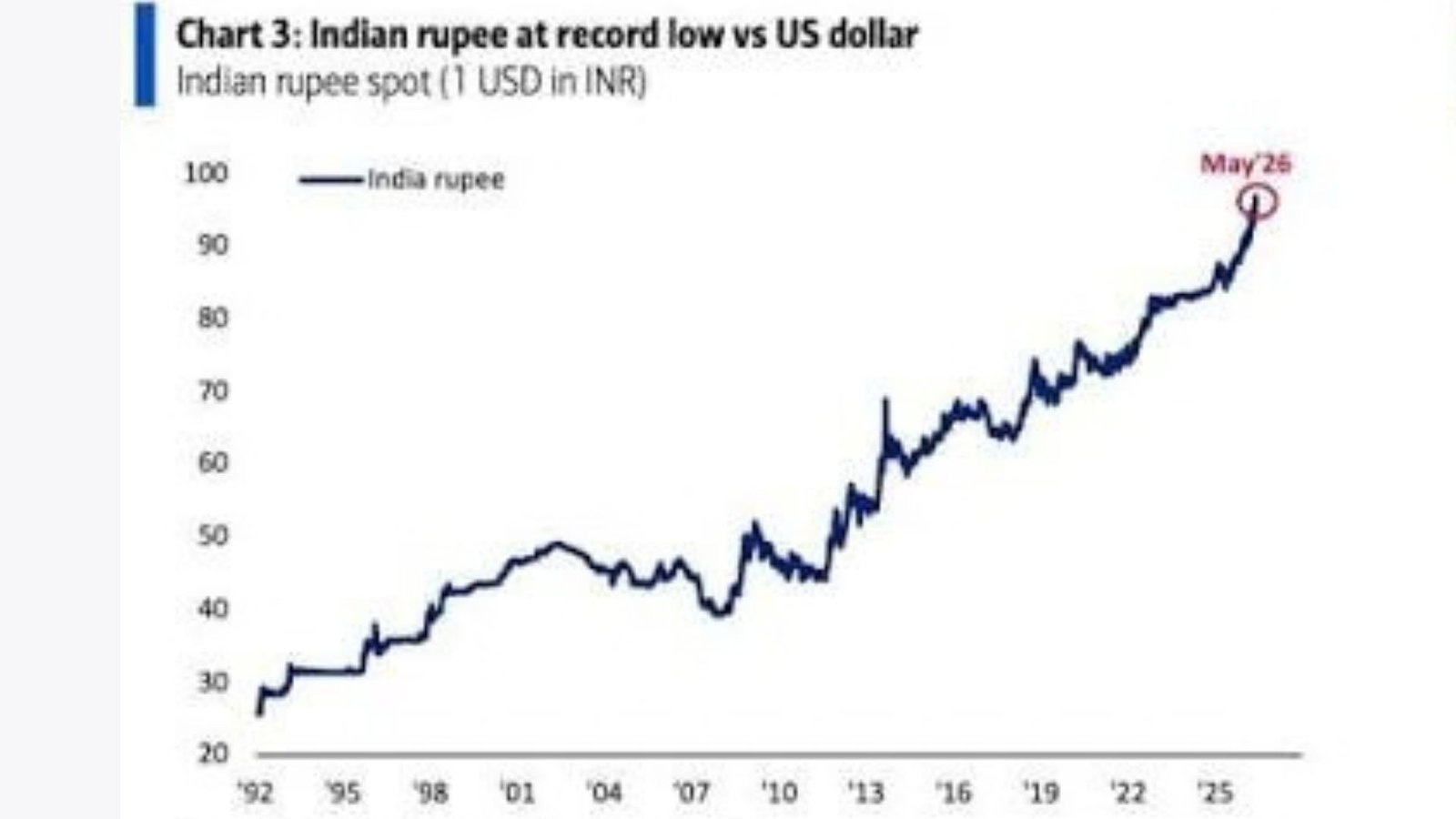
The Indian rupee strengthened sharply against the US dollar on Wednesday, November 25, reaching its highest level in seven months as foreign investment in domestic equities and lower crude oil prices supported the currency.

The rupee opened at 92.74 against the dollar, recovering from Monday's close of 92.91. It continued to gain during the trading session, touching 92.42 per dollar. Indian financial markets had remained closed on Tuesday due to a holiday.
The latest rise took the rupee's gains for November to 2.7%, according to Reuters.
Foreign investment supports the rupee
Renewed foreign investor interest in Indian equities has been a key factor behind the currency's recovery. Foreign investors purchased more than $600 million worth of Indian shares on a net basis on Monday, even as benchmark stock indices declined by nearly 2%.
Their total net investment in Indian equities has exceeded $14 billion so far in November, marking a record monthly inflow, the Reuters report said.
Strong foreign investment in domestic stocks generally supports demand for the rupee, as overseas investors need the Indian currency to purchase local assets.
Lower crude prices add support
Lower crude oil prices have also contributed to the favourable market environment. Since India imports a significant share of its crude oil requirements, a decline in global oil prices can help reduce demand for dollars used to pay for imports.
Market participants believe the rupee's near-term direction will depend partly on whether foreign inflows continue and oil prices remain supportive.
A private bank trader quoted by Reuters said a significant rise in oil prices or a sustained reversal in foreign investment flows could change the currency's direction.
Monday's decline seen as temporary
The rupee's fall to 92.91 on Monday interrupted its recent recovery. Traders attributed the decline largely to heavy dollar purchases by companies and technical indicators suggesting the currency had become overbought.
Several bankers viewed the movement as a temporary consolidation rather than a sign of a major deterioration in the rupee's outlook.






0 comments
No comments yet. Yours would be the first.