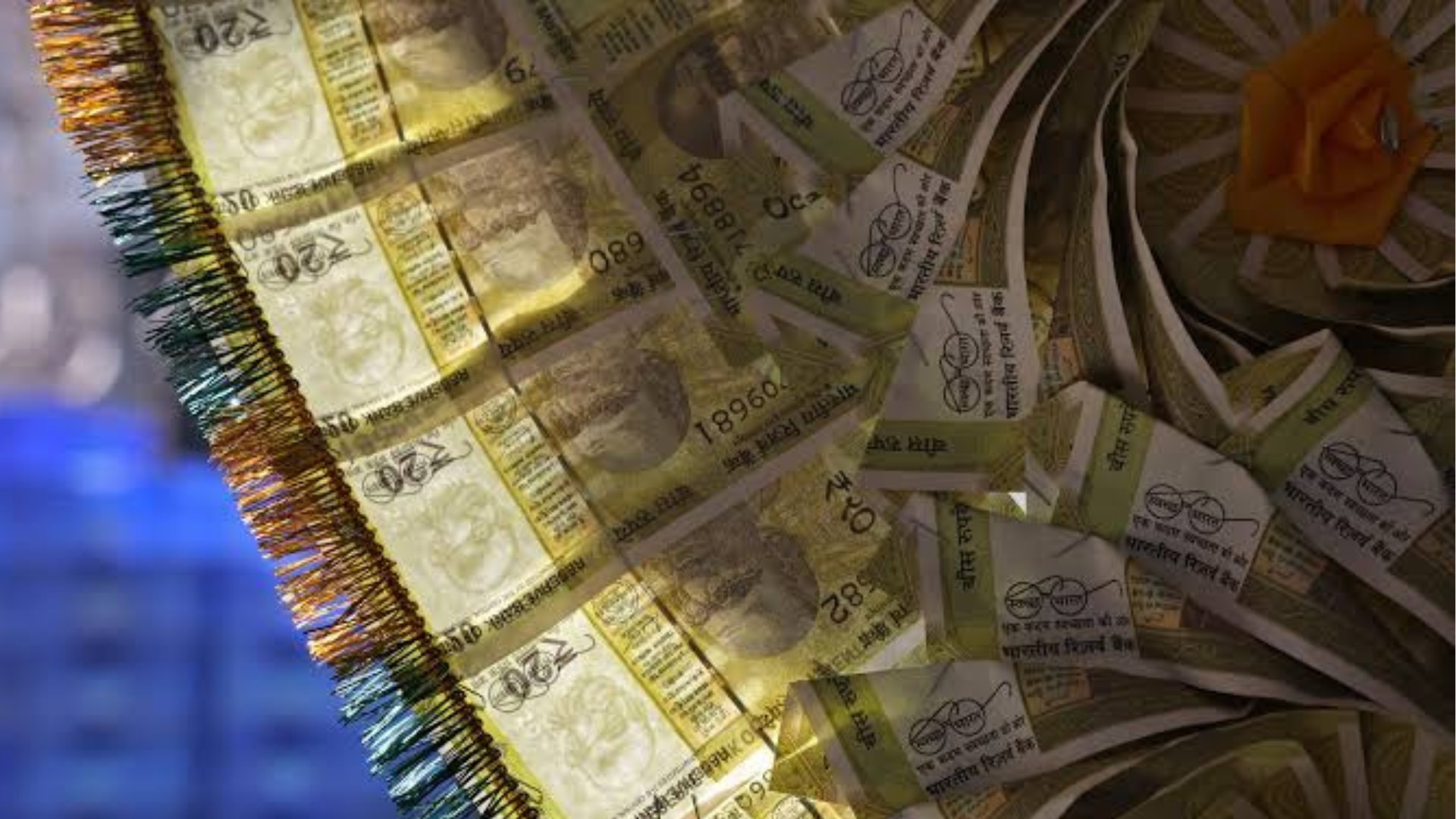
The Indian rupee has staged a strong recovery against the US dollar, climbing to its strongest level since April 2026. Falling crude oil prices and renewed foreign investor interest have supported the currency, which had earlier faced pressure amid geopolitical tensions and rising global oil prices. However, concerns about a possible fall to ₹100 against the dollar have not completely disappeared.

On November 11, the rupee closed at around ₹93.69 per dollar, improving from ₹93.93 on November 9. This marks a gain of more than 3.3% from its record low of ₹96.96 recorded on May 20. The currency has also gained close to 1% during the current financial year, making it one of Asia's better-performing currencies.
A major factor behind the recovery has been the decline in international crude oil prices. Brent crude briefly fell below $90 per barrel on November 10 before moving up to around $92 the following day. This remains considerably lower than its October average of $124. Lower oil prices help reduce India's import bill and ease pressure on the rupee.
Foreign portfolio investor (FPI) inflows have provided additional support. Investors reportedly brought around $6.4 billion into Indian equities during November up to November 11, their strongest monthly buying since September 2024. The inflows have also supported the domestic stock market, with the Sensex and Nifty 50 gaining around 10% since the end of October.
Despite the improvement, risks remain. FPIs were still net sellers of $24.98 billion between January 1 and November 11. Rising inflation, global interest rate uncertainty and changes in crude oil prices could affect investor sentiment and currency movements.
The rupee's recovery has eased immediate pressure, but its longer-term direction will depend on whether favourable global conditions and foreign investment flows continue.








0 comments
No comments yet. Yours would be the first.