
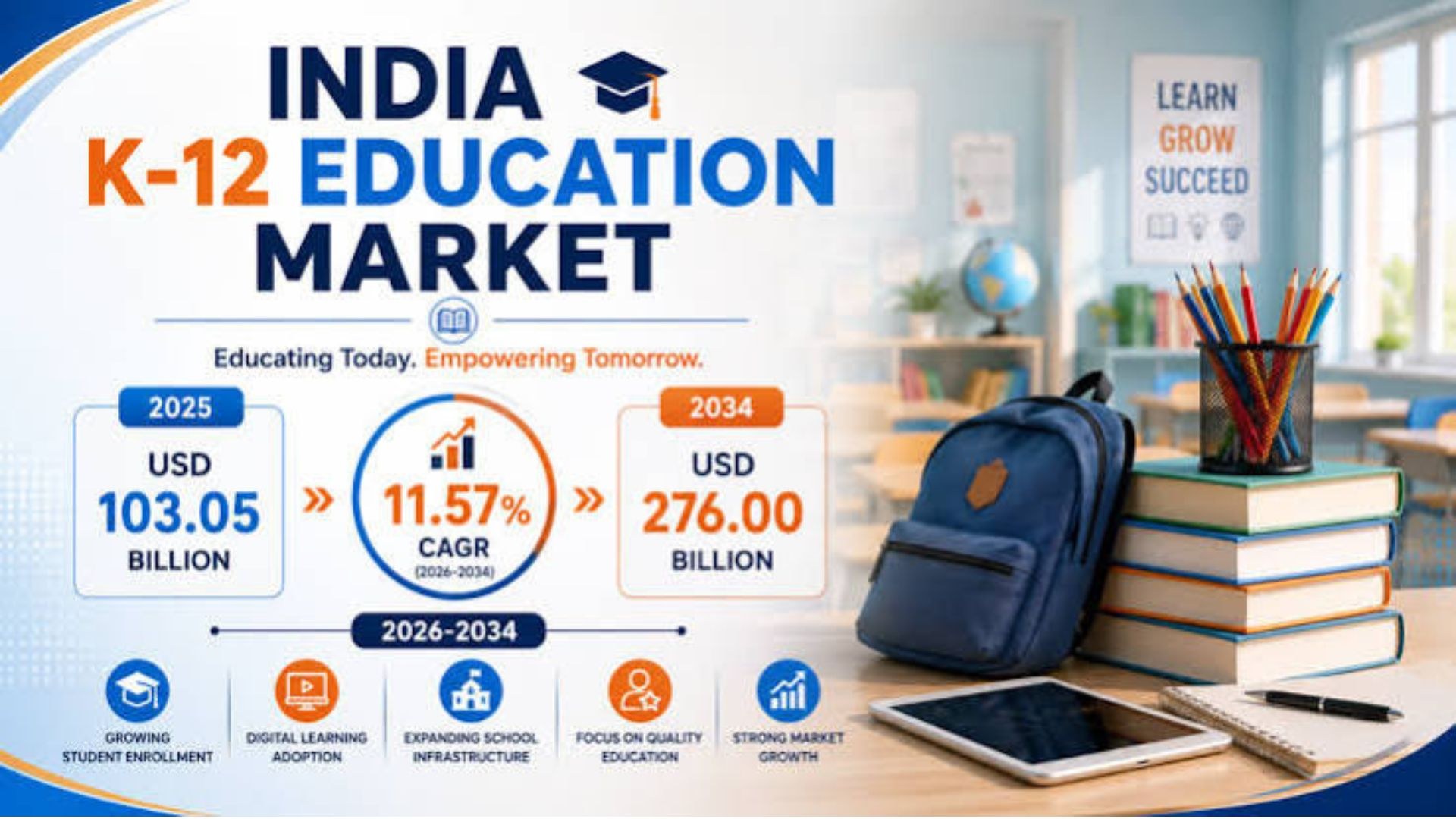
India’s K-12 market is experiencing sharply different demand patterns across regions, with some schools operating at capacity while others struggle to attract students. Girish Kumar Sachdev, Member of the Board of Management at DPS Indirapuram, says the divergence is largely driven by local demographics, economic conditions, competition and how well schools respond to community needs.

Sachdev noted that several schools have entered established markets over the past decade, increasing competition in areas where student demand may not be sufficient to support every institution. International and British school brands are also entering India, encouraged by rising aspirations, higher incomes and growing demand for diverse educational options.
At the same time, interest in international curricula such as IB is increasing, particularly among families considering overseas education. However, Sachdev argued that global university opportunities are not limited to students following international curricula. CBSE and ICSE students can also pursue education abroad, with universities increasingly assessing personality, extracurricular activities and overall development alongside academic performance.
Technology and AI in schools are becoming another major area of change. Sachdev believes technology should reduce teachers’ administrative workload and give them more time to understand individual students. He also highlighted teacher mindfulness, introspection and human connection as essential alongside technology skills.
His approach to AI education goes beyond robotics and gadgets. DPS Indirapuram has developed dedicated learning spaces and an age-appropriate curriculum built around Discover, Design and Develop.
The emerging model of a future-ready school, he suggested, will combine academic quality, personalised attention, professional management, technology literacy and strong teacher-student relationships.

0 comments
No comments yet. Yours would be the first.