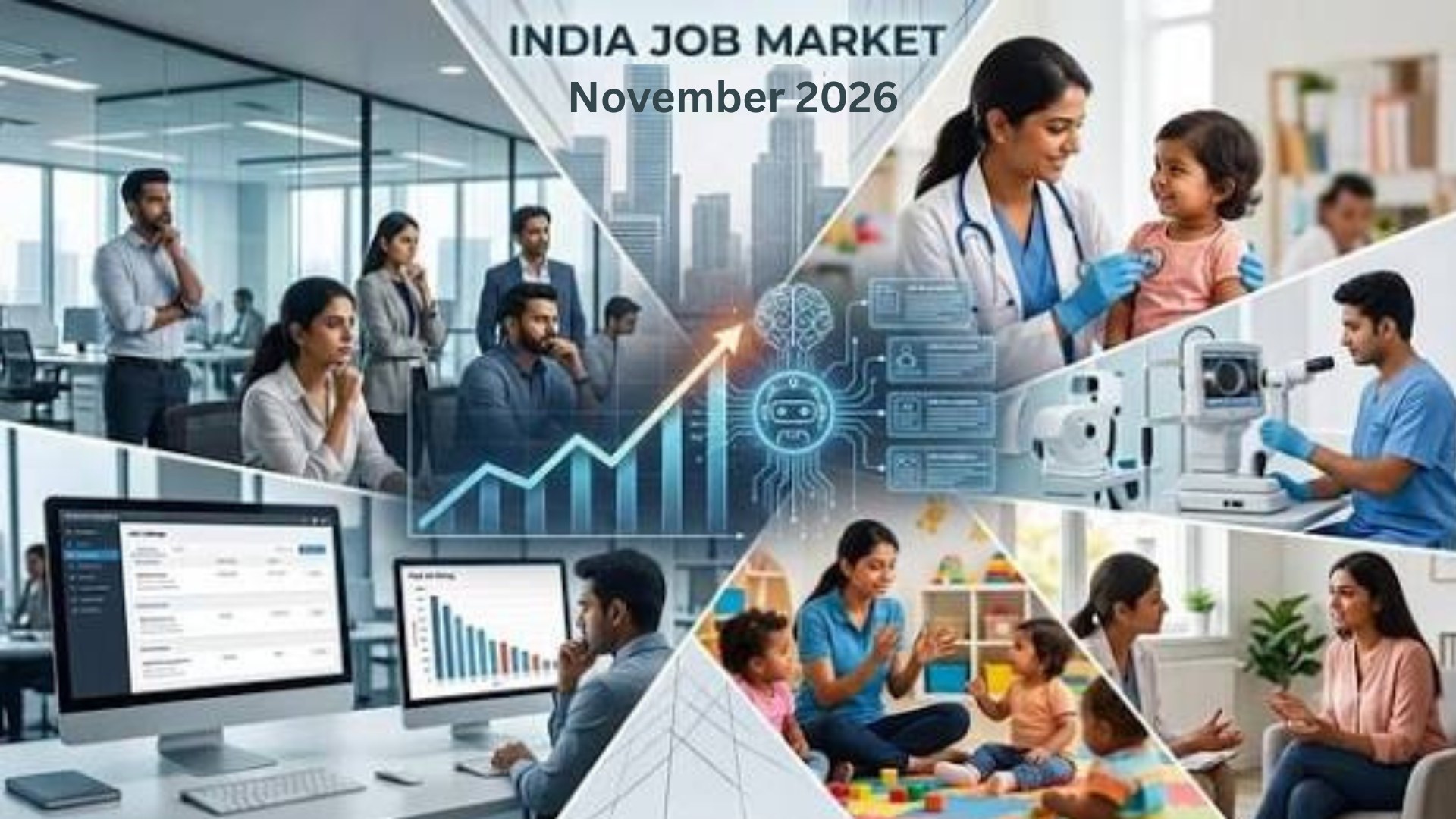
India’s entry-level job market is undergoing a major shift in 2026, as companies move away from traditional bulk campus recruitment towards more selective hiring. Employers are increasingly prioritising practical skills, hands-on experience and the ability to contribute from the beginning.

Overall white-collar hiring has remained relatively flat or contracted slightly, with junior and entry-level openings facing a sharper decline. Estimates suggest that entry-level positions fell by around 5% to 11% year-on-year, depending on the quarter. At the same time, millions of graduates enter the job market every year, increasing competition for a limited number of opportunities.
Artificial intelligence is adding to the pressure by automating routine tasks such as basic coding, data processing and document verification. This has encouraged some organisations to reduce traditional fresher recruitment. However, specialised opportunities in artificial intelligence and machine learning are growing, with some roles reportedly offering salary premiums of 25% to 40%.
Hiring is also expanding beyond traditional IT services companies. Global Capability Centres (GCCs), manufacturing, banking and healthcare organisations are becoming important recruiters of fresh graduates. These employers increasingly look for candidates with practical project experience rather than academic qualifications alone.
Skills such as data structures, problem-solving, GitHub portfolios, communication and familiarity with AI tools are becoming important selection criteria.
Globally, companies are also adopting more cautious recruitment strategies, although specialised fields such as cybersecurity, cloud engineering, AI deployment, healthcare operations and green energy continue to offer opportunities.
For fresh graduates, the changing market makes practical learning, project development and industry-relevant skills increasingly important.






0 comments
No comments yet. Yours would be the first.