
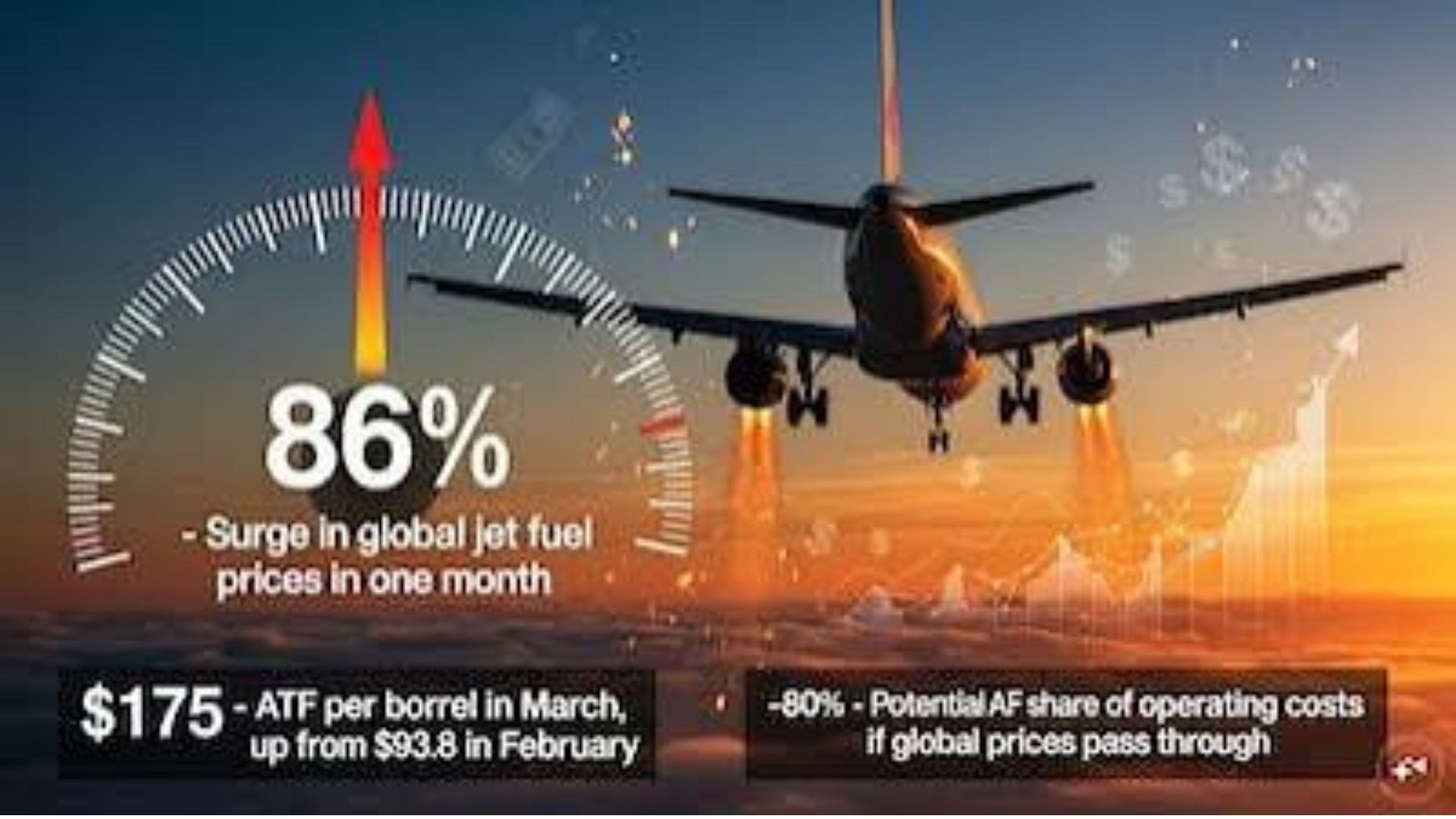
India’s aviation industry is facing renewed pressure as rising aviation turbine fuel (ATF) prices increase operating costs for airlines and threaten already tight profit margins. The issue has sparked debate over why airlines pay internationally benchmarked prices for fuel refined domestically and whether India’s pricing system needs a rethink.

ATF prices in Delhi reportedly climbed 13% in a month to ₹137 per litre, adding to the financial burden on carriers. With fuel accounting for a significant share of airline operating expenses, sudden price increases can affect profitability and force companies to reconsider ticket pricing.
The main concern is that domestic ATF prices are linked to international benchmarks rather than being determined solely by the cost of crude oil procurement, refining and distribution in India. As a result, airlines remain exposed to global energy market volatility and fluctuations in the rupee-dollar exchange rate, even when the fuel is produced locally.
Taxes add another layer of cost. Central excise duty and state-level value-added tax (VAT) contribute to the final price, while differences in state tax rates create variations in fuel costs across airports.
The Federation of Indian Airlines has called for cost-based pricing for domestic operations, a fixed-rate excise levy and continued relief on taxes and airport charges. Supporters argue that a more predictable pricing structure could help airlines manage expenses and reduce pressure to impose fuel surcharges.
However, any reform would need to balance the financial health of airlines with government revenue and the interests of passengers. Whether changes ultimately lead to lower fares will depend on how pricing and tax adjustments are implemented.
For India’s aviation sector, the debate is no longer just about fuel prices. It is also about creating a more predictable cost environment for airlines while keeping air travel accessible to passengers.




0 comments
No comments yet. Yours would be the first.