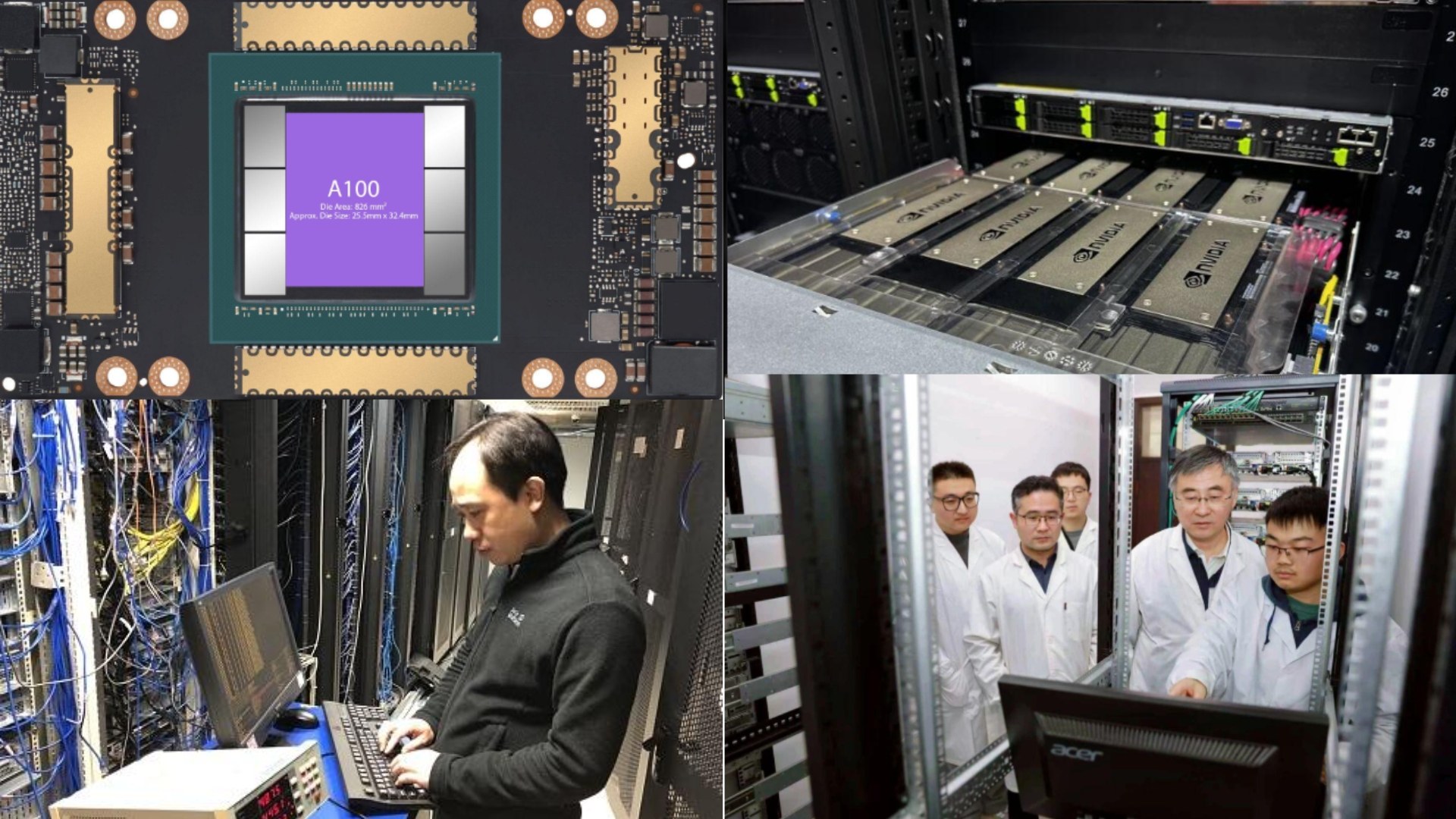
At least six Chinese universities placed on the US government's restricted-entity list have reported purchasing Nvidia computer chips in recent years, according to a CNN review of procurement records, raising questions about the effectiveness of American export controls on advanced artificial intelligence technology.

The purchases reportedly involved chips including Nvidia's A100, A800, H100, H200 and H800 models. The records were collected from Chinese public procurement notices and a commercial database, with nearly 300 documents examined.
Among the reported purchases, Harbin Institute of Technology acquired an A100 chip for approximately $7,000 in September. Northwestern Polytechnical University reportedly purchased four H200 chips through procurement notices published in September and October, with the combined cost reported at around $240,000. Both institutions are associated with China's “Seven Sons of National Defense” group of universities, which have links to the country's military establishment.
The purchases reportedly involved local Chinese sellers rather than Nvidia directly. However, the records did not provide complete details about the supply chains or the intended uses of the chips, and CNN said it could not verify whether the hardware was delivered in every case.
US export restrictions introduced in 2022 limited China's access to several advanced Nvidia processors. Experts say intermediaries, stockpiles and complex supply chains can make enforcement difficult, allowing restricted technology to potentially reach prohibited end users.
The findings also highlight concerns surrounding access to computing power through overseas data centres, a loophole that US authorities have sought to address through additional restrictions.
The issue has renewed scrutiny of semiconductor export controls as Washington and Beijing continue discussions over technology, trade and national security.




0 comments
No comments yet. Yours would be the first.