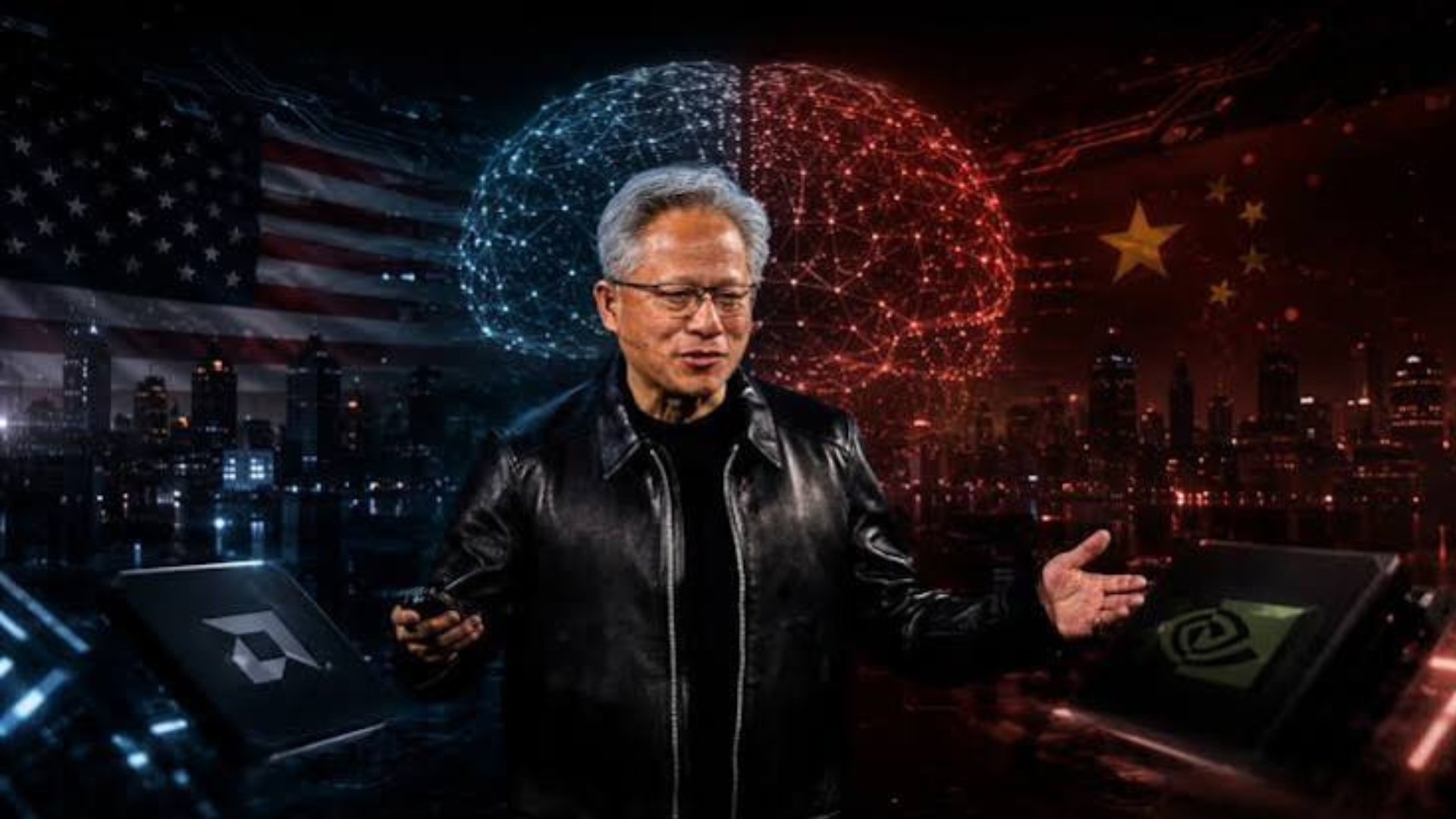
Nvidia has become one of the most influential companies in the artificial intelligence industry, building its dominance around graphics processing units (GPUs), software, networking technologies and complete AI computing systems.

But following Jensen Huang's resignation as chief executive, the company faces a major leadership transition. The question is whether Nvidia can maintain the innovation-driven strategy that helped establish its position in the global AI market.
Huang stepped down on November 12, 2026. Chief Financial Officer Colette Kress was appointed interim CEO, while the board began searching for a permanent successor.
R&D investment continues to rise
Nvidia's research and development expenditure reached $18.497 billion in fiscal 2026, compared with $12.914 billion in FY2025 and $8.675 billion in FY2024. The spending reflects the company's commitment to developing new chips, computing architectures and AI technologies.
Its financial growth has been equally substantial. Revenue reached $215.938 billion in FY2026, while net income stood at $120.067 billion. Revenue increased 65% year-on-year, highlighting the scale of demand for its AI infrastructure.
The challenge of replacing a founder
Huang was closely involved in Nvidia's technology strategy, product development and relationships with customers, suppliers and industry partners. His leadership helped align hardware, CUDA software, networking and AI infrastructure into a unified ecosystem.
That organisational structure could make succession particularly challenging. A new CEO must preserve the company's research culture, retain engineering talent, coordinate product roadmaps and maintain relationships across the AI industry.
Can Nvidia maintain its momentum?
Nvidia's competitive advantage is built not only on its chips but also on software, developer adoption, networking capabilities and the ability to deliver integrated AI systems.
The leadership transition does not automatically mean innovation will slow. The company's substantial R&D investment, established engineering teams and product ecosystem provide continuity.
However, sustaining that advantage will depend on how effectively the new leadership manages future product cycles, competition, talent retention and strategic decision-making without Huang at the helm.






0 comments
No comments yet. Yours would be the first.