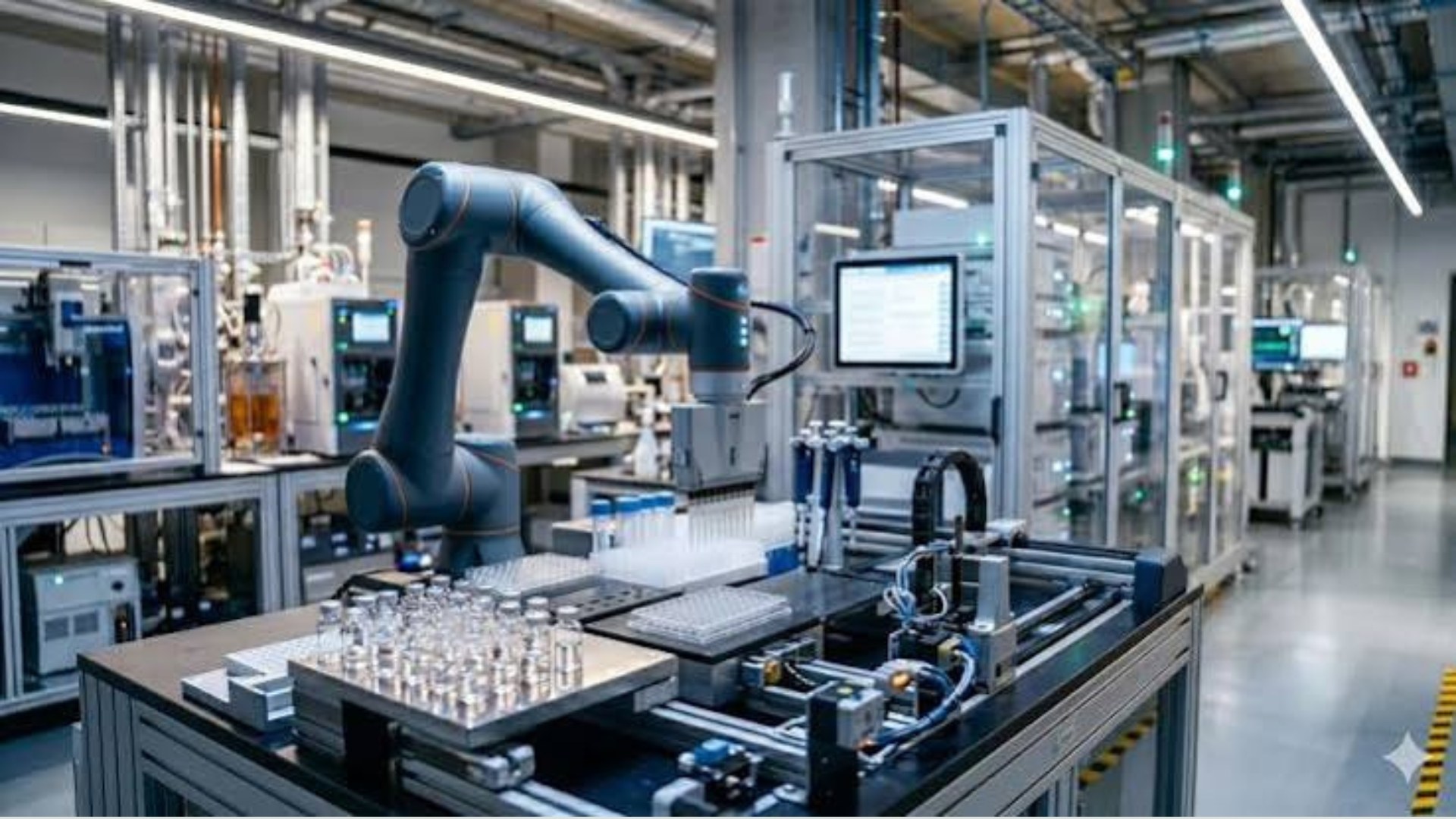
Artificial intelligence is moving beyond generating text and analysing information. Researchers at Shanghai Jiao Tong University in China have developed AutoDNA, an AI-powered laboratory platform capable of planning and conducting complex molecular biology experiments with limited human intervention.

The research, titled An AI-native experimental laboratory for autonomous biomolecular operations, was published in the journal Nature on November 4, 2026. The platform uses multiple AI agents to coordinate laboratory equipment and manage experiments from planning to analysis.
Unlike conventional generative AI tools that primarily operate through digital interfaces, AutoDNA connects AI agents with physical laboratory equipment.
The system divides complex research tasks into stages, including literature searches, reagent selection, experimental planning, code generation, hardware execution, result analysis and further optimisation.
It can coordinate more than 20 types of laboratory instruments and perform tasks involving DNA synthesis, transcription, amplification and sequencing. Robotic equipment handles physical operations such as transferring samples and processing liquids, while the AI agents coordinate the experimental workflow.
The research team tested AutoDNA across four representative applications. These included enzymatic DNA synthesis, DNA-based information storage and the identification of a cancer-associated KRAS G13D mutation.
According to the published study, the platform matched expert-optimised yields in enzymatic DNA synthesis and accelerated concurrent experimental protocol execution by 3.2 times. It also completed an end-to-end DNA information storage cycle, successfully recovering the original digital content.
The system coordinated more than 20 instrument types across over 11,000 operations, demonstrating its ability to manage lengthy experimental processes.
Automation could potentially reduce the time and manual effort required for certain laboratory workflows. However, the published research does not establish that AutoDNA is cheaper than conventional laboratories.
The platform still depends on specialised equipment, laboratory infrastructure, maintenance and human assistance for tasks such as replenishing reagents and laboratory supplies.
Its findings nevertheless represent a significant development in autonomous scientific research. As such systems evolve, they could help researchers manage complex experiments, improve workflow efficiency and explore new approaches to biological discovery.






0 comments
No comments yet. Yours would be the first.