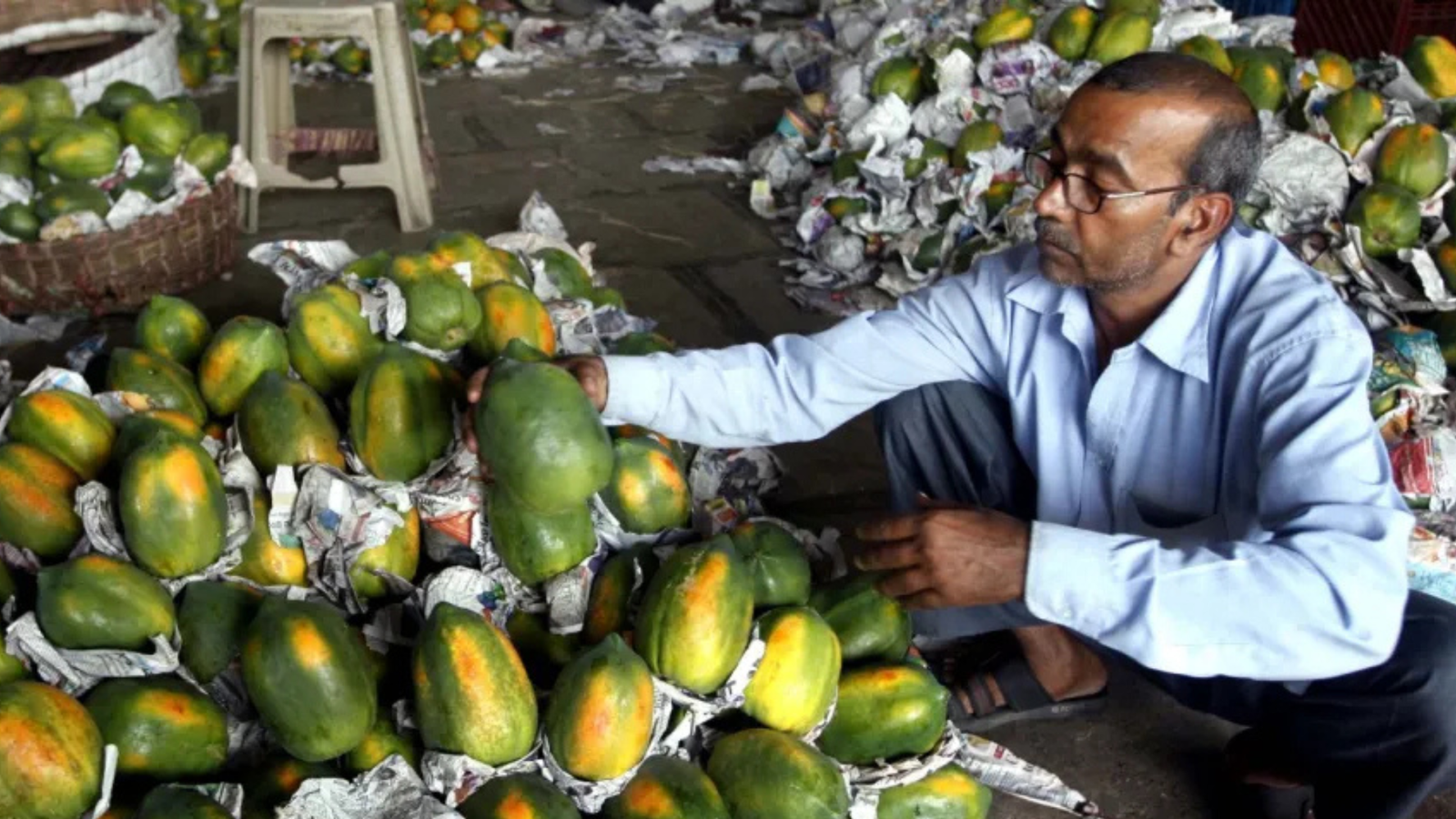
A bright yellow papaya can sometimes make shoppers suspicious, particularly when the fruit has an unusually uniform colour. But yellow skin alone does not prove that a papaya has been chemically ripened, according to nutritionist Himanshi Sharma, Chief Clinical Nutritionist at ISIC Multispeciality Hospital.
Naturally ripened papayas can also develop an even yellow or golden-yellow colour when they are allowed to mature fully. The final appearance of the fruit can vary depending on factors such as its variety, growing conditions and the stage at which it was harvested.
What Does Papaya Colour Tell You?
A ripe papaya generally changes from green towards yellow or orange as it matures. However, the colour pattern can differ between varieties, meaning there is no single appearance that can confirm whether a fruit ripened naturally.
Therefore, shoppers should not reject a papaya simply because its skin is uniformly yellow.
Check Smell and Texture Too
Smell: A ripe papaya usually develops a noticeable fruity aroma. An absence of aroma may indicate that the fruit is not fully ripe, although smell alone cannot establish how it was ripened.
Texture: A ripe papaya should give slightly when gently pressed. It should not feel excessively hard, nor should it be extremely soft, bruised or leaking.
Appearance: Look for healthy-looking skin without extensive bruising, cuts or signs of spoilage. Colour should be considered alongside the fruit's overall condition rather than treated as a chemical-ripening test.
Can You Tell Chemical Ripening by Looking at a Papaya?
Not reliably. Colour, smell and texture can help assess ripeness and freshness, but they cannot definitively establish whether a papaya was chemically ripened.
For consumers, the more practical approach is to assess several signs together and buy fruit from reliable sellers.
Lifestyle
How to Identify Naturally Ripened Papaya Before Buying
Is a yellow papaya chemically ripened? Learn what colour, smell and texture can tell you when choosing a naturally ripe papaya.