
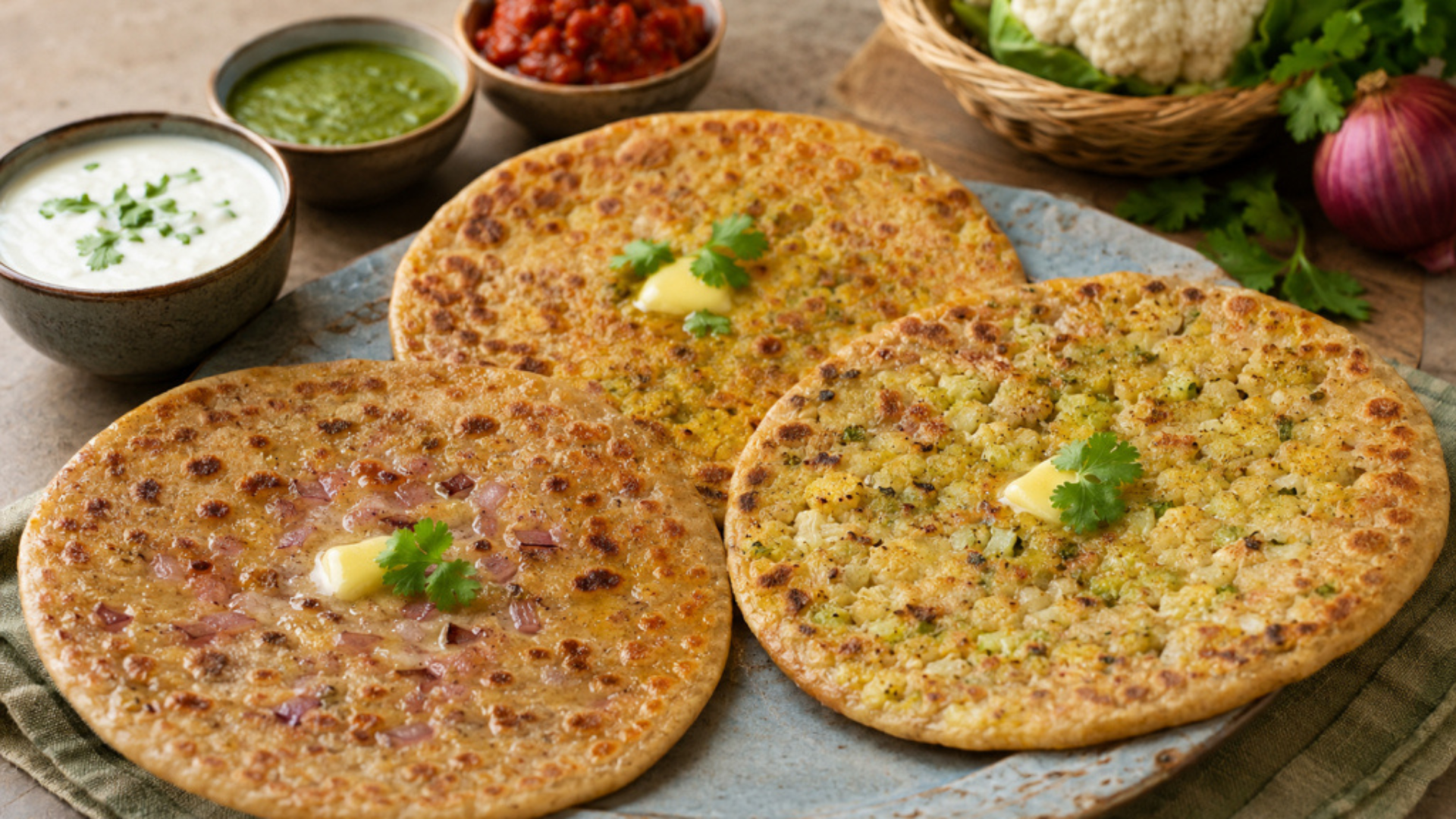
When it comes to a classic Indian breakfast, aloo, gobhi and pyaz parathas are all popular choices. But if you had to choose the healthiest option among the three, a dietician ranks gobhi paratha first, followed by pyaz and then aloo paratha.
According to Meena Kumari, Chief Dietician at Sarvodaya Hospital, Faridabad, gobhi paratha gets the top spot because cauliflower adds fibre, vitamins and antioxidants while keeping the filling relatively light. Cauliflower is also a source of folate and other nutrients. USDA food-composition data lists cauliflower among foods with measurable folate and vitamin C content.
Pyaz paratha comes second, offering the nutritional benefits of onions while still providing the carbohydrates and calories associated with the wheat-based paratha.
Aloo paratha ranks third in the dietician’s comparison because potato adds more carbohydrate while contributing less fibre than a vegetable-rich filling such as cauliflower. However, this does not mean aloo paratha needs to be avoided altogether.
The filling is only one part of the nutritional picture. The type and quantity of flour, the amount of oil, ghee or butter used while cooking, portion size and accompaniments can significantly change the overall meal.
Using whole-wheat dough, adding more vegetables and limiting excess cooking fat can make any of these parathas a more balanced breakfast. Pairing them with curd or another protein-rich accompaniment can also improve the overall nutritional profile.




0 comments
No comments yet. Yours would be the first.