
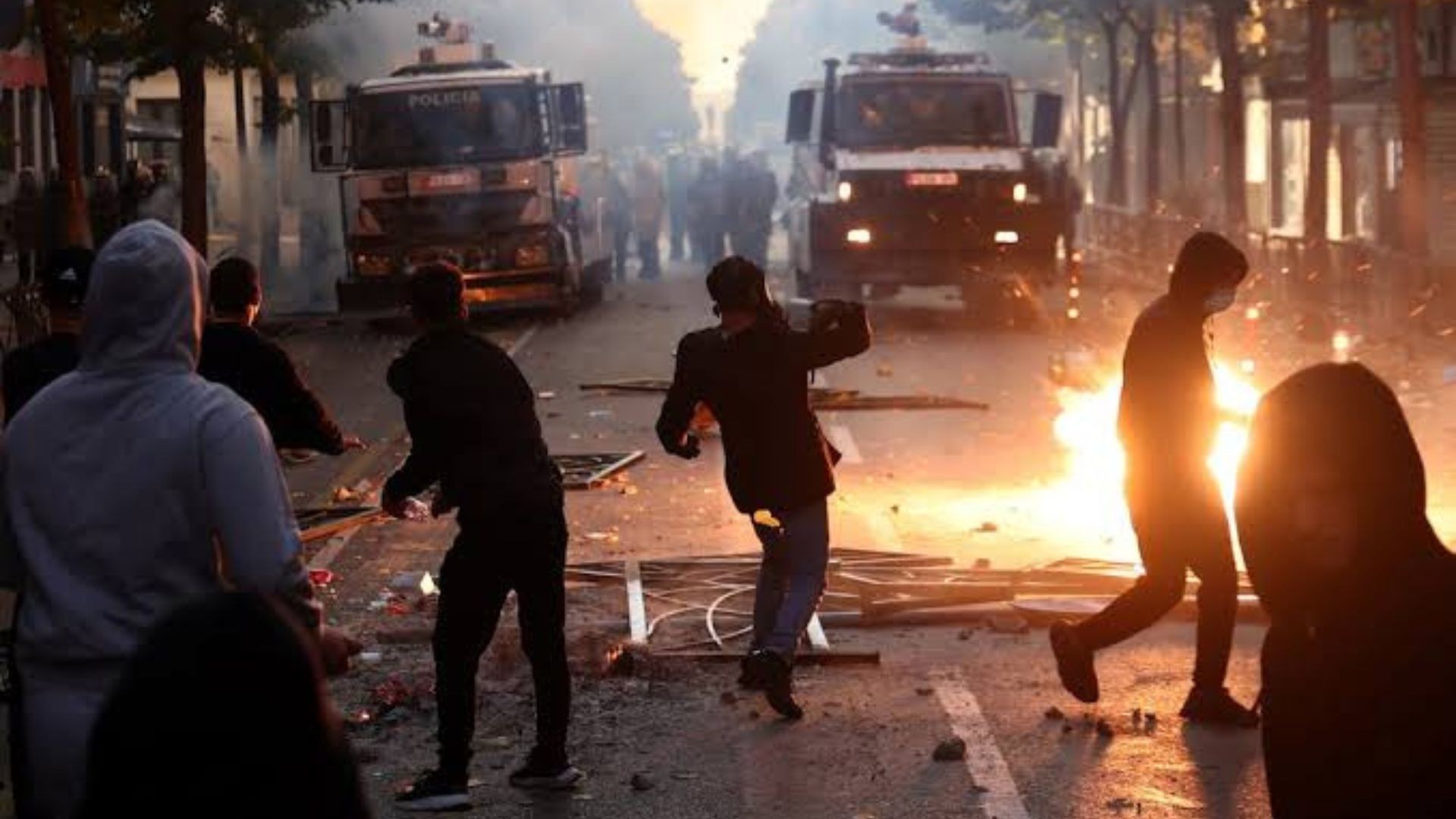
Student protests in Albania turned violent in the capital, Tirana, on Tuesday, October 13, as demonstrators threw bricks and concrete blocks at the Education Ministry. Police responded with tear gas and water cannons, and several protesters were detained, according to the reported account.

The nationwide demonstration centred on concerns about university conditions, the cost of higher education, financial support for students and employment opportunities after graduation. Some demonstrators also voiced frustration over social inequality and the gap between wealthy and poorer sections of society.
Protesters argued that young people need better opportunities and meaningful changes to address their concerns about education and their economic future. One demonstrator, Luljeta Kola, called for a fundamental change in the political system, citing what she described as deep social injustice.
The clashes prompted a response from Albania’s Deputy Prime Minister, Albana Kociu, who criticised violence against public institutions and police. In a statement shared on Facebook, she said that throwing stones, attacking state institutions and damaging public property were not acceptable ways for young people to express their views.
The incident comes amid wider student activism in Europe, where young people have also raised concerns about educational resources and facilities. In France, high school students have reportedly organised protests and school blockades demanding more teachers and better school infrastructure.
The demonstrations in Albania highlight the challenges facing students who are concerned about the affordability of higher education, financial assistance and their prospects in the job market. The extent to which the protests lead to policy changes or discussions with student representatives remains to be seen.


0 comments
No comments yet. Yours would be the first.