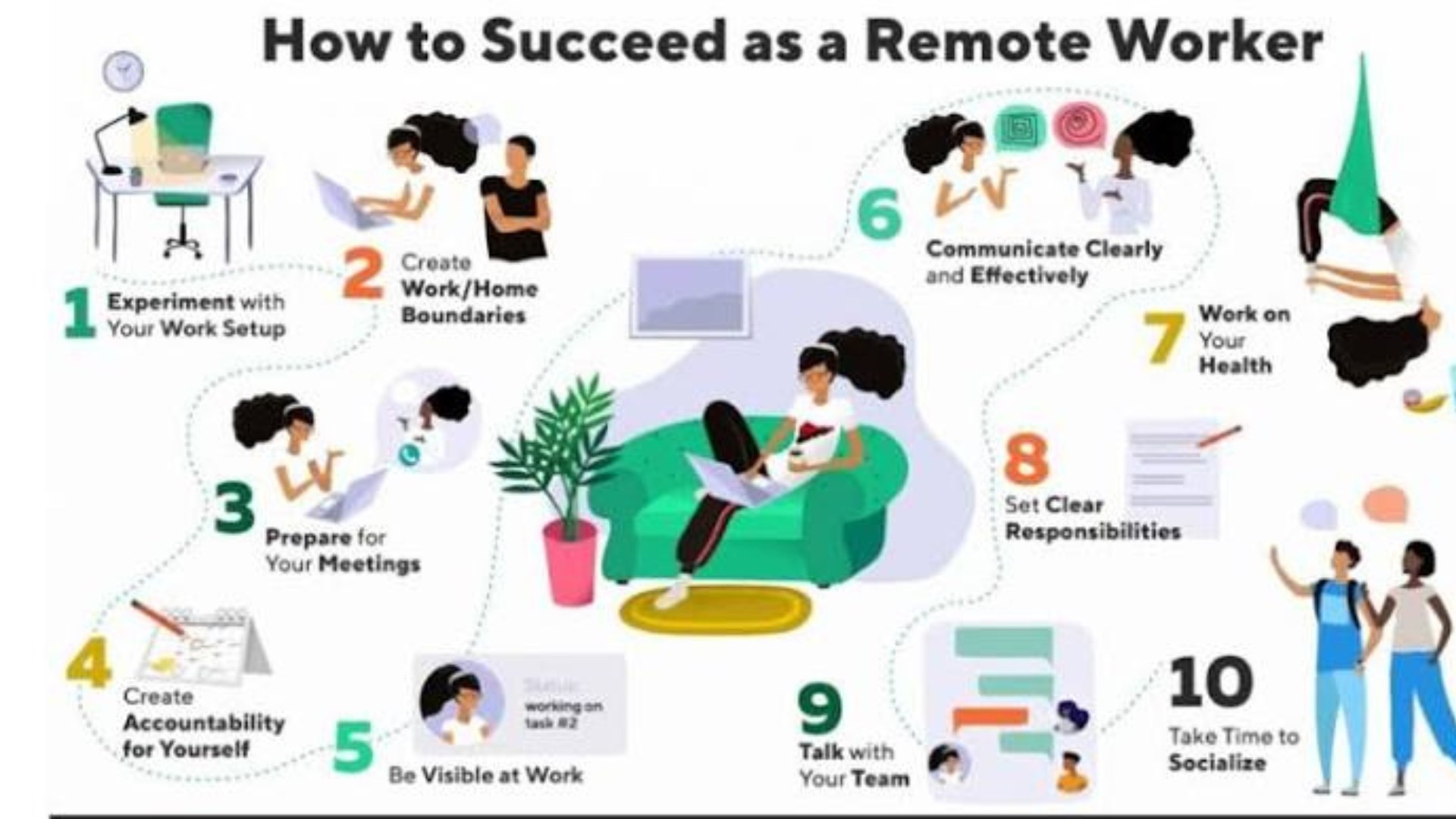
Working from home (WFH) is a work arrangement in which employees perform their duties from home or another remote location instead of a traditional office. Digital tools such as video conferencing, messaging applications and cloud platforms help employees communicate and complete tasks.

The arrangement has become popular among workers and companies because of its potential benefits.
One major advantage is improved work-life balance. Flexible schedules can help employees manage family responsibilities, personal errands and rest. Working remotely also eliminates daily commuting, saving time, transportation expenses and travel-related stress.
Some employees experience improved productivity when working in quieter environments with fewer office interruptions. Businesses may also reduce office-related expenses while accessing talent from different locations without requiring relocation.
However, remote work comes with challenges. Household responsibilities, family members and other distractions can interrupt concentration. Limited face-to-face interaction may contribute to loneliness, reduce spontaneous collaboration and affect employees' visibility within organisations.
Technology and workspace limitations can also influence performance. Unreliable internet connections, inadequate equipment and uncomfortable home workstations may make daily tasks more difficult.
Ultimately, working from home offers flexibility and convenience, but its effectiveness depends on individual circumstances, job requirements, workplace support and the ability to maintain clear boundaries between professional and personal life.








0 comments
No comments yet. Yours would be the first.