
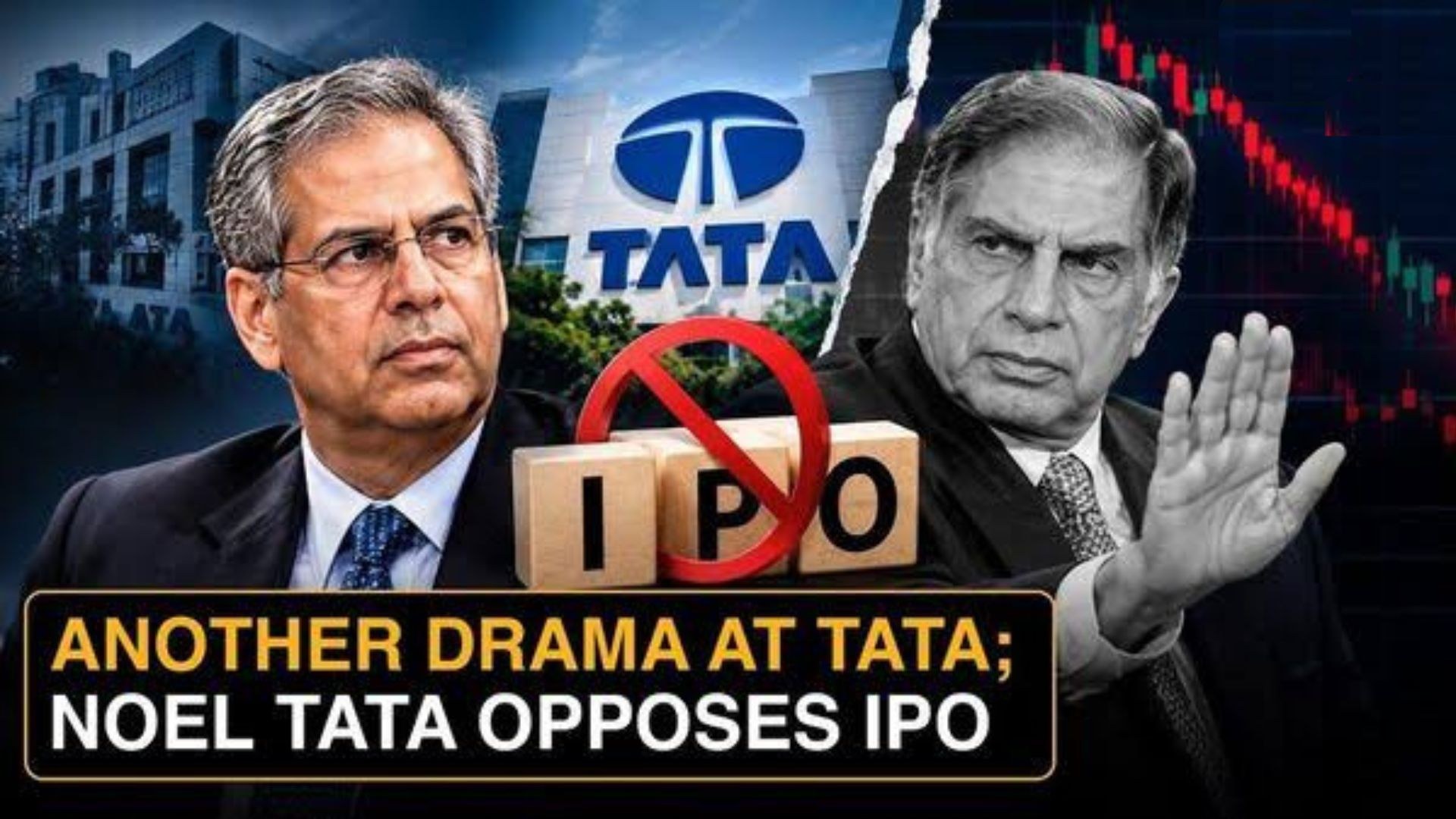
Ratan Tata reportedly resisted taking Tata Sons public despite advice from investment bankers and discussions among senior group executives in the early 2000s. According to Ratan Tata: A Life, written by Thomas Mathew, concerns about losing control over the wider Tata Group ultimately helped end the proposal.

The question of listing Tata Sons has resurfaced amid regulatory pressure for the holding company of the Tata Group to go public. The conglomerate, with businesses spanning technology, automobiles, steel and consumer products, has long operated under a distinctive ownership structure in which Tata Trusts hold a majority stake in Tata Sons.
Mathew’s biography describes how the possibility of a listing gained attention around the time Tata Consultancy Services (TCS) went public in August 2004. Ishaat Hussain, a former finance director of Tata Sons, told the author that several people advised Ratan Tata to consider listing the parent company. Investment bankers reportedly presented different scenarios to persuade the group to pursue the idea.
According to Hussain’s account in the book, a Tata Sons meeting in the early 2000s even resulted in a decision to take the holding company public. However, Ratan Tata did not openly support the proposal, and the plan was reconsidered.
Senior executives, including Tata Sons Vice-Chairman Noshir Soonawala and Hussain, reportedly played important roles in the rethink. The central concern was that a publicly listed parent company could have less flexibility in making strategic decisions for businesses across the group.
A listing, the book explains, could complicate efforts to increase Tata Sons’ stakes in group companies and potentially weaken the family’s ability to maintain control over the conglomerate. These concerns ultimately outweighed the perceived benefits of going public, and the proposal was not pursued further.
The debate illustrates the importance of ownership structure and governance in large business groups. While listing can provide access to capital and greater market visibility, it can also introduce additional disclosure requirements and shareholder considerations.
Ratan Tata’s reported reluctance to list Tata Sons therefore reflected a broader strategic question: whether public-market access was worth potentially reducing the holding company’s freedom to make long-term decisions for the group.



0 comments
No comments yet. Yours would be the first.