
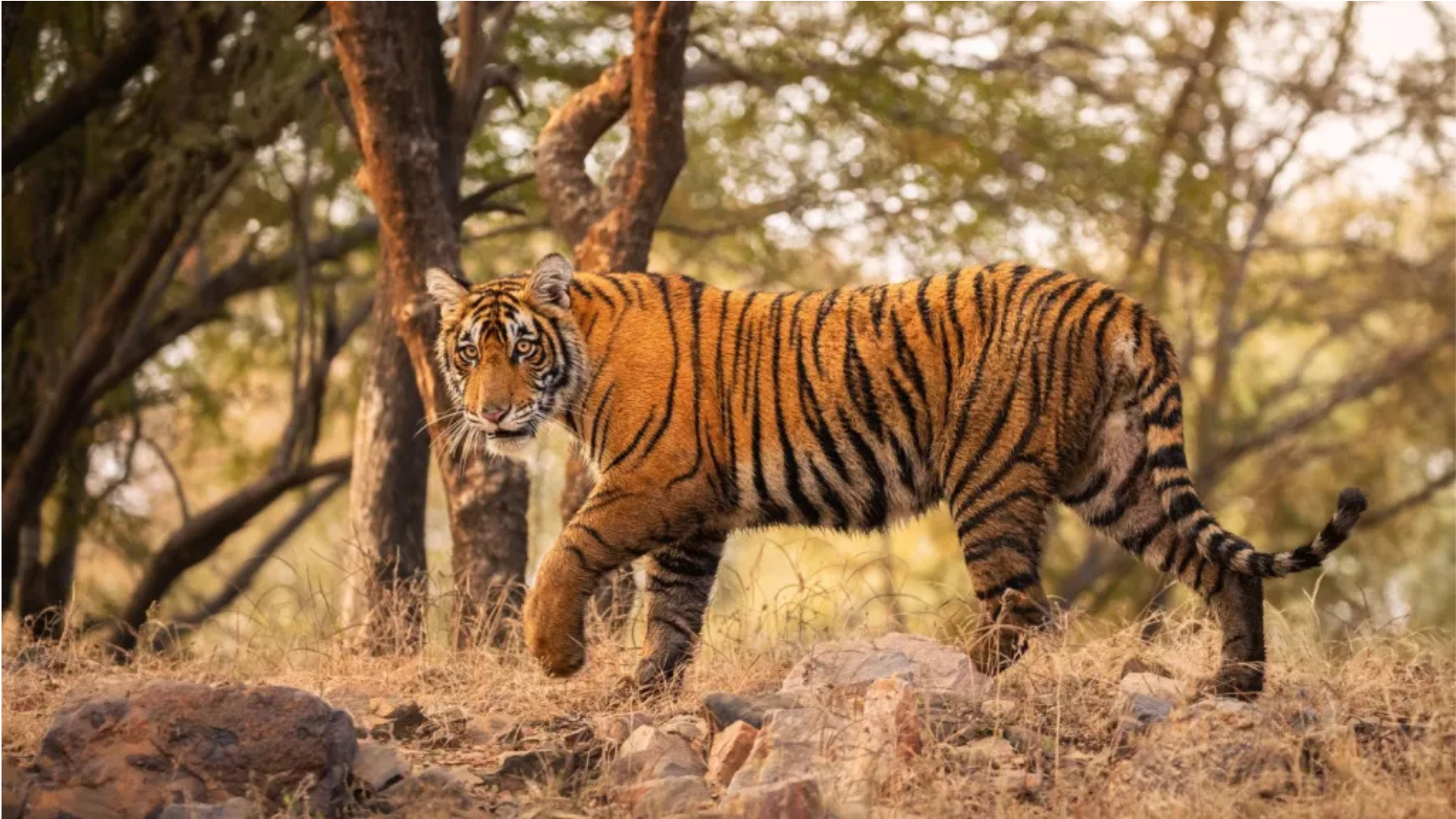
The Royal Bengal tiger is one of India’s most recognisable wildlife symbols, but the name itself has a history shaped by geography, colonial-era natural history and the animal’s imposing reputation.
The “Bengal” part of the name has a clear geographical connection. During British rule, Calcutta, now Kolkata, was the capital and administrative centre of British India. British naturalists, hunters and officials frequently encountered and documented tigers in Bengal and nearby forests, helping establish the term “Bengal tiger”. (indianexpress.com)
The origin of “Royal” is less straightforward. Historical accounts suggest the phrase became popular in the colonial period, with one documented account linking its wider use in 1875 to coverage in the Calcutta press around the visit of the Prince of Wales, later King Edward VII, who was known for tiger hunting. However, historians and natural-history sources differ on precisely how the honorific developed. (nereview.com)
The word also reflects the tiger’s long-standing image of power and majesty. Its strength, distinctive striped coat and ability to survive across varied habitats have helped reinforce its cultural status. The term “Royal Bengal tiger” is a popular name rather than a separate scientific classification; the animal is classified as Panthera tigris tigris. (odishareview.in)
The tiger was selected as India’s national animal in 1972, further strengthening its association with national identity and wildlife conservation. Today, the name “Royal Bengal tiger” carries both historical associations and the enduring image of one of the subcontinent’s most iconic big cats.





0 comments
No comments yet. Yours would be the first.