
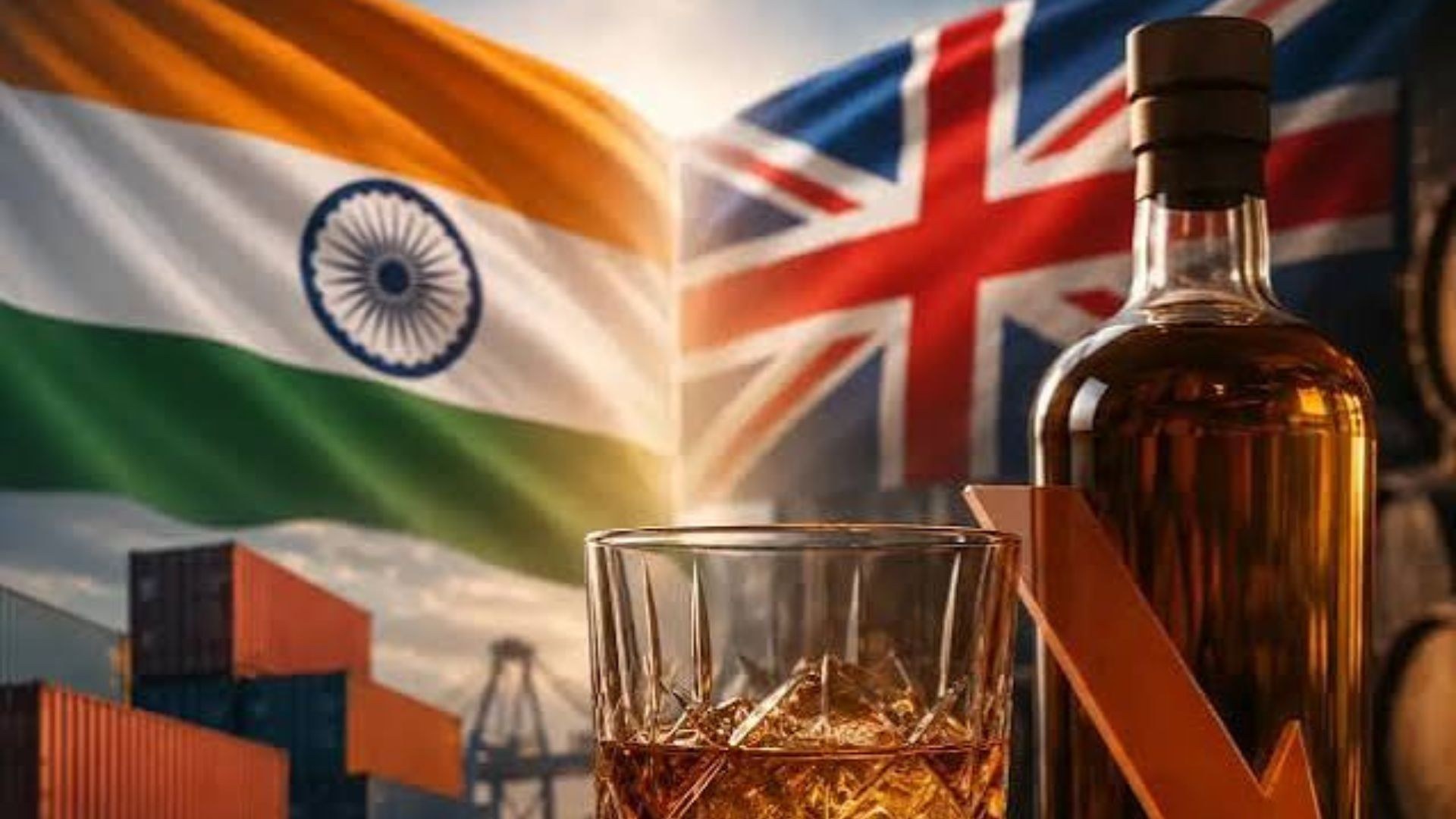
Scotch whisky could become more affordable in India as lower import duties under the India-UK trade agreement reshape the country’s premium spirits market. However, consumers may not see an immediate or uniform drop in prices, as state taxes, distribution costs and retailer margins will continue to influence the final bill.

Under the trade agreement, which came into force on July 15, 2026, customs duties on Scotch whisky imports were reduced from 150% to 75%. The duty is scheduled to fall further to 40% over the next 10 years.
India is already the world’s largest Scotch whisky market by volume and could overtake the United States by export value, according to the Scotch Whisky Association. Scotch exports to India were valued at £286 million in 2025.
Why won’t prices fall equally everywhere?
Lower customs duties reduce import costs, but they do not automatically translate into equivalent retail price cuts. State-level taxes, distribution expenses and retailer margins differ across markets, meaning the savings passed on to consumers will depend on the brand and location.
Some Indian markets have reportedly already seen price reductions, although the extent varies. Consumers may gradually find certain imported labels more accessible, with greater choice across premium price segments.
What does this mean for Indian whisky brands?
Domestic liquor makers see opportunities in India’s growing premium spirits market but have called for fair taxation and competition. The Confederation of Indian Alcoholic Beverage Companies has argued that Indian-made premium spirits should not face a disadvantage compared with imported products.
The tariff changes could encourage Indian manufacturers to strengthen product quality, innovation and brand positioning. At the same time, local bottling and blending may continue to offer opportunities for domestic businesses.
Ultimately, Scotch whisky may become cheaper for some Indian consumers, but the size of any reduction will depend on local taxes, company pricing decisions and distribution costs. The bigger change could be stronger competition and more choice in India’s premium whisky market.



Aaj sham 7 bje peena bethte h🥃🥃