
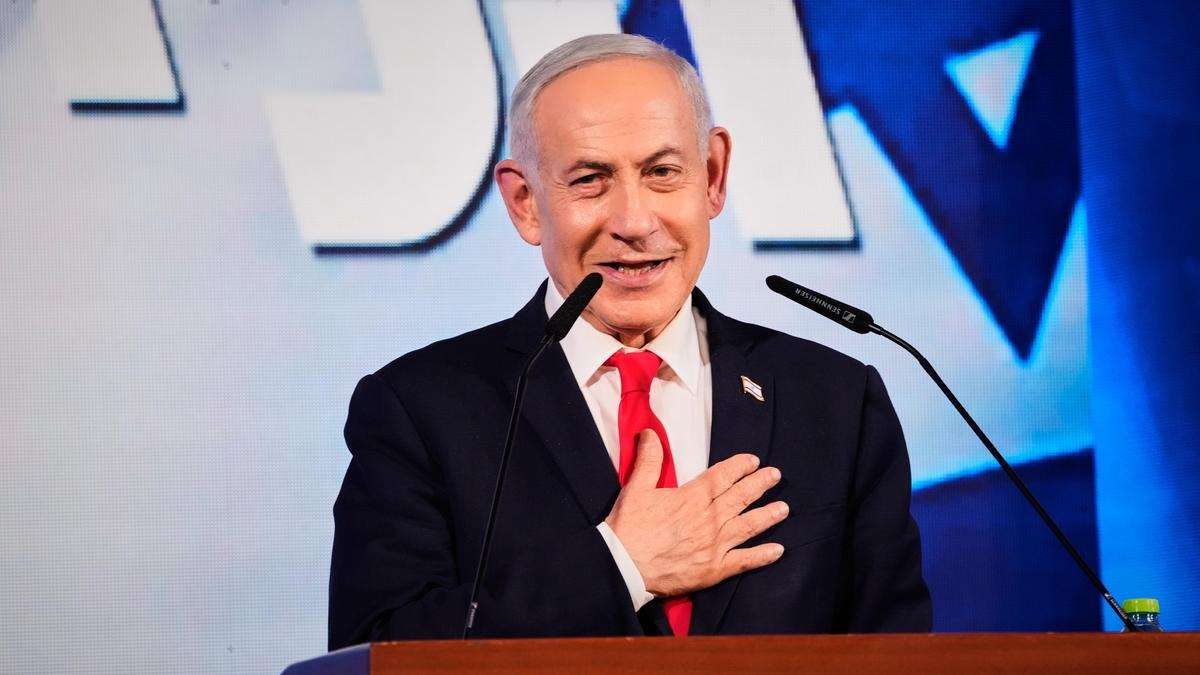
Israeli Prime Minister Benjamin Netanyahu’s political bloc was leading in the country’s general election on Wednesday, October 28, 2026, but remained short of the seats needed to secure a parliamentary majority, according to partial results reported by AFP.

With 51.8% of ballots counted, Netanyahu’s bloc was projected to hold 55 seats in Israel’s 120-member parliament, leaving it below the 61 seats required for a majority.
The preliminary figures also suggested that the opposition bloc led by Eisenkot could potentially secure enough seats to form a majority if it reached a coalition agreement with Arab parties. However, the final parliamentary balance remained uncertain as vote counting continued.
The election drew significant public attention, with voter turnout reportedly reaching its highest level in decades. Voters were deciding the political future of Netanyahu, Israel’s longest-serving prime minister, whose tenure has been marked by a sharp rightward shift in Israeli politics and military campaigns following the Hamas-led attack on October 7, 2023.
The results could shape the country’s political direction and determine which parties will participate in the next government. In Israel’s parliamentary system, a party or bloc generally needs support from at least 61 members of the Knesset to command a majority.
Coalition negotiations often play a decisive role when no single bloc wins enough seats independently. The possibility of cooperation between opposition parties and Arab parties could therefore become a key factor in government formation.
With only partial results available, the election outcome and the composition of the next government remained unresolved at the time of the report.


0 comments
No comments yet. Yours would be the first.