
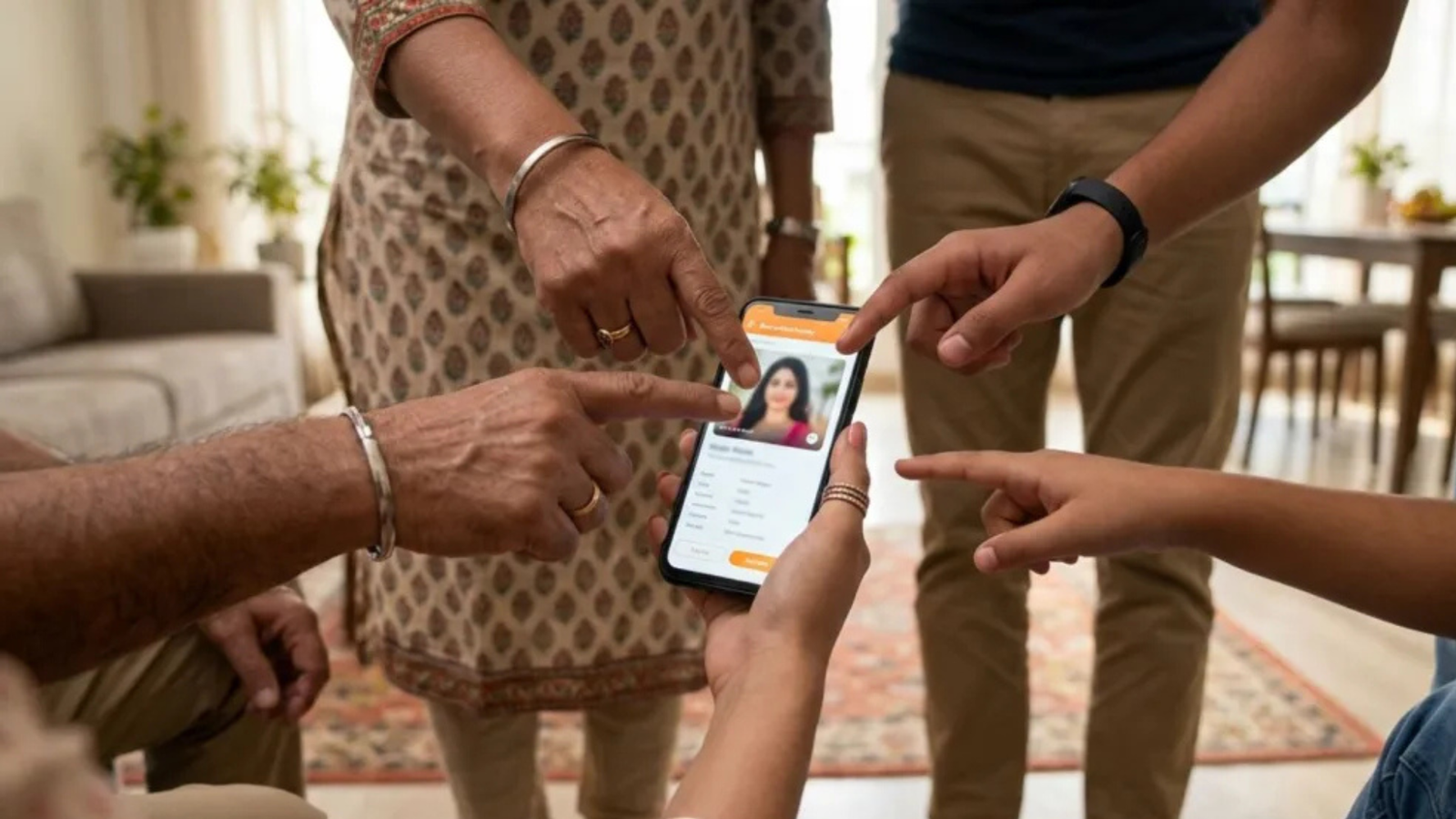
The traditional divide between arranged marriage and love marriage is becoming less straightforward as some Indian families explore a more collaborative approach to finding life partners.
A growing number of matrimony and dating platforms now allow parents and their adult children to jointly manage profiles. Instead of leaving matchmaking entirely to parents or handling the process independently, families can participate together by browsing profiles, communicating with potential matches and shortlisting people.
This emerging model is creating what can be described as a “co-piloted” approach to matchmaking, where young adults remain involved in choosing a partner while parents also have a role in the process.
The change reflects broader shifts in how Indian families approach relationships and marriage. For many young adults, having parents involved can provide family perspective and support while still allowing them to make decisions about compatibility and relationships.
For parents, participating directly can offer a way to understand their children’s preferences rather than relying entirely on traditional matchmaking networks.
However, the model depends heavily on mutual agreement. Joint profiles work when both the young person and the parents are comfortable sharing responsibility for the search. The arrangement differs from traditional parent-led matchmaking because the individual looking for a partner remains an active participant.
As digital platforms become increasingly integrated into the matchmaking process, Indian marriage practices are showing more variation than the familiar arranged-versus-love-marriage binary. Family involvement and individual choice can now coexist within the same search for a life partner.




0 comments
No comments yet. Yours would be the first.