
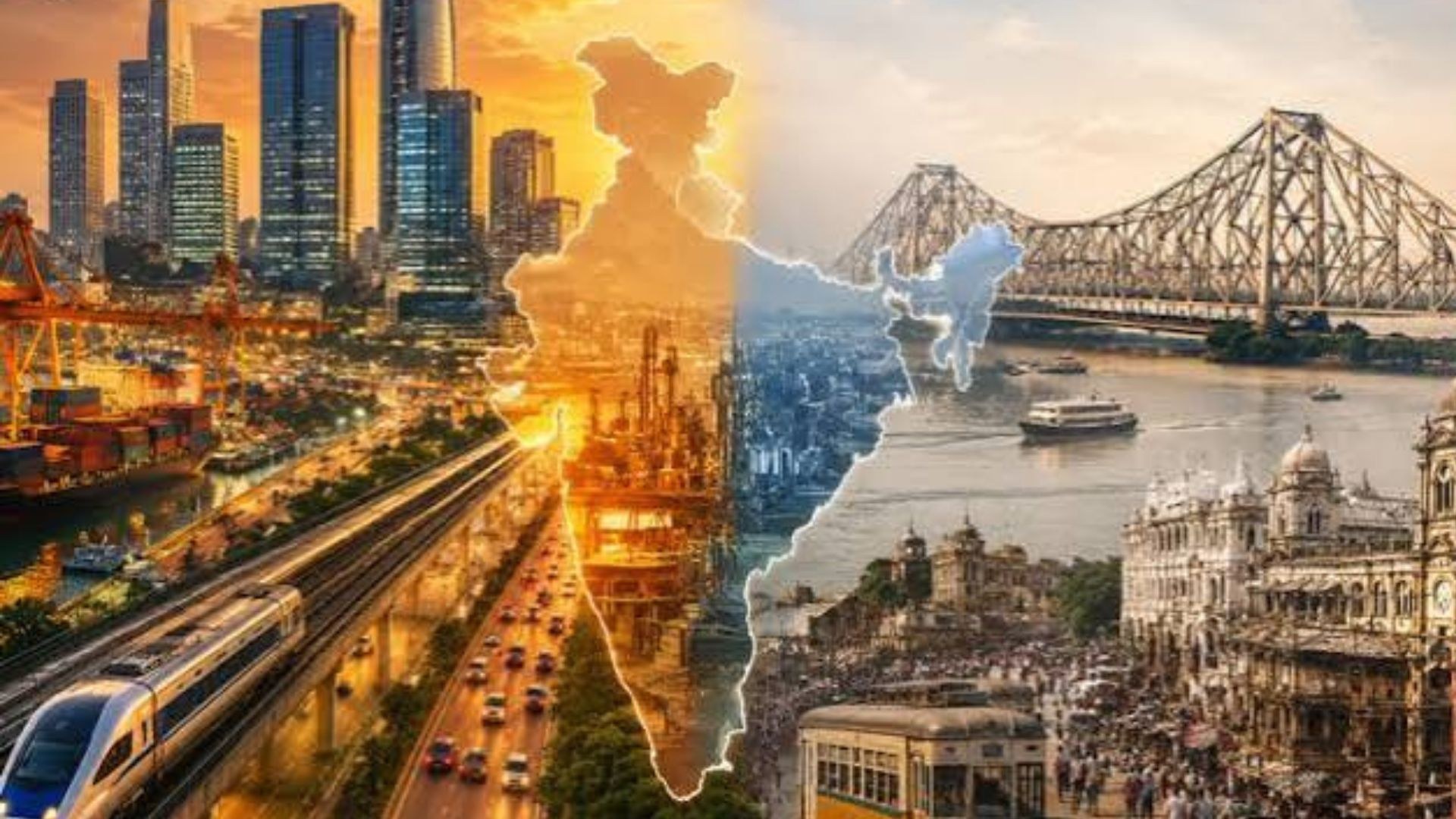
India's economic map tells two contrasting stories. Western states such as Maharashtra and Gujarat have developed major manufacturing centres, financial services and international trade networks. Meanwhile, several eastern states, including Bihar, Jharkhand and Odisha, possess significant mineral resources but continue to face development challenges. The reasons behind this divide stretch back through colonial history and post-independence economic policy.

During British rule, different regions experienced different land revenue systems. The Zamindari system, prevalent in areas including Bengal and Bihar, gave landlords a central role in collecting revenue from cultivators. In parts of western and southern India, the Ryotwari system established a more direct relationship between cultivators and the colonial government. Both systems imposed significant burdens on farmers, but their long-term effects on landholding, investment and rural society varied across regions.
After independence, another policy shaped the industrial landscape. Introduced in 1952, the Freight Equalisation Policy sought to make selected industrial raw materials, including coal and iron ore, available at comparable transport costs across the country. Although intended to support balanced industrial development, the policy reduced the geographical cost advantage enjoyed by mineral-rich regions. This potentially made it easier for businesses to establish factories far from eastern mining centres. The policy was withdrawn in the early 1990s.
However, freight policy alone cannot explain regional inequality. Infrastructure, access to markets, investment, governance, education and historical industrial development have also influenced where businesses grow. Western ports and established commercial networks helped several western states expand their economic reach.
The divide is not permanent. Better transport links, reliable infrastructure, skills development and investment in local processing industries could help eastern states create more jobs and retain greater value from their natural resources. India's challenge is not simply to move raw materials, but to ensure that economic opportunities reach the regions that produce them.


0 comments
No comments yet. Yours would be the first.