
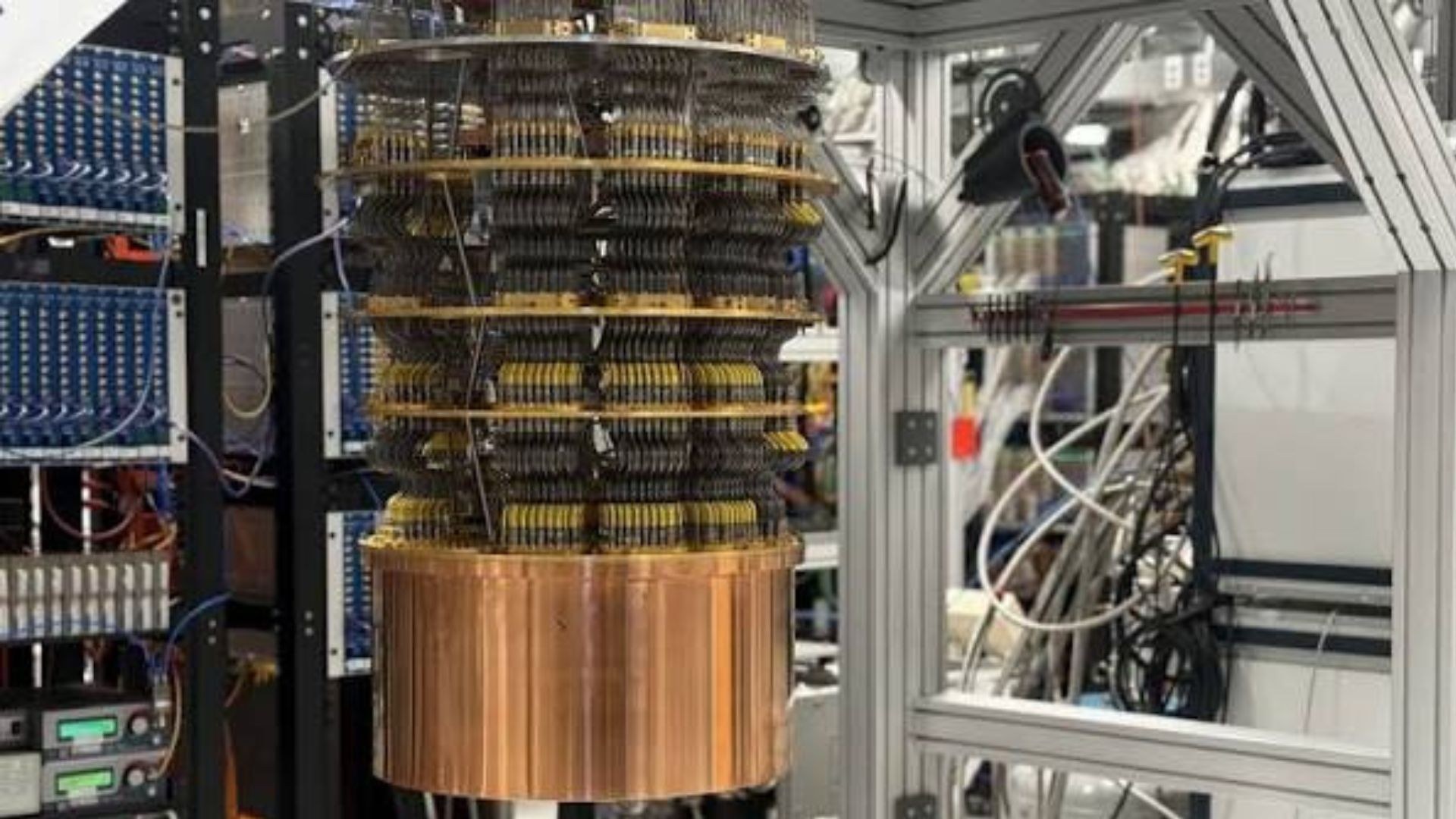
Google Quantum AI has demonstrated a technique called magic state cultivation on its Willow quantum processor, addressing a longstanding challenge in quantum computing. The experiment reduced errors by approximately 40 times and achieved a reported logical fidelity of 99.99% for T-states, bringing practical, error-corrected quantum computing closer to reality.

Magic states are essential building blocks for universal quantum computing, which aims to perform a broad range of complex calculations. However, these states are highly sensitive to noise and are consumed during computation, making it difficult to generate them reliably. The process has traditionally required substantial computing resources, potentially leaving much of a quantum system’s capacity devoted to error correction rather than useful calculations.
Magic state cultivation is designed to improve the quality of these states before they are used. The process begins by introducing an imperfect quantum state into a small region of a chip. Carefully coordinated measurements then identify and filter out errors, helping produce a more reliable state. The purified state can subsequently be transferred between different quantum error-correction systems.
The technique was developed theoretically by Google Quantum AI researchers Craig Gidney, Noah Shutty and Cody Jones in 2024. Testing it on the Willow processor demonstrated that the method could work on physical quantum hardware, rather than remaining a theoretical proposal.
According to the reported experimental results, cultivated states had roughly 40 times fewer errors than un-cultivated states. The team also demonstrated the transfer of purified states from a distance-3 color code to a distance-5 surface code, an important step towards integrating the technique into larger quantum computing systems.
The researchers also had to address environmental noise and measurement inconsistencies during testing. Improved hardware controls and a benchmarking method based on the cultivation process itself helped them assess the system’s accuracy.
The breakthrough could reduce the resources required to build useful quantum computers, potentially lowering the physical qubit requirements for future systems. However, large-scale manufacturing, system integration and scaling remain significant challenges. The experiment marks technical progress, but it does not mean that fully practical, large-scale quantum computing has already arrived.




0 comments
No comments yet. Yours would be the first.