
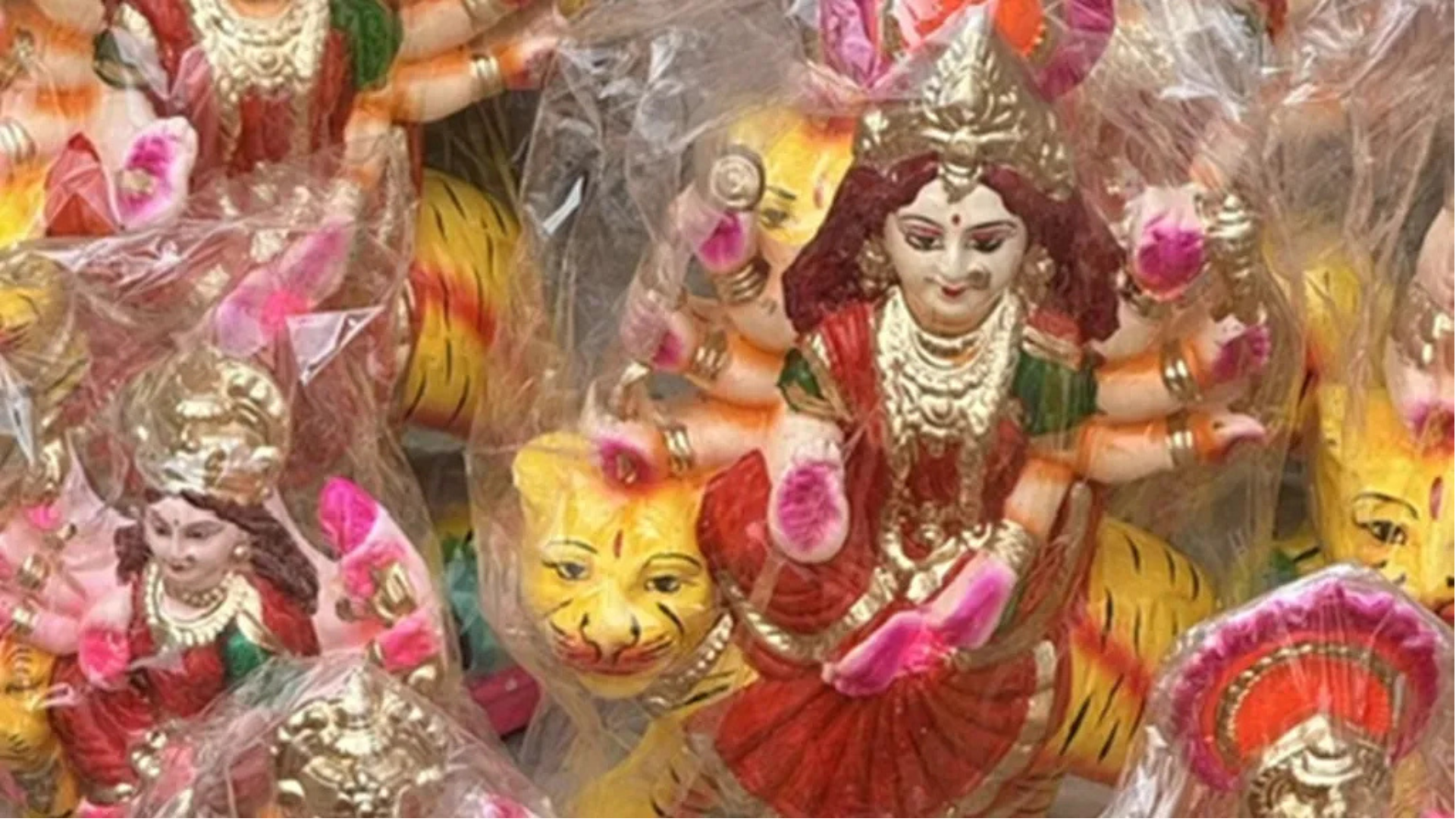
As India prepares for Navratri, Durga Puja and Dussehra, clay idols, traditional diyas and handcrafted decorations become an important part of festive markets. Behind these seasonal traditions are artisans whose work supports local livelihoods but often brings uncertain earnings and limited access to wider markets.
In Delhi, artisans Soniya and Sharda make and sell clay idols and diyas during the festive season. Their work reflects the role women play in preserving traditional crafts while navigating financial challenges and barriers to digital access.
September and October are particularly important months for artisans involved in making religious idols, sculptures and clay toys. Demand rises as households, community groups and festival organisers prepare for celebrations. Similar craft traditions can be seen across different parts of India, with products and practices shaped by local customs.
In Maharashtra, for example, festive markets also feature clay figures of oxen and other livestock during Pola. The festival recognises the contribution of domesticated animals to farming and agricultural livelihoods.
In eastern and central India, celebrations around Mahalaya signal the arrival of Durga Puja. Streets and pandals are decorated with lights, lamps and traditional alpona designs, while seasonal flowers add to the festive atmosphere. These celebrations create opportunities for artisans and small vendors selling handmade goods.
However, seasonal demand does not necessarily translate into stable incomes. Artisans may face challenges related to production costs, pricing, access to customers and the short window in which festive products sell. Limited digital access can also make it harder to promote products online or reach buyers beyond local markets.
The experiences of Soniya and Sharda highlight the connection between India’s festive economy, women’s work and traditional craftsmanship. Better market access, fair prices and opportunities to use digital platforms could help small artisans reach more customers and sustain their livelihoods beyond the festival season.




0 comments
No comments yet. Yours would be the first.