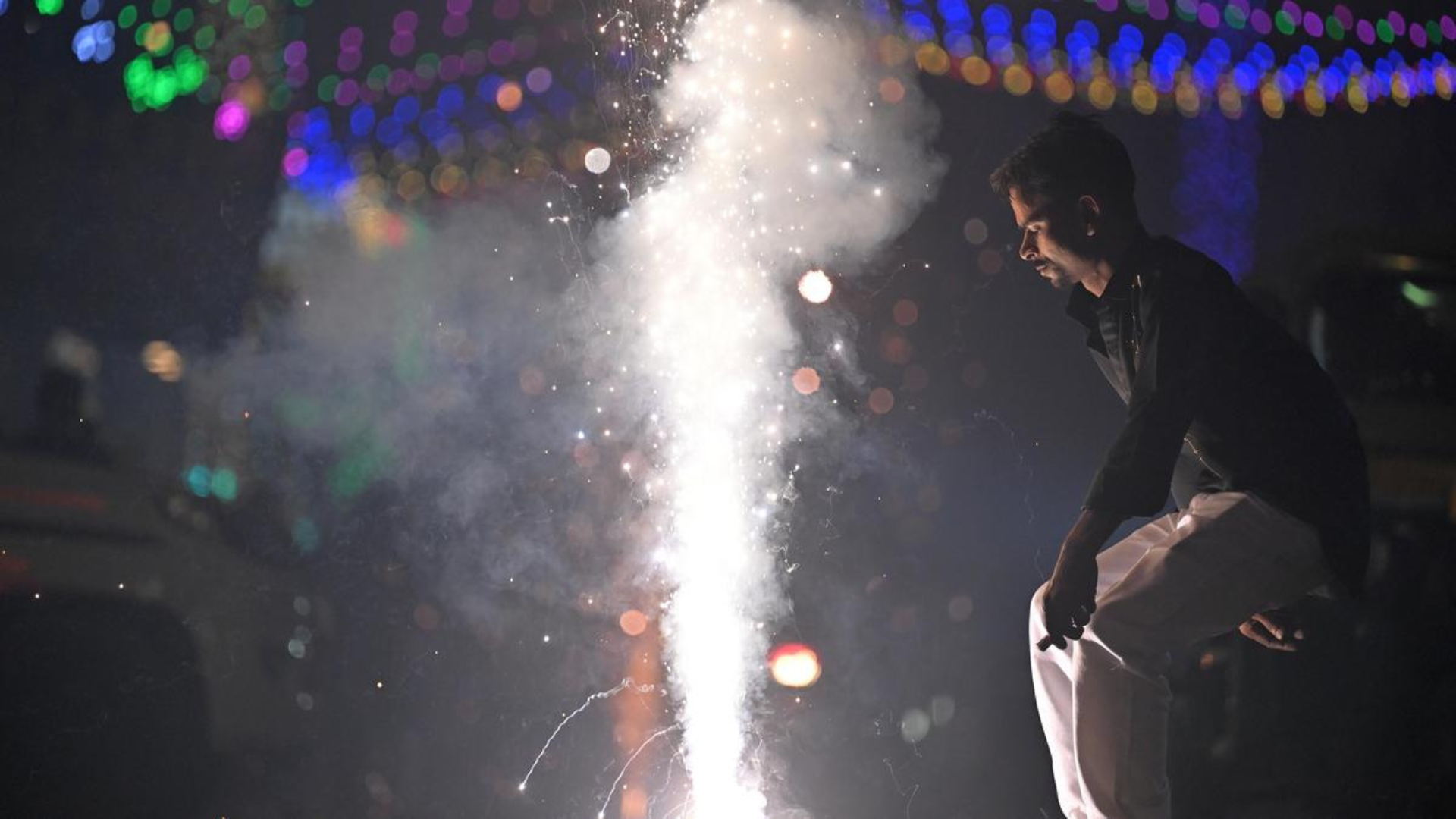
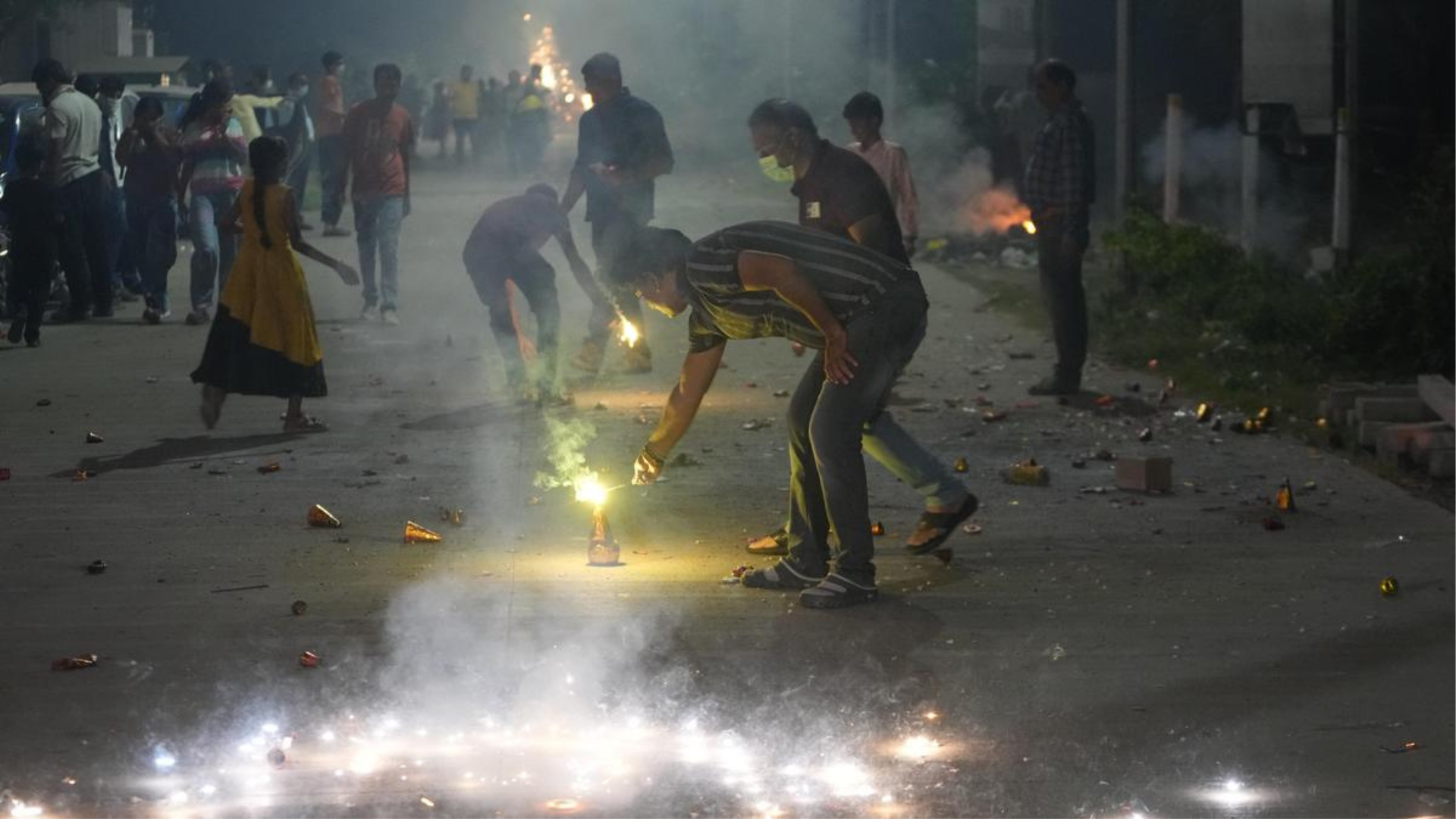
Delhi's air pollution surged to more than 66 times the World Health Organization's (WHO) recommended 24-hour PM2.5 guideline following widespread firecracker use during Diwali celebrations on November 8, 2026. According to official monitoring data, PM2.5 concentrations in parts of the national capital reached extreme levels during the night, before gradually declining in the early hours of Monday. Punjabi Bagh recorded a PM2.5 concentration of 993 micrograms per cubic metre at 4 am on November 9, equivalent to approximately 66.2 times the WHO's recommended 24-hour guideline of 15 micrograms per cubic metre. Vivek Vihar recorded 873 micrograms per cubic metre at 2 am, while R.K. Puram registered 924 micrograms per cubic metre at 10 pm on Sunday. The pollution spike followed firecracker use that continued beyond the 10 pm deadline set by the Supreme Court for Diwali night. Concerns have also emerged over gaps in pollution monitoring data. Several stations operated by the Delhi Pollution Control Committee (DPCC) did not report readings for hours during the period when pollution levels were at their highest. Monitoring data from locations including Anand Vihar, R.K. Puram and Bawana were unavailable during parts of the night. The missing readings have raised questions about whether the recorded pollution levels captured the full extent of the spike. PM2.5 refers to fine particulate matter measuring 2.5 micrometres or less in diameter. These particles can penetrate deep into the respiratory system and pose serious health risks. The episode has renewed concerns about firecracker-related pollution, enforcement of restrictions and the reliability of air quality monitoring during peak pollution events in Delhi.




0 comments
No comments yet. Yours would be the first.