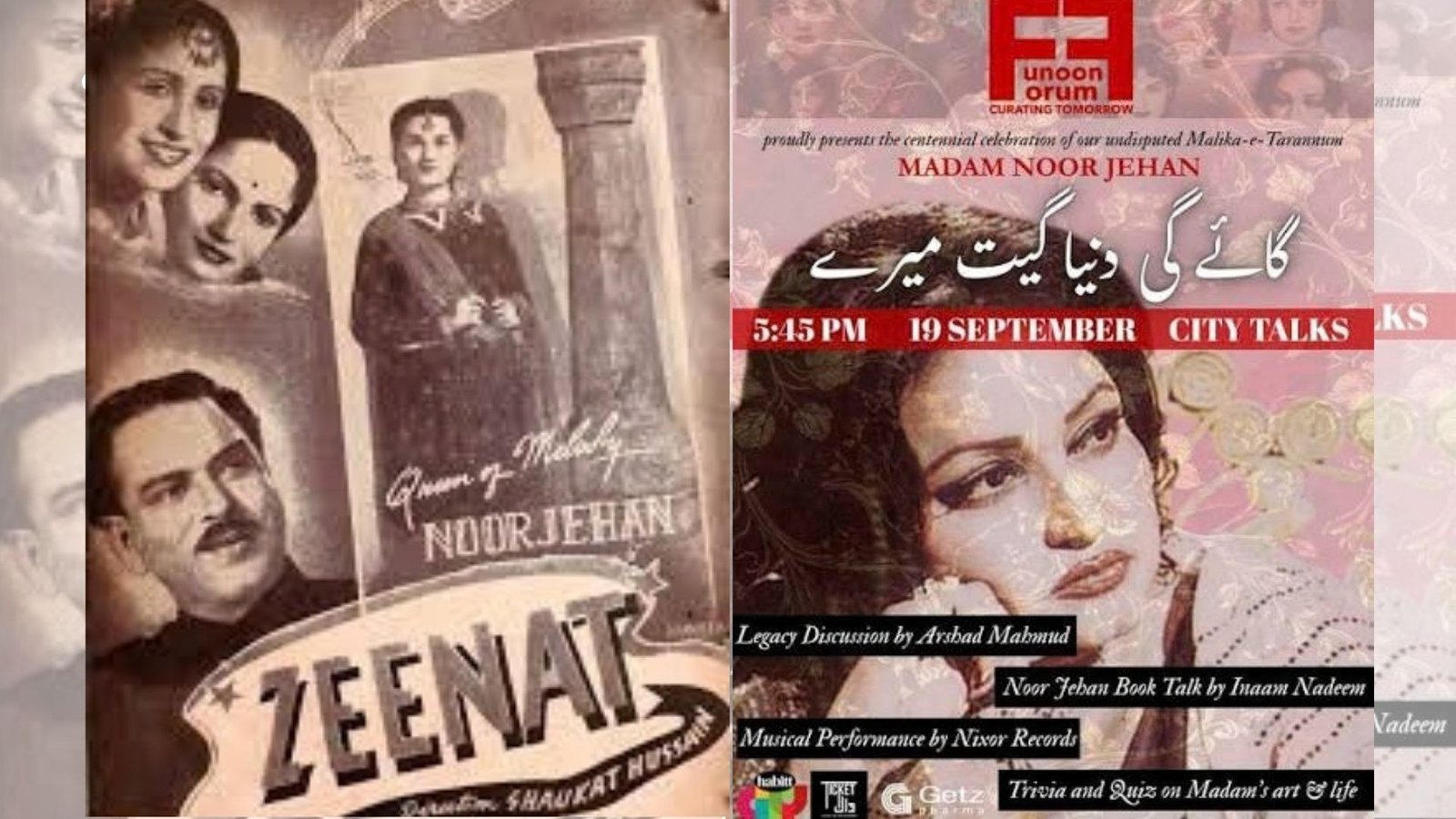
Noor Jehan, one of South Asia’s most influential singers and actors, is being remembered on her 100th birth anniversary for a career that crossed borders and shaped the musical history of the subcontinent.
She began her career in the Indian film industry in the 1930s, establishing herself as a successful performer in Bombay before Partition. Her move to Pakistan transformed the next chapter of her career, where she became known as Malika-e-Tarannum, or the Queen of Melody.
Noor Jehan went on to become one of the foundational figures of Pakistan’s film and music industry. Her singing became closely associated with Pakistani cinema, while her work continued to resonate with audiences across the region.
Her legacy also extended to fellow legends. Lata Mangeshkar, who was frequently compared with Noor Jehan, acknowledged her influence and described her as a role model.
Among Noor Jehan’s enduring songs are Sanu Nehr Vale Pul, while her rendition of Faiz Ahmed Faiz’s Mujhse Pehli Si Mohabbat remains closely associated with her artistic legacy.
Her journey was marked by the upheaval of Partition, a major relocation and the challenge of rebuilding a career in a new country. Yet she emerged as one of the most celebrated voices in South Asian music.
A century after her birth, Noor Jehan’s influence continues to connect the musical histories of India and Pakistan.