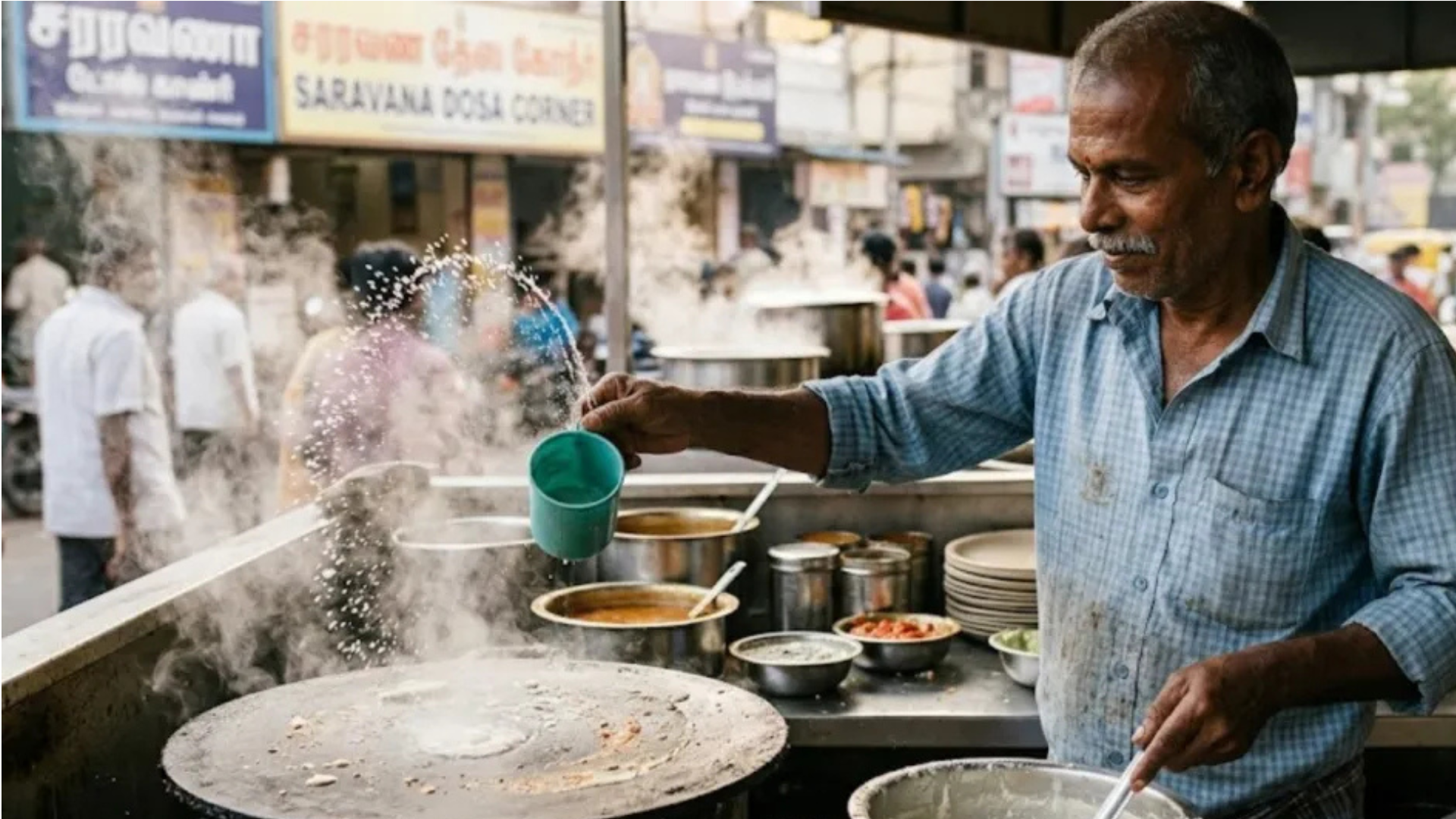
Sprinkling a few drops of water on a hot tawa before spreading dosa batter is a familiar practice in Indian kitchens. This simple technique helps assess the pan's temperature, which is important for achieving a properly cooked dosa with an even texture. When water touches a heated surface, its reaction provides a rough indication of how hot the tawa is. This allows the cook to judge whether the pan is ready for the batter. However, the technique is not a precise temperature measurement, and controlling the heat remains essential. According to Dt Amreen Sheikh, Chief Dietician at KIMS Hospitals, Thane, observing how water behaves on the tawa can help determine whether the cooking surface is ready. Maintaining the appropriate temperature also allows the batter to spread evenly and cook properly. If the tawa is excessively hot, spreading the batter evenly can become difficult. On the other hand, a pan that is not sufficiently heated may affect the dosa's cooking and final texture. The type of cookware also matters when preparing dosa. Cast iron and non-stick tawas are commonly used, although they have different cooking characteristics. Cast iron retains heat effectively and requires proper seasoning and maintenance. Non-stick cookware generally makes spreading batter and removing the finished dosa easier. Regardless of the cookware used, managing the tawa's temperature is essential. The water-sprinkling method offers a quick kitchen indicator, helping cooks judge the pan before pouring and spreading the batter.







0 comments
No comments yet. Yours would be the first.