
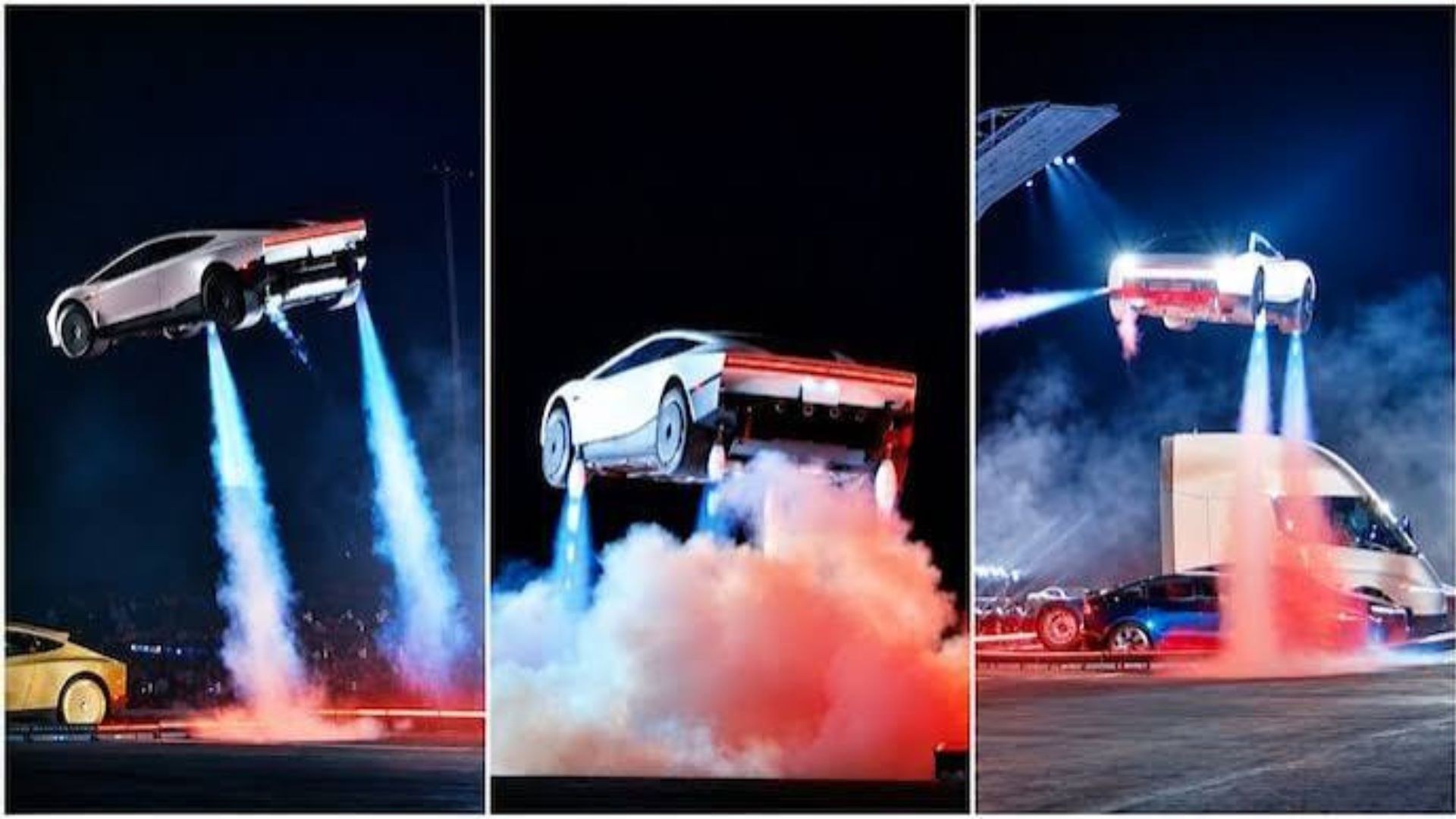
Tesla CEO Elon Musk has presented a new version of the company's Roadster electric sports car in Texas, showcasing a dramatic demonstration in which the vehicle appeared to lift into the air and rotate before landing with the help of air jets. The unveiling has sparked questions about whether flying cars could become a reality, although significant technological and regulatory challenges remain.

The presentation took place at a facility owned by Musk's aerospace company, SpaceX, which reportedly helped develop the vehicle. Introducing the demonstration, Musk told the audience that they were about to see “some crazy stuff tonight.”
The vehicle drove up a steep ramp before launching into the air, spinning and landing using jets of air. Musk said an audience was needed to demonstrate that the performance was “not AI,” addressing the possibility that viewers might mistake the footage for a computer-generated effect.
The demonstration was striking, but describing the Roadster as a conventional flying car requires caution. The reported display showed a vehicle using thrusters to perform an airborne manoeuvre; it does not establish that the car can sustain controlled flight, carry passengers through the air or operate safely above public roads.
The project also highlights the relationship between Tesla's electric-vehicle engineering and SpaceX's experience with propulsion technology. However, the supplied report does not provide detailed technical specifications explaining the thrusters, their operating limits or how the system would function outside a controlled demonstration.
Turning such a concept into a practical road vehicle would involve substantial engineering challenges. A vehicle capable of lifting off the ground would need reliable control systems, appropriate propulsion, sufficient power and robust safety mechanisms. Engineers would also have to address how the technology behaves in different weather conditions and how to protect passengers and people nearby.
Regulation would present another obstacle. Conventional cars must meet road-safety requirements, while aircraft are subject to separate rules governing airworthiness, flight operations and pilot responsibilities. A vehicle designed to perform both functions would face complex certification and operational requirements before it could be used widely.
There are also questions about everyday practicality. Flying vehicles would need to balance performance with cost, energy consumption, maintenance, noise and safe landing arrangements. Even if a demonstration proves that a vehicle can briefly leave the ground, making the technology reliable and affordable for ordinary drivers is a different challenge.
For now, the new Roadster demonstration offers a glimpse of an ambitious automotive concept rather than proof that flying cars are ready for public roads. Further technical details and independent verification would be needed to assess the vehicle's actual capabilities.
Musk's unveiling has renewed interest in the future of personal transportation, but the key question is not simply whether a car can rise into the air. It is whether such a vehicle can do so safely, repeatedly and within the practical limits of modern transport systems.




0 comments
No comments yet. Yours would be the first.