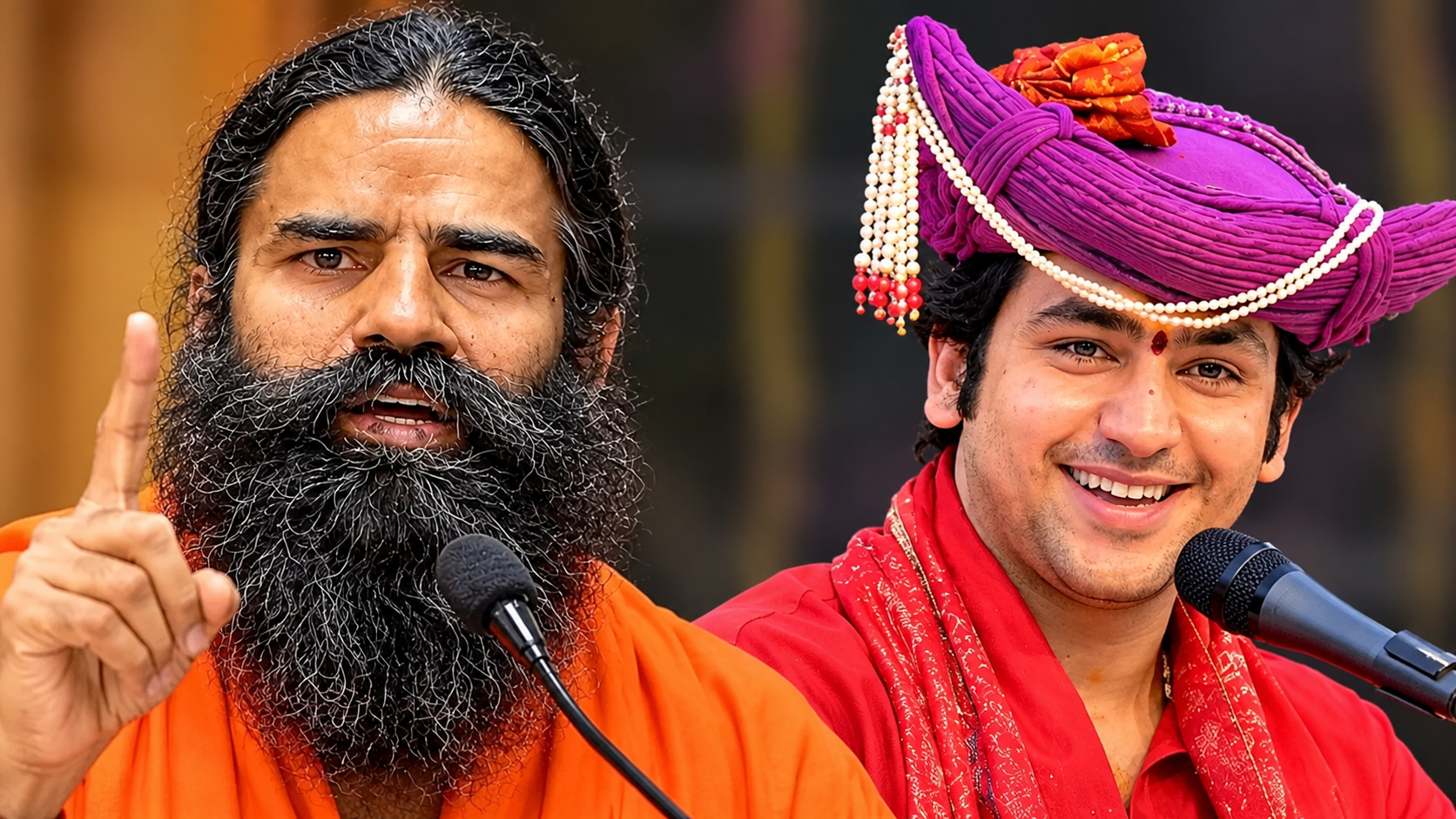
A public disagreement between yoga guru Baba Ramdev and Bageshwar Dham chief Dhirendra Krishna Shastri has drawn attention as religious activities gather pace ahead of the 2027 Uttar Pradesh Assembly election.

Ramdev criticised religious preachers who compare Hindu deities, calling those making such analogies “hypocrites”. His remarks followed controversy over Shastri’s comments comparing Lord Ram and Lord Krishna. Shastri had faced criticism from religious figures and devotees, and had earlier apologised, saying he did not intend to create a distinction between the two deities.
The exchange has attracted political attention because both religious figures are perceived as having links with the BJP, although the supplied report does not establish any formal political role for either. Observers cited in the report interpret the disagreement in the context of Uttar Pradesh’s caste equations and the growing visibility of religious discourses in the Hindi heartland.
Shastri has promoted the idea of “Sanatan unity” across caste divisions through religious gatherings in Uttar Pradesh. Separate reporting has described a series of planned religious discourses ahead of the 2027 Assembly election, with local leaders and party sympathisers helping facilitate some events. This does not, by itself, establish that the BJP is formally organising them.
The disagreement appeared to soften on November 25. Ramdev later said he had spoken to Shastri and described him as a younger brother and disciple. Shastri, in turn, said he accepted Ramdev’s criticism as well as his praise and would not respond disrespectfully to the senior yoga guru.
The episode illustrates how public religious discourse can intersect with questions of influence and political visibility in a state preparing for a major electoral contest.
Editorial Disclosure-This article is based on a report published by The Hindu and additional coverage from other news organisations.The article distinguishes reported statements from analysis and does not imply any formal political affiliation or coordination unless independently established.




0 comments
No comments yet. Yours would be the first.