
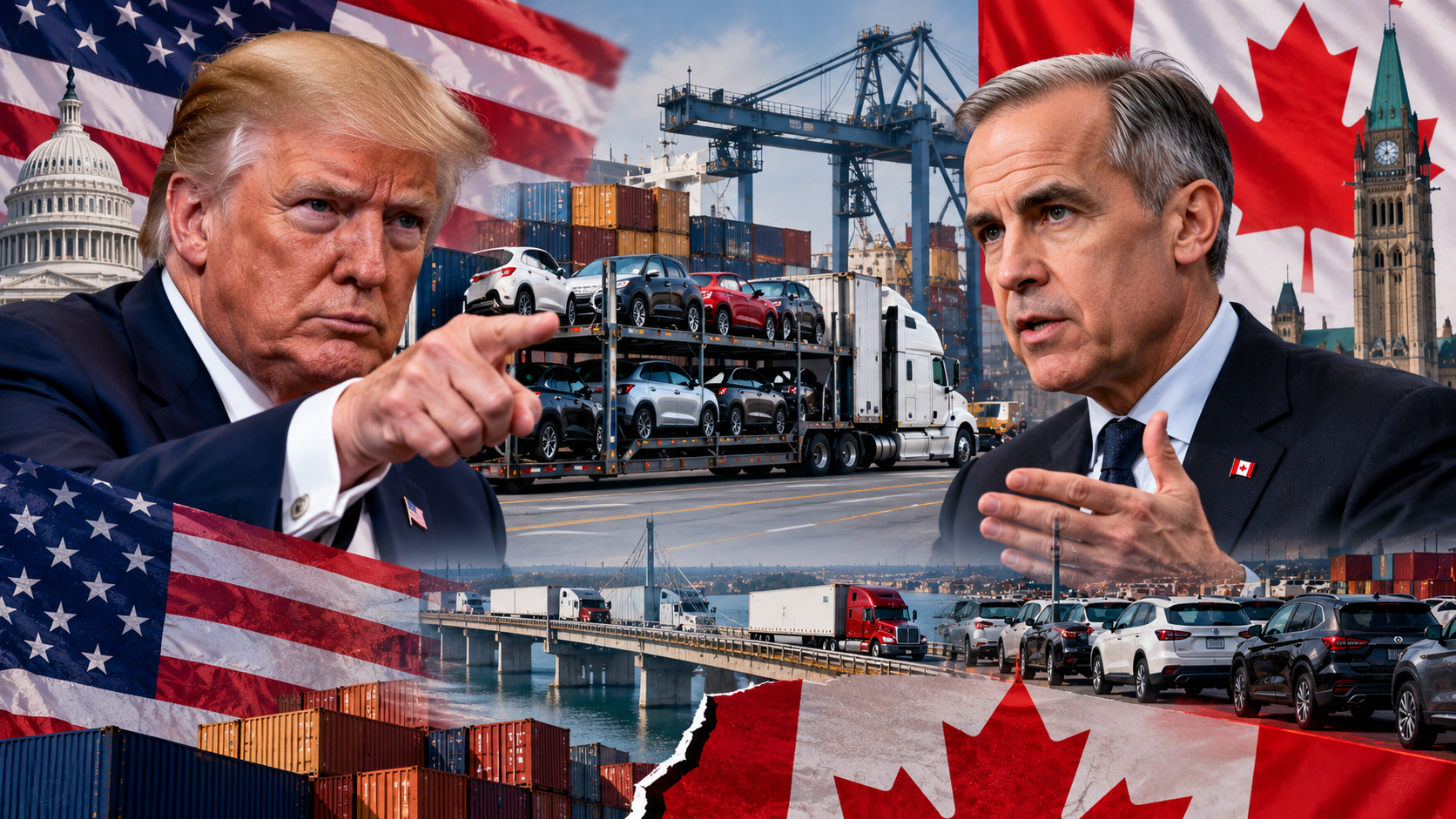
Canadian Prime Minister Mark Carney has criticised U.S. President Donald Trump’s tariffs, arguing that the measures are increasing costs for American families and disrupting a decades-old trade relationship between the two neighbouring countries.

On Wednesday, October 21, 2026, Carney announced a multibillion-dollar plan aimed at protecting Canada’s manufacturing heartland from the growing trade dispute. The initiative comes as businesses and workers face uncertainty over the future of cross-border trade and manufacturing.
Trump has openly encouraged automakers to shift production from Canada to the United States, raising concerns about an automotive industry that has operated through deeply integrated supply chains across the border for decades. Such changes could affect manufacturers, suppliers, workers and consumers in both countries.
Carney also revealed that he had spoken with Trump for “quite some time” about several issues, including trade. The conversation highlights continuing efforts by both governments to address tensions affecting their economic relationship.
Meanwhile, the U.S. Embassy in Canada accused Canadian politicians of attempting to influence American politics ahead of next month’s U.S. midterm elections. The allegation adds another layer of tension to an already strained relationship between Washington and Ottawa.
The dispute carries significant implications for the North American economy. The automotive sector relies on components and manufacturing operations that cross the U.S.-Canada border multiple times. Tariffs and production shifts could increase costs, disrupt supply chains and create uncertainty for companies planning future investments.
Canada’s proposed manufacturing support plan is intended to strengthen domestic industry and cushion the impact of the trade conflict. However, the longer-term effects will depend on how both governments handle tariffs, political disagreements and negotiations.
The developments underline the growing economic and diplomatic challenges facing two countries whose trade relationship has long been central to North American manufacturing and employment.




0 comments
No comments yet. Yours would be the first.