
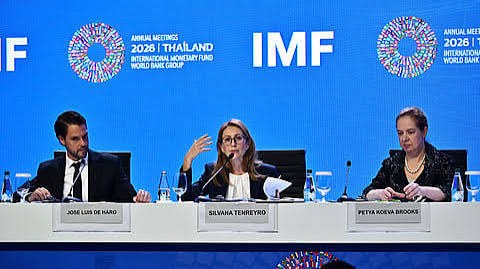
The International Monetary Fund (IMF) has warned that low-income developing countries facing the economic fallout of the Iran war may have little choice but to reduce government spending or risk debt restructuring.

Speaking on Tuesday, October 13, 2026, during the IMF and World Bank Annual Meetings in Bangkok, Petya Koeva-Brooks, deputy director of the IMF’s Research Department, said heavily indebted countries that depend on imported oil were among the hardest hit by the energy shock.
The conflict-driven surge in energy costs has created additional pressure on economies already struggling with rising debt and inflation. These countries face difficult decisions about how to protect households from higher prices while maintaining financial stability.
In comments to AFP, Koeva-Brooks highlighted the growing challenges confronting governments after years of repeated global economic shocks.
“Unfortunately, after years of the global economy being hit by shock after shock, debt levels have increased quite a lot, and at the same time, inflation has become a problem,” she said.
The IMF’s warning highlights the limited financial flexibility available to many developing economies. Governments must balance the need to support vulnerable citizens against the risk of allowing public debt and borrowing costs to rise further.
Cutting expenditure could help some countries manage their finances, but it may also limit their ability to provide relief when households are struggling with higher fuel, transport and food costs. Debt restructuring could become another option for countries unable to meet their financial obligations.
The warning underscores how geopolitical conflicts can spread economic pressure far beyond the countries directly involved. For vulnerable economies, the combination of expensive energy, inflation and mounting debt threatens to make an already difficult recovery even more challenging.


0 comments
No comments yet. Yours would be the first.