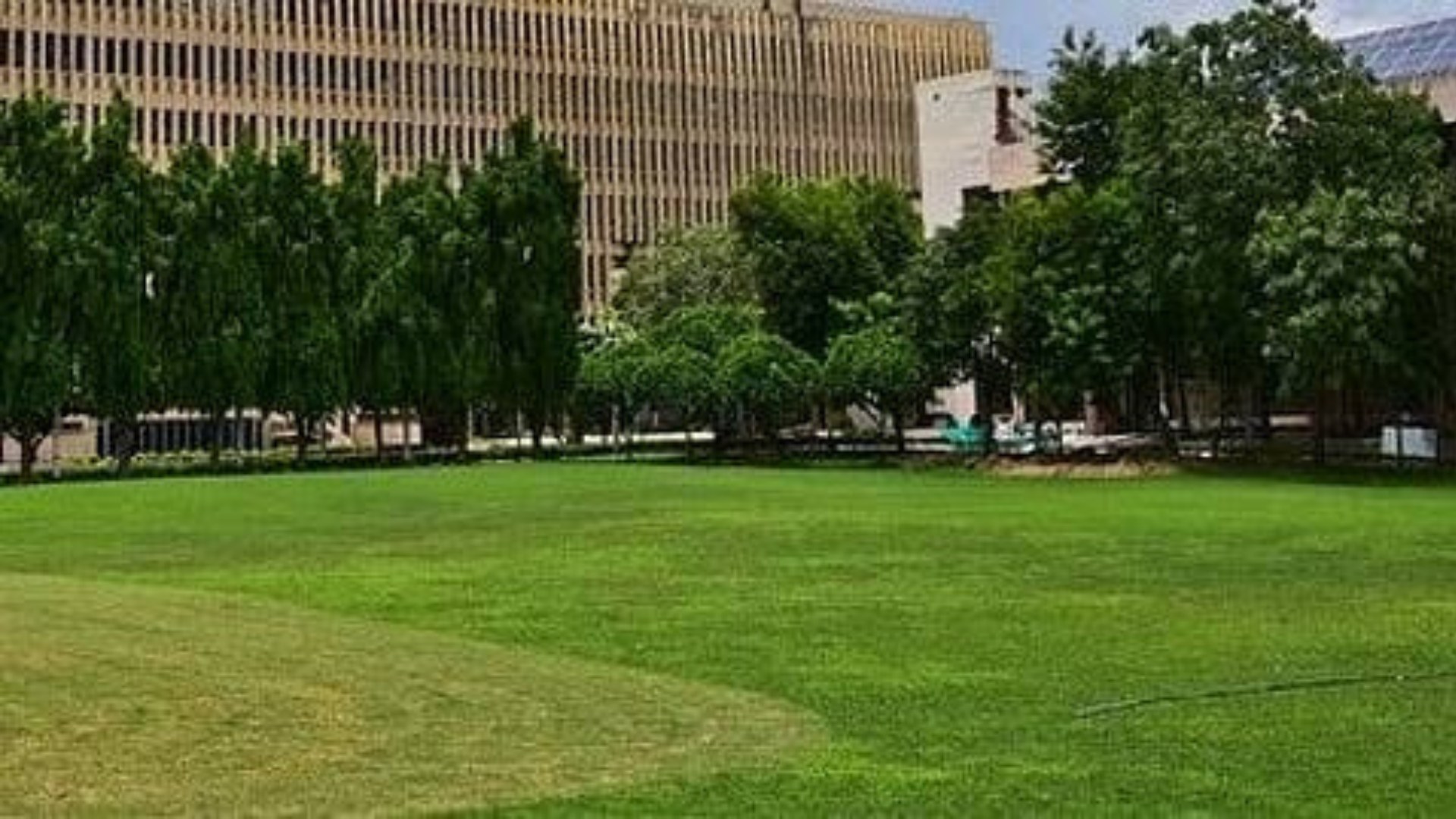
Visakhapatnam: Green spaces can help make educational campuses cooler and more comfortable for outdoor activities, according to a field study conducted in Visakhapatnam, where a vegetated courtyard recorded temperatures up to 1.2°C lower than a courtyard without vegetation.

The study, titled Microclimate and User Perception in Vegetated and Non-Vegetated Educational Courtyards: A Paired Field Study in Visakhapatnam, India, was conducted by K Sai Sri Laasya, an M.Arch student, and Sai Gautham Kumar Gujjula, an assistant professor at GITAM's School of Architecture. It was published in the International Journal of Latest Technology in Engineering, Management & Applied Science.
Researchers monitored two courtyards on 10 dates between July 23 and August 8, 2026, recording air temperature and relative humidity at four points at 9 am and noon.
The vegetated courtyard averaged 29.27°C at 9 am and 29.43°C at noon, compared with 29.98°C and 30.63°C in the non-vegetated courtyard. The temperature difference widened from 0.72°C in the morning to 1.20°C at noon.
Relative humidity was also higher in the vegetated courtyard, averaging 79.58% in the morning and 79.20% at noon.
A survey of 21 courtyard users, mostly students, found better comfort ratings in the vegetated space. While 54.5% rated its thermal conditions comfortable, 20% of respondents at the non-vegetated courtyard reported comfortable conditions.
Researchers noted that vegetation, shade and cooler planted surfaces can influence heat exposure, while moisture released by plants can affect the surrounding energy balance. However, they cautioned that vegetation alone could not explain the observed temperature difference.





0 comments
No comments yet. Yours would be the first.