
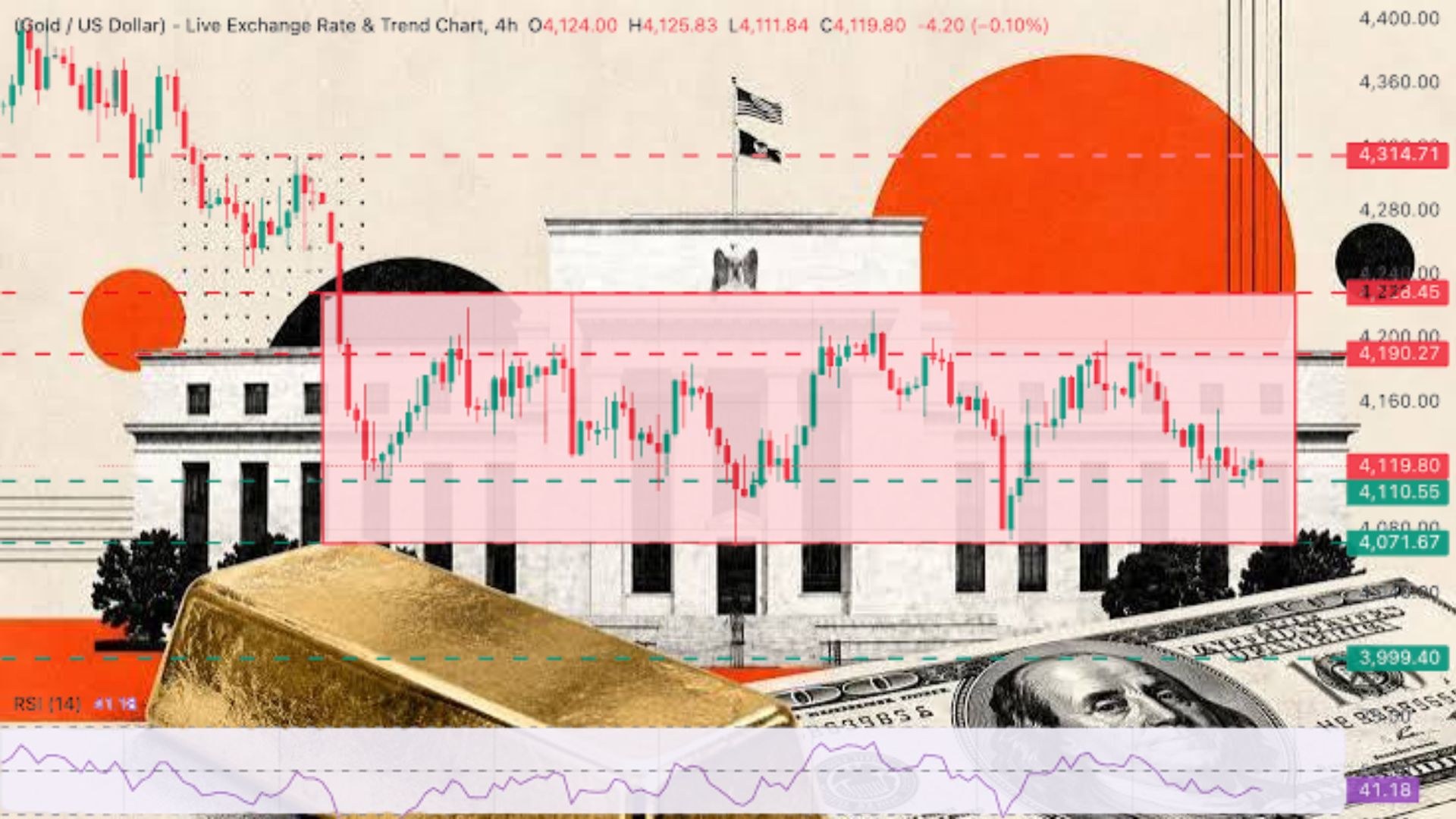
Gold prices are showing signs of recovery after falling to a three-month low near $3,986, with XAU/USD trading around $4,030. However, the rebound remains fragile as rising oil prices continue to weigh on the precious metal’s outlook.

Falling US Treasury yields have offered some support to gold, which does not pay interest. The benchmark US 10-year Treasury yield dropped sharply on Thursday, easing pressure on the metal as investors responded to concerns about a potential AI market bubble.
Expectations surrounding the Federal Reserve’s next policy moves are also influencing market sentiment. Lower yields can make gold more attractive to investors, although persistent inflation concerns could limit the scope for a sustained recovery.
Oil prices remain a major challenge. Brent crude has climbed above $110 a barrel, while US West Texas Intermediate crude has moved above $100. Higher energy prices can fuel inflation and increase the likelihood of tighter monetary policy, creating additional uncertainty for gold traders.
Gold Price Outlook: Key Levels to Watch
From a technical perspective, gold remains within a bearish channel that began in September. The Relative Strength Index (RSI) on the four-hour chart has entered deeply oversold territory, suggesting that a short-term rebound may be possible.
On the upside, $4,070 is an important resistance level. A stronger recovery could bring the $4,150 area into focus, followed by resistance between $4,200 and $4,220.
On the downside, a break below $4,000 could expose gold to support between $3,960 and $3,941. The lower boundary of the bearish channel is near $3,925.
For now, gold’s recovery depends on whether falling Treasury yields can offset pressure from rising oil prices and the broader bearish trend.




0 comments
No comments yet. Yours would be the first.