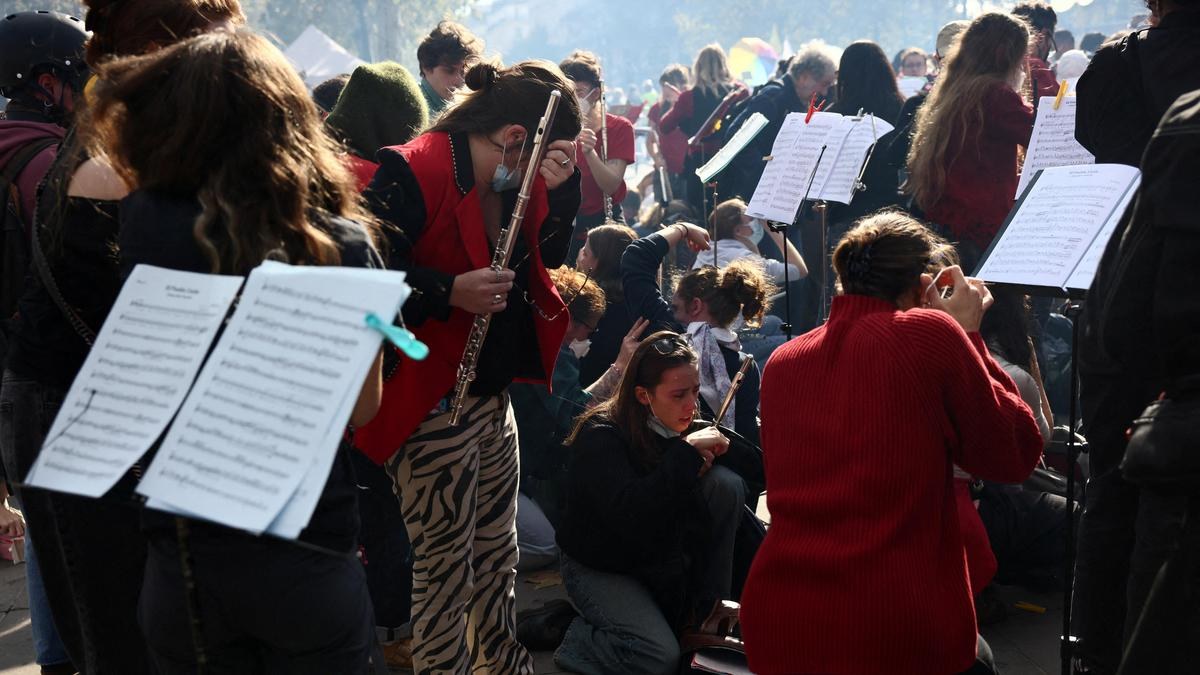
France has witnessed escalating anti-government protests and violent clashes in recent weeks, with public anger over living costs, strained public services and police conduct contributing to widespread unrest.

The demonstrations began in September with small protests over conditions in state schools. They expanded into a broader movement, attracting students, parents, teachers, trade unionists and political groups.
According to a Reuters investigation, nationwide protests on October 17 saw serious violence in Paris, Marseille and Lyon. Rioters and looters attacked shops and public buildings, while police struggled to control parts of the cities. The demonstrations also drew support from the Yellow Vest movement, which had protested against President Emmanuel Macron's government in 2018 and 2019.
Government officials have blamed far-left radicals and what they described as opportunistic offenders for exploiting largely peaceful demonstrations to attack state institutions and businesses.
However, police tactics have also faced criticism. Reuters reported that its journalists reviewed dozens of videos, attended court hearings involving 26 accused protesters and interviewed more than 50 people, including officials, police officers, lawyers and demonstrators.
The investigation highlighted concerns over injuries suffered by young protesters, including people who lost hands or eyesight. Human rights experts have also questioned the arrest of nearly 7,000 minors during school blockades, describing the scale of arrests as disproportionate.
Although demonstrations became calmer after October 17, confrontations continued during attempts to disperse protesters. Police used tear gas and charged groups who threw bottles, paving stones and fireworks.
The unrest has added to political pressure on the French government ahead of the country's next presidential election.

0 comments
No comments yet. Yours would be the first.