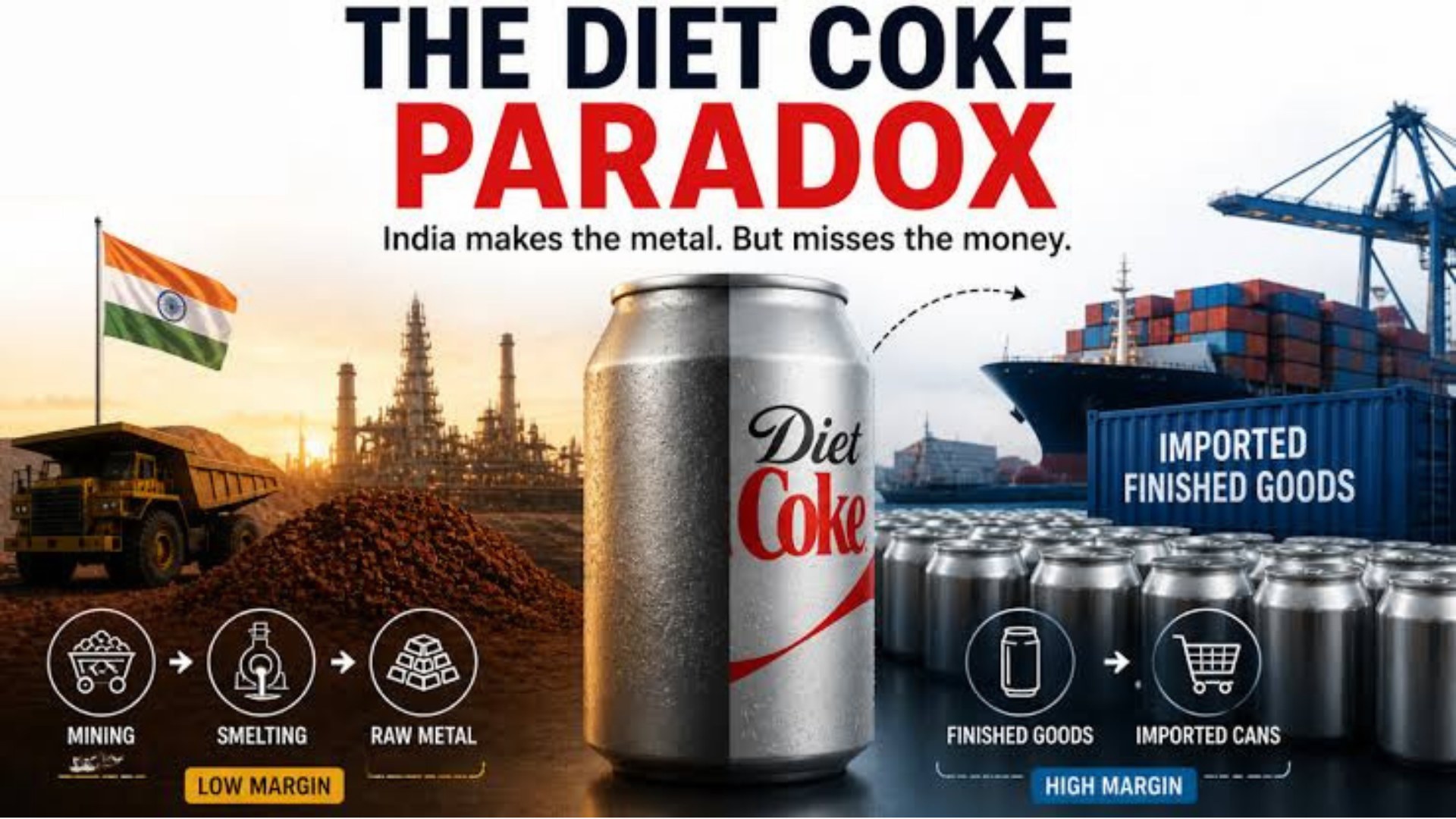
The disappearance of Diet Coke from several Indian store shelves in April 2026 exposed an unexpected weakness in the country's manufacturing ecosystem. India is the world's second-largest aluminium producer, yet a shortage of aluminium beverage cans disrupted the supply of a popular soft drink. The episode has come to be described as the Diet Coke Paradox.

The immediate disruption was linked to the conflict in West Asia. Delayed shipments from the Gulf, which accounts for around 9% of global aluminium production, affected the availability of imported cans. Diet Coke was particularly vulnerable because it was sold in India only in aluminium cans, unlike several other soft drinks available in plastic bottles.
However, the problem also exposed a wider industrial challenge. India produced approximately 42 lakh tonnes of primary aluminium in FY2024-25, according to the Ministry of Mines. Yet the country remains dependent on imports for a significant share of its processed can sheets and packaging requirements. Domestic capability does exist: Hindalco's Hirakud facility, for instance, manufactures can body stock. The concern is whether domestic capacity can expand quickly enough to meet growing demand.
Regulatory requirements have added another layer of difficulty. Mandatory BIS certification for aluminium beverage cans was introduced through quality-control rules, but implementation deadlines have been repeatedly deferred. The latest schedule places compliance for large manufacturers in April 2027, with later deadlines for smaller enterprises. Industry representatives have cited certification delays as one factor affecting supply and the approval of alternative suppliers.
Trade policy is another area of debate. A CUTS International policy brief has raised concerns about inverted duty structures, import-parity pricing and the impact of preferential trade agreements on domestic downstream manufacturers. These issues can influence the cost competitiveness of Indian processors, although their effects vary across products and tariff classifications.
The challenge extends beyond aluminium. Government data show that China accounted for approximately 73.7% of India's imports of APIs, bulk drugs and drug intermediates in FY2024-25.
The Diet Coke episode therefore offers a broader lesson: producing raw materials is not enough. Building competitive processing industries, expanding domestic capacity and diversifying supply sources are equally important for economic resilience.






0 comments
No comments yet. Yours would be the first.