
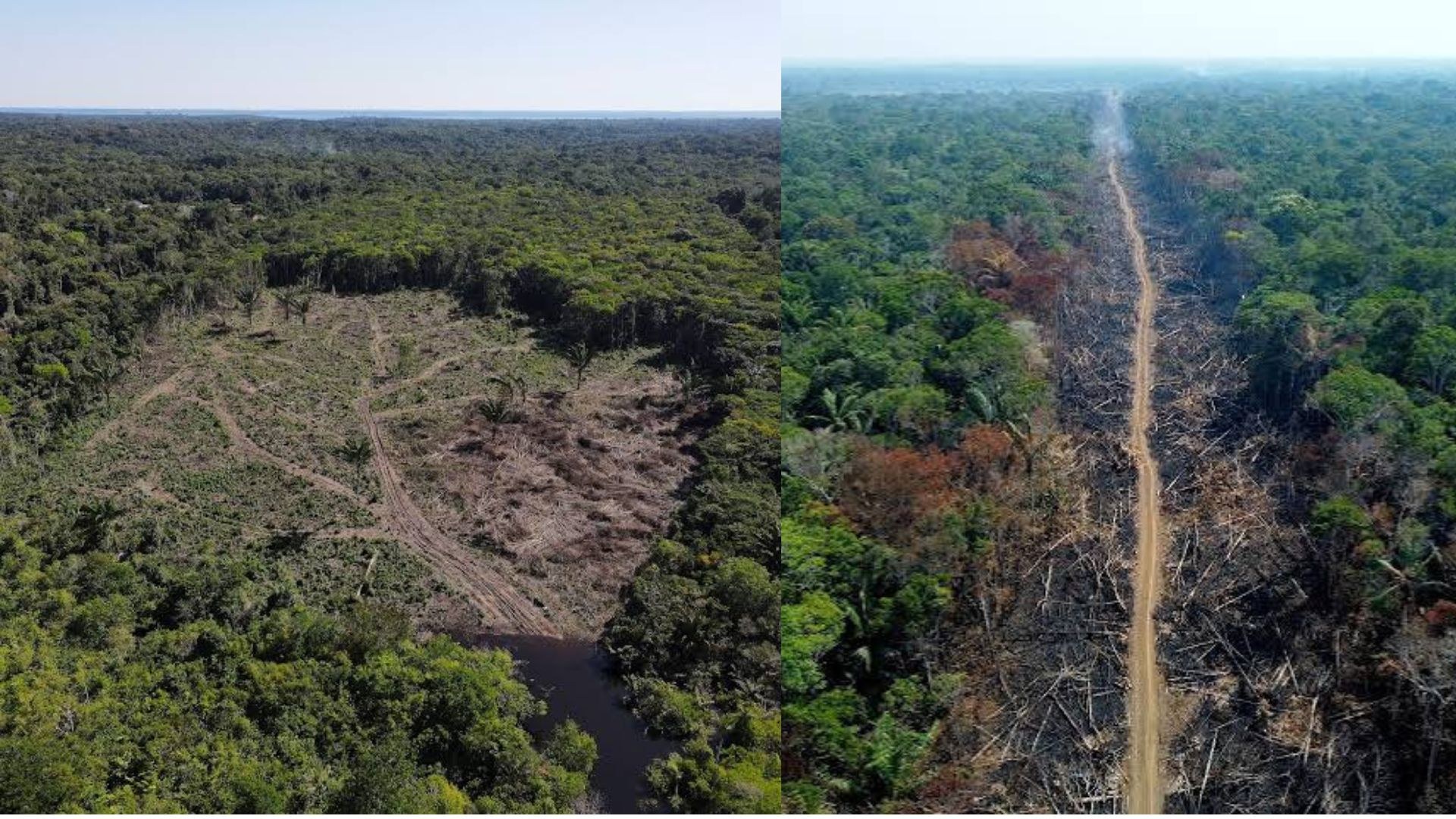
Brazil has reported a record decline in deforestation across the Amazon rainforest and the Cerrado savanna, marking a significant development in the country's environmental protection efforts ahead of a closely contested presidential election. The future of the rainforest has become a major issue as voters prepare to choose between President Luiz Inácio Lula da Silva and his challenger, Flavio Bolsonaro.

According to satellite data cited in the report, deforestation in the Brazilian Amazon fell by 41.8% in the year to July 2026, the largest annual decline since records began in 1988. The Cerrado, a vast savanna region known for its biodiversity, recorded a 23.8% reduction over the same period.
The figures represent progress towards Lula's commitment to ending deforestation by 2030. When he returned to office three years ago, the left-wing president pledged to strengthen forest protection after deforestation increased during the administration of his predecessor, Jair Bolsonaro.
Lula's government has tightened environmental monitoring and increased penalties for illegal logging as part of its efforts to curb forest destruction. In a post on X on Friday, the president reiterated his goal of achieving zero illegal deforestation by 2030.
The decline comes at a politically important moment for Brazil. Lula is due to face Flavio Bolsonaro, the son of former president Jair Bolsonaro, in a presidential run-off scheduled for 25 October, according to the supplied report. Polls cited in the report suggest a closely fought contest, with environmental policy among the issues shaping the campaign.
Jair Bolsonaro's presidency, which ran from 2019 to 2022, was associated with increased pressure on the Amazon. His administration promoted mining in Indigenous territories, while forest clearances rose and resources for environmental protection were reduced. Figures cited by AFP indicated that the Amazon lost nearly 60% more forest during his presidency than in the preceding four years.
Lula took a different approach after assuming office, and deforestation fell to a six-year low during his first year in power. The latest figures suggest that efforts to strengthen enforcement and deter illegal forest clearance have continued to influence the country's environmental record.
Brazil's Environment Minister, Joao Paulo Capobianco, described the fall in Amazon deforestation as “absolutely stratospheric.” Marcio Astrini, executive secretary of the climate advocacy organisation Observatorio do Clima, called the results a historic achievement for the country. He said the decline demonstrated that political commitment could help curb deforestation and greenhouse gas emissions.
The Amazon plays a critical role in the global climate system. It is the world's largest tropical rainforest, and approximately 60% of it lies within Brazil. Its trees and vegetation absorb carbon dioxide, helping regulate greenhouse gas concentrations, while its ecosystems support millions of species.
However, the rainforest continues to face threats from agricultural expansion, logging and other forms of land clearance. Climate change adds to these pressures by contributing to conditions that can increase the risk of wildfires and damage forest ecosystems.
The Cerrado also faces substantial environmental pressure because of land conversion for agriculture. Its decline in deforestation, alongside the Amazon's improvement, makes the latest figures relevant to Brazil's wider conservation efforts.
Despite the progress, maintaining the reductions will require continued monitoring, enforcement and long-term policy commitments. The election could influence the direction of future environmental measures, particularly if a change in government brings a different approach to land use and forest protection.
For Brazil, the challenge is to turn the latest decline into lasting progress. The results offer evidence that deforestation can be reduced, but achieving the 2030 target will depend on whether forest protection remains a priority in the years ahead.


0 comments
No comments yet. Yours would be the first.