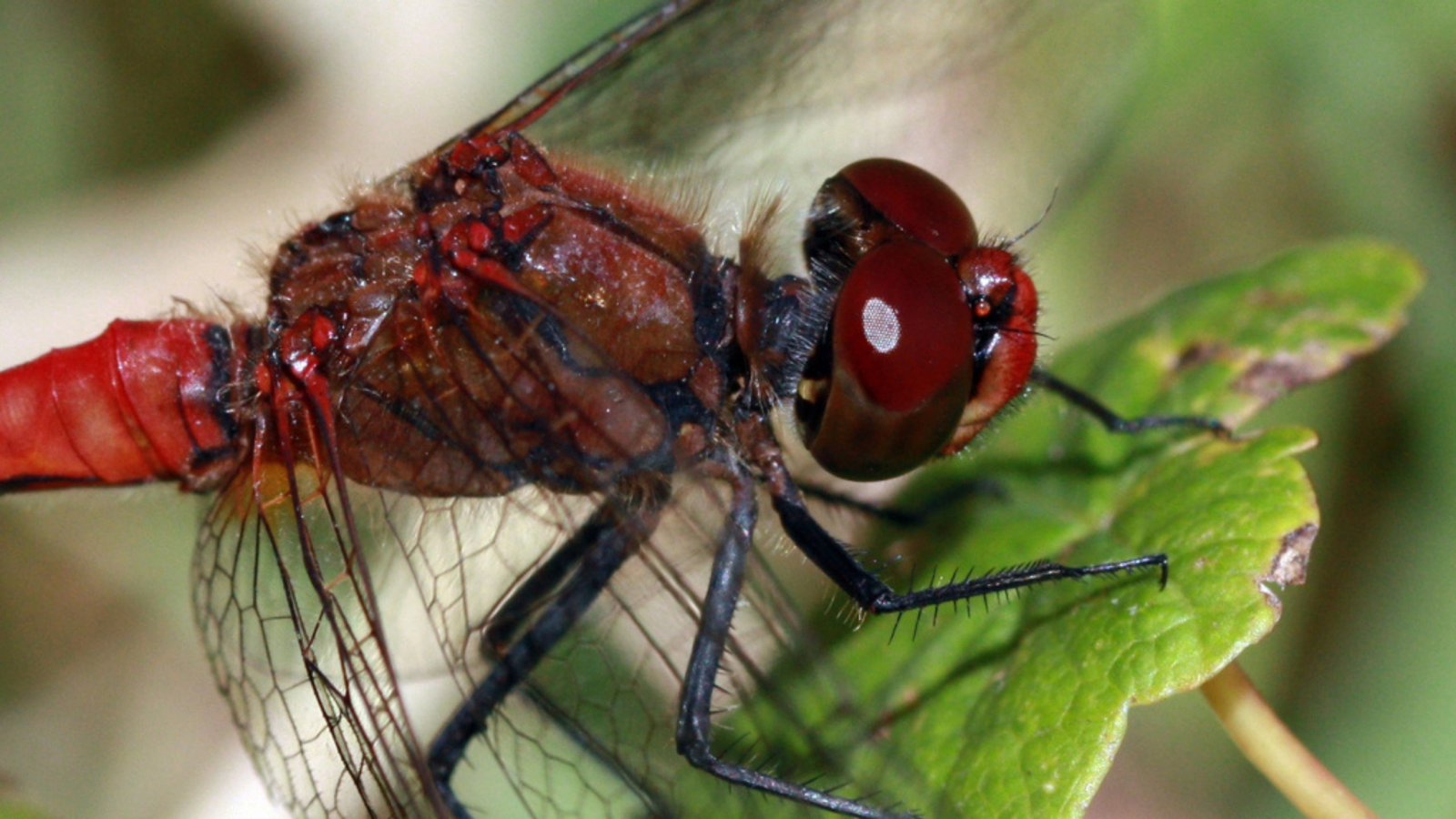
Dragonflies are among the most efficient hunters in the insect world, and much of their hunting ability comes from their remarkable eyes. Their enormous compound eyes cover a large part of their head, giving them an unusually wide field of vision.
Unlike humans, who have a relatively limited field of view, dragonflies can see in almost every direction at once. Their rounded compound eyes provide close to 360-degree visual coverage, allowing them to detect movement around them without constantly turning their heads.
This wide field of vision is particularly useful for an aerial predator. A dragonfly needs to identify potential prey while flying quickly, and its vision allows it to monitor its surroundings for insects approaching from different directions.
Their eyes are made up of thousands of tiny visual units called ommatidia. Each unit receives information from a small portion of the surrounding environment, with the brain combining these signals to create a broad visual picture.
Dragonflies also have impressive reflexes and flight control, allowing them to rapidly change direction while pursuing prey. Their visual system helps them detect and track moving targets, making them highly effective hunters.
The large eyes therefore serve a clear evolutionary purpose. They provide dragonflies with extensive visual coverage while supporting the fast responses needed during flight.
From spotting prey to avoiding threats and finding potential mates, vision is central to the dragonfly’s survival. Their unusual eye structure is one of the clearest examples of how an animal’s physical features can evolve around the demands of its environment.